Traveling with Your Dog from Vancouver: Road Trips, Ferries and Flights
Traveling with your dog from Vancouver is much easier when you plan the practical details before the day you leave. A smooth trip usually comes down to simple things: safe restraint, water, familiar food, licence and vaccine records, pet-friendly stops, and a realistic plan for your dog's comfort.
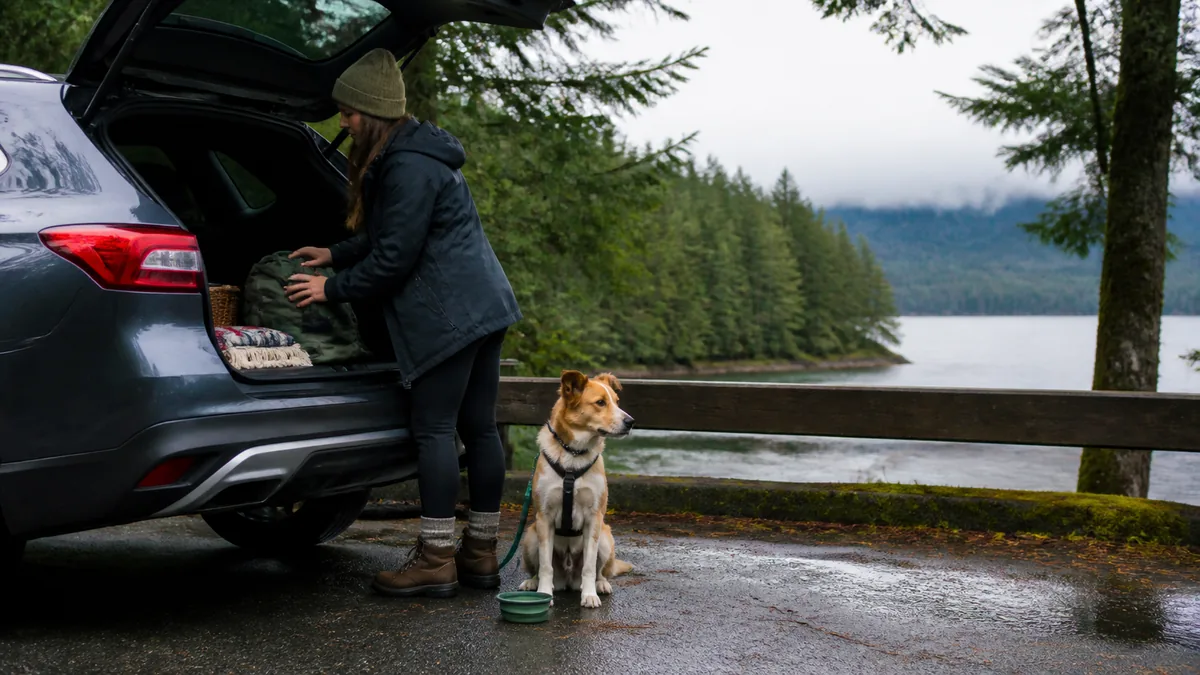
This guide covers road trips, BC Ferries, YVR airport travel, paperwork, packing, and when it may be kinder to arrange trusted care at home instead of bringing your dog along.
Quick Answer
For most Vancouver dog owners, the safest travel plan is to confirm pet rules before booking, keep your dog secured in the vehicle, bring familiar food and medication, carry licence and veterinary records, and plan stops before your dog becomes restless. For ferries, airports, hotels, parks, and border crossings, always check the current official policy before you leave.
Before You Go
Start with your dog, not the itinerary. A relaxed adult dog who enjoys car rides may love a weekend away. A nervous puppy, senior dog, reactive dog, or dog with medical needs may find the same trip stressful.
- Confirm your destination allows dogs and ask about size, breed, number-of-pet, and fee rules.
- Check local leash rules and off-leash areas before planning park stops.
- Save your regular veterinarian's number and the nearest emergency clinic at your destination.
- Pack enough of your dog's regular food to avoid a sudden diet change.
- Make sure your dog's ID tag, microchip information, and licence details are current.
If your dog is young or newly adopted, review our guides to your puppy's first vet visit and adopting a rescue dog in Vancouver before planning a bigger trip.
Travel Care Decision Snapshot
Some dogs love travel; others are calmer staying with a trusted caregiver. Decide based on your dog’s comfort, not just convenience.
- Consider age, health, anxiety, car comfort, heat, ferry rules, flight stress, and recovery time.
- Boarding may be kinder for dogs who panic during travel or cannot settle in unfamiliar places.
- Plan medication, food, documents, and emergency contacts before departure day.
Road Trip Planning
Road trips are usually the easiest form of dog travel because you control the pace. The goal is to keep your dog secure, hydrated, cool, and able to settle.
| Planning point | What to do |
|---|---|
| Vehicle safety | Use an appropriately fitted restraint or carrier with relevant independent crash-test evidence and install it as directed. A movement-limiting barrier alone does not establish crash protection. Do not let your dog ride loose in the front seat. |
| Breaks | Plan short stops for water, bathroom breaks, and sniffing before your dog becomes uncomfortable. |
| Heat | Never leave your dog unattended in a parked vehicle. Temperatures can become dangerous quickly. |
| Food | Keep meals familiar and avoid rich road-trip snacks that may upset your dog's stomach. |
| Exercise | Give your dog a calm walk before a long drive rather than relying on rest stops alone. |
For pre-trip exercise near home, see our guides to off-leash dog parks in Vancouver and how much exercise your dog needs.
BC Ferries with Dogs
Check the pet arrangements for your sailing. BC Ferries requires dogs to be held on a leash no longer than one metre and pets to remain in permitted areas with their guardian. Dogs with a bite history or aggressive behaviour are prohibited in designated pet areas. Indoor spaces, outdoor areas and vehicle-deck arrangements vary by vessel; follow posted rules and crew directions.
For longer sailings, plan extra carefully. Bring water, waste bags, bedding, medication, and anything your dog needs to remain comfortable if access is limited. A dog who is reactive, heat-sensitive, or very anxious may be safer with care at home than on a long sailing.
Ferry notes for South Vancouver travellers
From Marpole, the Tsawwassen terminal is about 30 minutes south via Highway 99 and the tunnel, which makes Vancouver Island, the Southern Gulf Islands and the Sunshine Coast (via Horseshoe Bay, about 45 minutes north) realistic weekend trips. On the big Tsawwassen–Swartz Bay and Duke Point sailings, dogs travel either on the vehicle deck or in the designated pet areas; they are not allowed in the passenger lounges or cafeterias. On a hot day, a 95-minute crossing on a closed vehicle deck is uncomfortable, so book a sailing that lets you stay with the dog in a pet area, bring water and a mat, and arrive early enough to be directed to the right deck. Small dogs in carriers have more flexibility as foot passengers.
Dog-friendly destinations by drive time from Marpole
| Destination | Approx. drive | Why dogs do well there | Watch for |
|---|---|---|---|
| Boundary Bay and Centennial Beach (Delta) | 40 min | Long flat dyke walks, off-leash beach section | Wind, no shade, seasonal bird closures |
| Squamish | 1 hr | Riverside trails, dog-tolerant patios, Alice Lake area | Bears in season, cold fast water |
| Harrison Hot Springs and Harrison Mills | 1 hr 45 min | Lakeshore and river flats, quieter than Whistler | Eagles and salmon carcasses in fall |
| Whistler | 2 hr | Valley Trail, Lost Lake dog beach, dog-friendly village patios | Summer crowds, leash rules on most trails |
| Sunshine Coast (Gibsons, Sechelt) | Ferry + 30 min | Beaches, forest trails, relaxed pace | Ferry timing on long weekends |
| Tofino and Ucluelet | Ferry + 3 hr | Long beach walks; many rentals allow dogs | Wolves on beaches, leash requirements in Pacific Rim National Park Reserve |
| Okanagan (Kelowna, Penticton) | 4 hr | Lake beaches with off-leash sections, wineries with dog-friendly grounds | Summer heat, hot sand, wildfire smoke |
Crossing into the United States
The Peace Arch and Pacific Highway crossings are about 40 minutes from Marpole, and US rules for dogs changed in 2024. At minimum, expect to show proof of a current rabies vaccination, and check the current CDC dog-import requirements before every trip because the form and microchip rules have been revised more than once. Coming back into Canada, CFIA requires a valid rabies certificate for dogs over three months. A dog that has been in the US for a day trip is treated the same as one that has been away for a month, so carry the paperwork even for a short run to Bellingham.
YVR and Air Travel
YVR allows pets in the terminal when they are controlled safely. YVR's current guidance says pets must be in a kennel or on a non-retractable leash no longer than 4 feet in permitted public areas, with stricter carrier rules in some locations. Airlines set their own rules for cabin, checked, and cargo travel, so confirm directly with your airline before booking.
If you are crossing an international border, check the Canadian Food Inspection Agency and destination-country requirements early. Pet travel paperwork can depend on destination, timing, age, vaccination status, health certificates, and whether your dog is returning to Canada or entering another country.
For flight days when your dog is not travelling, consider dog boarding near Vancouver Airport so your dog can stay in a familiar, calm routine while you travel. For planned airport-related support, see our Vancouver pet transportation service for local pickup and drop-off options in Vancouver.
YVR & Boarding Backup Plan
Flight days go better when you have a backup plan for delays, early departures, and dogs who are not suited to airport stress.
- Confirm pickup windows, alternate contacts, and delay communication.
- Keep food, medication, leash, harness, and comfort items labelled and accessible.
- Consider YVR-adjacent boarding when travel would be harder on your dog than staying nearby.
Packing Checklist
Adapt this list to your trip and your dog. The print control opens your browser’s print options, where you can print on paper or save a PDF.
- Leash, harness, collar, and ID tags
- Food, treats, medication, and feeding instructions
- Water and travel bowl
- Waste bags, towel, and cleanup supplies
- Licence, vaccination records, microchip information, and vet contact details
- Bed, blanket, or familiar item from home
- Crate, carrier, seat restraint, or other travel-safety equipment
- Basic first-aid supplies and any veterinarian-recommended medications
For a safety refresher, see our guide to emergency first aid for dog owners.
When Boarding May Be Kinder
Not every trip is a good dog trip. If the itinerary involves long restaurant days, hot weather, crowded events, air travel stress, strict accommodation rules, or limited bathroom breaks, your dog may be happier with a trusted caregiver.
At Marpole Dog Walking & Boarding Service, we focus on calm routines, familiar food, small-group care, and kennel-free boarding for dogs who are a good fit. If you are planning travel, check availability early so there is time to confirm fit and routine.
Check Boarding Availability & FitRelated Guides
Check off each item as you pack. Use Print / Save Checklist for a paper copy or PDF.
Travel packing checklist · Marpole Dog Walking & Boarding · marpoledogwalking.com
Frequently Asked Questions
Can I bring my dog on BC Ferries?
Usually yes, but your dog must follow BC Ferries' current pet rules and may need to stay in your vehicle or a designated pet area depending on the vessel and route.
Can my dog walk through YVR?
YVR permits pets in certain public terminal areas when controlled, but rules vary by area. Airlines also have their own pet-travel requirements, so confirm with both YVR and your airline.
Do I need paperwork to travel with my dog?
For local road trips, keep licence and veterinary records handy. For flights or border crossings, check airline, CFIA, and destination-country requirements well ahead of time.
Should I bring my dog or arrange boarding?
Choose the option that best protects your dog's comfort and safety. If the trip will involve heat, long waits, crowds, or limited dog-friendly time, boarding may be the kinder choice.
Sources
- BC Ferries: travelling with pets
- YVR: travelling with pets
- Canadian Food Inspection Agency: travelling with pets
- City of Vancouver: licensing your dog
Finish your travel handover
Use the packing list for belongings. Keep booking references and provider confirmations with your own travel records. If someone else will care for your dog, give them the completed care sheet privately before the handoff.
Download the dog-care handoff sheet (PDF, 2 pages) — record routines, settling cues, agreed belongings, contacts and both handoffs.
Three confirmations before departure
- Transport: record the provider, route, date checked and its confirmation of the pet arrangement. Keep its instructions and any required booking together.
- Stay: confirm the accommodation’s pet arrangements, practical limits and backup if the booking changes.
- Handoff: agree who has the dog at each stage, pickup and return windows, and whom to contact if delayed.
Fictional example: “Ferry pet arrangement: provider instructions checked 23 September; recheck before departure. Still to resolve: where to wait if sailing is delayed.” A packed bag does not mean the transport or border requirements are verified.