
Preparing Your Dog for Overnight Boarding
Overnight boarding goes more smoothly when your dog arrives with familiar routines, clear instructions, and a caregiver who understands what helps them settle. The goal is not to pack everything from home. It is to make the first evening, bedtime, morning, meals, walks, and pickup as predictable as possible.
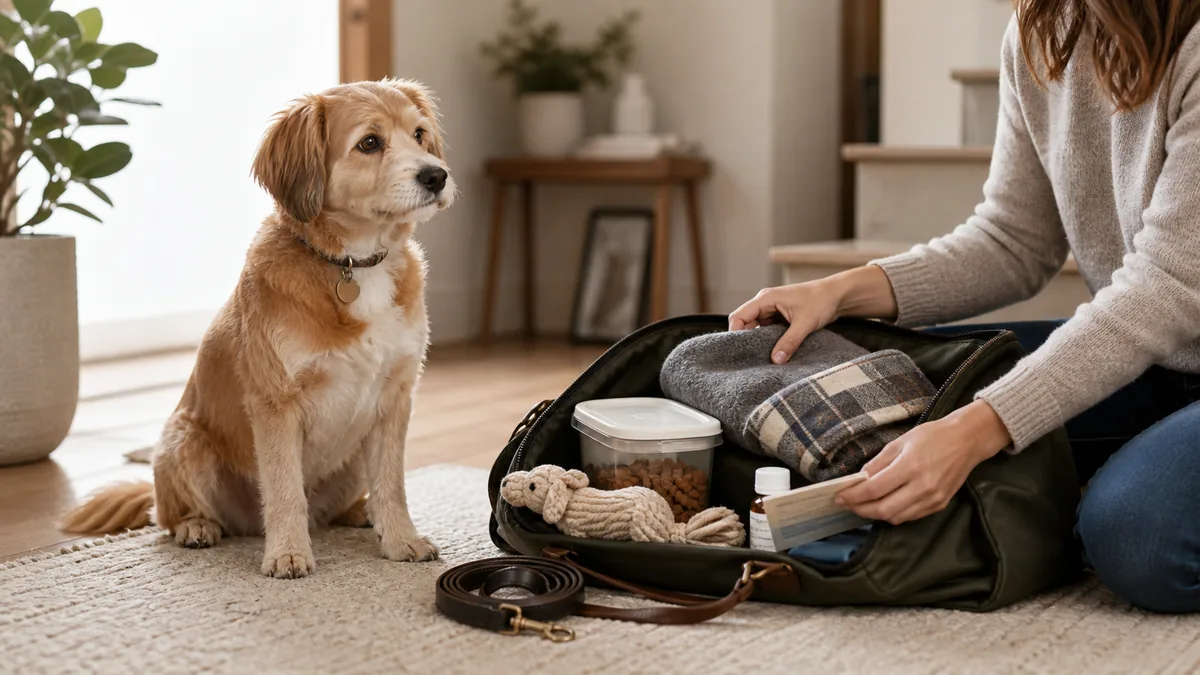
This guide focuses on the practical steps Vancouver dog owners can take before a boarding stay: what to ask, what to pack, what to share, and how to prepare your dog without creating extra stress.
Quick Prep Summary
Before your dog boards overnight, confirm the care environment, send accurate routine notes, pack normal food, label medication clearly, update emergency contacts, and avoid dramatic goodbyes. A calm handoff helps your dog read the situation as ordinary rather than alarming.
| Before boarding | Why it matters |
|---|---|
| Confirm sleeping arrangements and overnight supervision. | Boarding is not just daycare. Your dog needs a safe plan for evening, bedtime, and morning. |
| Send feeding, walk, medication, and behavior notes. | Specific instructions prevent guesswork and help the caregiver spot anything unusual. |
| Pack regular food and any permitted familiar item. | Keeping meals and scent cues familiar can reduce stomach upset and stress. |
| Provide emergency contacts and veterinary information. | If plans change or your dog needs care, the provider can act quickly. |
Confirm Fit Before the Stay
The best preparation starts before you pack a bag. Make sure the boarding setup is appropriate for your dog’s temperament, age, health, and comfort around other dogs. Some dogs do well in a calm home setting. Others are happier with a house sitter, a private suite, or a more structured facility.
Ask where your dog will sleep, how many dogs will be present, who is responsible overnight, how dogs are separated during meals, and what happens if your dog does not settle. A responsible provider should be comfortable answering those questions plainly.
For a fuller comparison of boarding options, see our Vancouver dog boarding guide.
Share Your Dog’s Real Routine
Owners sometimes describe the dog they hope they have rather than the dog who actually lives with them. It is better to be honest. If your dog barks at hallway noise, guards food, gets nervous at bedtime, needs a late bathroom break, dislikes having paws handled, or eats slowly, say so.
Useful notes include:
- Normal meal times and exact portions.
- Walk timing, preferred routes, and bathroom habits.
- Medication, supplements, allergies, and sensitivities.
- Sleeping routine, including crate, bed, room, or door preferences.
- Reactivity, guarding, anxiety, escape attempts, or noise triggers.
- Commands, handling cues, and calming routines that work at home.
Overnight Handoff Snapshot
The best boarding handoff is honest and specific. Small details about sleep, food, bathroom timing, and stress signals can make the first night much easier for your dog.
- Normal bedtime, wake-up time, bathroom schedule, and feeding routine.
- Comfort cues, anxiety signs, favorite rest spots, and anything that helps your dog settle.
- Medication instructions, vet contact, emergency contact, and permission notes.
- Triggers such as elevators, traffic, other dogs, thunderstorms, or being left alone.
What to Pack
Pack for consistency, not clutter. Your boarding provider may have specific rules, so check before bringing large beds, toys, raw food, chews, or items that could cause conflict in a shared space.
- Food: Bring enough of your dog’s usual food for the stay, plus a little extra in case travel plans change.
- Medication: Use original packaging where possible and include written dosing instructions.
- Leash and harness: Bring equipment your dog already uses comfortably.
- Routine notes: Keep instructions short, clear, and practical.
- Emergency contacts: Include your veterinarian and a local backup contact if you are traveling.
- One familiar item: A small blanket or washable item with home scent may help, if the provider allows it.
Health, Medication, and Emergency Details
Health requirements vary by provider. Ask what documentation is needed before the stay, including vaccination records, parasite prevention, and any waiting period after recent illness or vaccination. If your dog has a medical condition, confirm whether the provider is comfortable with the level of care required.
If medication is involved, write down the dose, time, storage instructions, what the medication is for, and what to do if a dose is missed or your dog refuses food. Do not rely only on a quick verbal explanation at drop-off.
What to Expect the First Night
Even confident dogs may need time to settle in a new environment. The first night is often about learning the smells, household sounds, sleeping routine, and where safe resting spaces are. A little restlessness does not automatically mean the stay is going badly.
Ask your provider how they handle bedtime, nighttime bathroom needs, early waking, barking, and dogs who need extra reassurance. The answer should be calm and specific, not just “they will be fine.”
First Night Comfort Check
Some dogs settle quickly, while others need extra reassurance during the first night away from home. A familiar routine helps us tell the difference between normal adjustment and a sign that the setup may not be right.
- Send food and treats your dog already knows instead of introducing something new.
- Pack a familiar blanket, bed, or small comfort item if your dog uses one.
- Tell us what your dog usually does when they are tired, worried, or ready to sleep.
- Share anything that should prompt an update, adjustment, or vet call.
Optional Day of Daycare
Many people like to try a day of daycare so that everyone can get to know each other. Although this is not required, we do find that it can be helpful.
A shorter visit can help assess comfort, routine fit and compatibility. Providers may require an assessment or trial before accepting a dog; ask about its purpose, cost and timing. At Marpole Dog Walking, a day of daycare is a good way for everyone to get to know each other, but it is not mandatory. We do not offer familiarization meetings; see our daycare rates.
Pickup and Aftercare
After boarding, some dogs are tired, extra affectionate, or slightly out of rhythm for a day. Keep the first evening home calm, offer water, return to the normal feeding routine, and avoid stacking a major grooming appointment, dog park trip, or intense training session immediately after pickup.
Ask the caregiver how your dog ate, slept, walked, and settled. Specific feedback helps you decide whether the arrangement is a good fit for future stays.
Boarding Prep Checklist
- Confirm dates, drop-off time, pickup time, cancellation terms, and total cost.
- Confirm where your dog sleeps and who is responsible overnight.
- Send feeding, medication, bathroom, walking, and behavior notes.
- Pack normal food, medication, leash, harness, and any approved familiar item.
- Provide veterinary information and emergency contacts.
- Tell the provider about anxiety, reactivity, guarding, allergies, or health changes.
- Keep drop-off calm and brief.
- Ask for practical feedback at pickup.
FAQ
Should I pack my dog’s usual food?
Yes. Boarding is not the time to change diets unless your veterinarian has advised it. Usual food helps reduce the risk of stomach upset and keeps the routine familiar.
Should my dog visit before staying overnight?
It can help, especially for dogs new to boarding. Marpole Dog Walking suggests an optional day of daycare rather than a familiarization meeting; other providers may require an assessment or trial. Confirm the policy and any fee before making plans.
What if my dog has never boarded before?
Start with clear communication and a realistic fit check. Share your dog’s actual routine and sensitivities, ask about overnight supervision, and consider a shorter introduction before a longer trip when practical.
Can my dog board if they take medication?
Possibly. Policies vary by provider and by medication. Confirm the details before booking and provide written instructions, original packaging where possible, and emergency guidance.
How do I make drop-off easier?
Stay calm, keep the goodbye short, and avoid repeatedly returning after leaving. Dogs often take emotional cues from their owners, so a steady handoff helps.
Related Resources
- How to choose safe dog boarding in Vancouver
- How to choose a safe dog daycare in Vancouver
- Dog boarding with Marpole Dog Walking & Boarding Service
- Contact us to discuss your dog’s needs and availability
- Puppy Vaccination Schedule and Why It Matters
- Kennel-Free Dog Boarding: Benefits, Limits and Fit
- Dog Boarding Near Vancouver Airport (YVR)
- Choosing the Right Dog Food
Planning an overnight stay? Marpole Dog Walking & Boarding Service provides small-scale, in-home care for compatible dogs in Marpole and South Vancouver. If you are considering boarding, we can talk through your dog’s routine, comfort level, dates, and whether our home setting is the right fit.
The Final Handoff Check
Before leaving, ask the caregiver to confirm the parts of the written routine that are easiest to misunderstand. The aim is a shared understanding, not a longer packing list.
- Identify the correct food container and the agreed feeding instructions.
- Confirm which comfort items are accepted and which should stay home.
- Check pickup timing, the contact for delays and the local backup arrangement.
- Confirm how any health or medication instructions have been agreed privately; do not improvise at drop-off.
If something has changed since the original conversation, say so before care begins. Review what should be confirmed for a stay. If pickup or delivery is part of the plan, read the transport handoff guidance so responsibility at each end is clear.
Comments are closed.