How Much Exercise Does Your Dog Need?
Most dogs need daily movement, but the right amount is not the same for every dog. A young working breed, a small companion dog, a senior, and a nervous rescue may all need very different routines, even if they live in the same Vancouver neighbourhood.
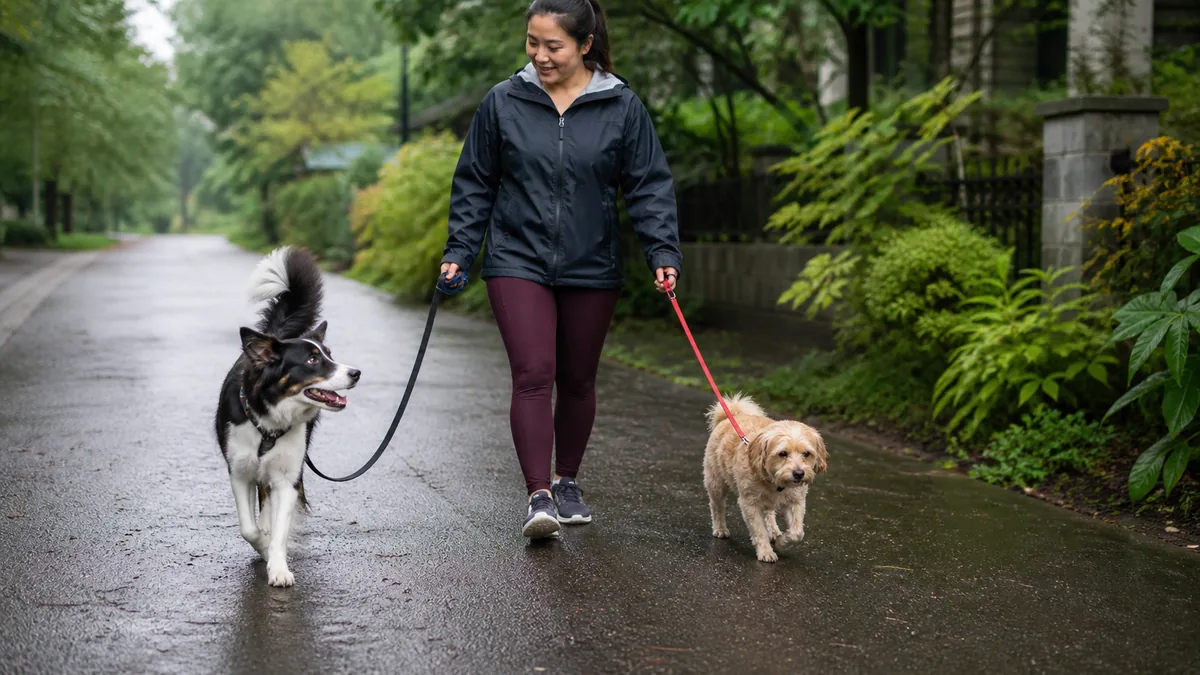
A useful exercise plan balances physical movement, sniffing, mental enrichment, rest, and weather realities. In Marpole and South Vancouver, that might mean a steady neighbourhood walk, a quiet sniff loop, a short rainy-day outing, a park visit, or a calmer indoor enrichment session when conditions are poor.
Quick Answer
There is no single daily exercise target that suits every dog. Start with activity your dog comfortably tolerates and adjust for health, fitness and weather. Puppies need shorter outings and more rest. Senior dogs often benefit from gentler, more frequent movement. Very active breeds may need longer walks, training games, scent work, or supervised off-leash time in appropriate places.
The best test is your own dog. A good routine leaves your dog relaxed and content at home, not exhausted, sore, frantic, or still bursting with unused energy.
Why Exercise Matters
Exercise supports weight, joints, digestion, sleep, and general health. It also gives dogs a healthy outlet for normal behaviours: sniffing, exploring, moving, watching, and using their brain.
Under-exercised dogs may become restless, bark more, chew, dig, pull hard on leash, or struggle to settle. Over-exercised dogs may become sore, irritable, overtired, or more reactive. The goal is not to tire your dog out at any cost. The goal is a steady rhythm your dog can enjoy and recover from.
Exercise Needs by Age
| Life stage | Useful approach | Watch for |
|---|---|---|
| Puppies | Short, frequent outings with gentle play, socialization, and lots of rest. | Overdoing stairs, jumping, long runs, or repetitive high-impact activity. |
| Adolescents | More movement, but still with structure: walks, training games, sniffing, and calm recovery time. | Over-arousal, leash frustration, and wild play that teaches poor habits. |
| Adults | Match the routine to breed, health, temperament, and energy level. | Weight gain, boredom, pulling, or soreness after big activity days. |
| Seniors | Shorter, gentler walks, traction-conscious routes, sniffing, and low-impact movement. | Stiffness, slipping, fatigue, heat/cold sensitivity, and changes in appetite or comfort. |
Exercise Needs by Energy Level
Lower-energy dogs
Some dogs are content with a few shorter walks, bathroom breaks, and calm companionship. These dogs still need movement and enrichment, but they may not enjoy long hikes, busy parks, or high-speed play.
Moderate-energy dogs
Many family dogs do well with a morning walk, an afternoon or evening walk, and some sniffing or training time. This is often the most sustainable pattern for city life.
High-energy dogs
Active breeds and young athletic dogs may need longer walks, structured play, training, scent work, hiking, or supervised off-leash time where legal and appropriate. These dogs often need mental work as much as distance.
If your schedule makes daily exercise difficult, dog walking in Marpole and South Vancouver or carefully selected small-group dog daycare in Vancouver can help, especially when the care provider keeps groups small and matches activity to the individual dog.
Exercise Fit Snapshot
A useful walk should leave your dog settled, not wired, sore, or overwhelmed. The right amount of exercise changes with age, health, weather, route difficulty, and stress level.
- Reassess the routine: pacing, attention-seeking or difficulty settling can reflect stress, discomfort or other unmet needs, not just too little exercise. New or persistent changes deserve veterinary advice.
- Needs less or gentler: lagging, stiffness, heat sensitivity, stress signals, or poor recovery after walks.
- Often overlooked: sniffing, calm exploration, and decompression can be as useful as distance.
Vancouver Weather and Route Planning
Vancouver dogs live with rain, wet sidewalks, muddy grass, dark winter afternoons, and occasional summer heat. A good exercise routine adapts to the day.
- Rain: choose shorter loops, dry paws and bellies afterward, and use indoor enrichment if the weather is miserable.
- Cold: small, thin-coated, senior, or arthritic dogs may need a jacket and shorter walks.
- Heat: avoid hot pavement and exercise earlier or later in the day during warm spells.
- Busy parks: choose quieter times if your dog is nervous, young, reactive, or easily overwhelmed.
For local ideas, see our guide to dog walking routes in Marpole and our overview of South Vancouver dog parks.
Vancouver Walk Adjustment Notes
In Vancouver, the same dog may need different walks in rain, heat, smoke, or busy neighborhood conditions. Adjusting the route is part of responsible exercise planning.
- Use shaded or quieter routes when heat, traffic, or stimulation is high.
- Shorten walks when footing is slick or your dog is tired, sore, or stressed.
- Mix movement with sniffing and calm pauses for better recovery.
A rainy-day tier system for Vancouver
“Bad weather” covers very different days here. Deciding in advance what each tier means saves the daily debate.
| Conditions | Walk plan | Make up the difference with |
|---|---|---|
| Steady light rain (most of November to March) | Normal walk. Dogs adapt faster than owners do. | Towel routine at the door |
| Atmospheric river, heavy wind | Short, purposeful outings for toileting; skip the destination walk. | Indoor scent games, a stuffed frozen toy, training reps |
| Heat above roughly 27°C | Walk before 8 am or after 8 pm; back-of-hand pavement test first. | Shade, water, a cooling mat, calm indoor play |
| Wildfire smoke, AQHI 7 or higher | Toileting only, especially for seniors, puppies and flat-faced breeds. | Indoor enrichment; keep windows closed |
| Rare snow or ice | Short walks on gritted routes; rinse paws after salt. | Indoor stairs or hallway fetch if permitted |
Marpole routes with rough times
Times are for an unhurried adult dog with sniffing stops; adjust for pace.
- Fraser River Park path, out and back from the Angus Drive lot: 30 to 40 minutes, flat.
- Winona Park perimeter plus the surrounding blocks: 15 to 25 minutes, flat.
- Arbutus Greenway from Milton Street to about 57th and back: 40 to 50 minutes, gentle grade.
- Marpole Village loop along Granville and the side streets: 20 to 30 minutes, urban distractions.
Details for each are in our Marpole walk routes guide.
Signs Your Dog Needs More or Less
Changes that deserve a closer look
- Restlessness or pacing at home.
- Chewing, digging, barking, or repeated attention-seeking; these do not establish boredom as the cause.
- Pulling hard at the start of every walk.
- Difficulty settling after normal household activity.
- Weight gain when diet has not changed.
Signs your dog may need less or gentler activity
- Limping, stiffness, or reluctance to get up after exercise.
- Excessive panting, lagging behind, or refusing to continue.
- Raw or worn paw pads.
- Irritability, over-arousal, or poor sleep after intense outings.
- Changes in appetite, bathroom habits, or energy after big activity days.
If those signs are new, persistent, or severe, check with your veterinarian before increasing or changing exercise.
Sample Daily Routines
Use these as starting points, not rules. The right routine depends on your dog’s health, age, temperament, training, and recovery after activity.
| Dog type | Possible daily rhythm | Adjustment to watch |
|---|---|---|
| Young active adult | Morning walk, afternoon exercise or training, evening decompression sniff walk. | If your dog gets wilder after activity, reduce intensity and add calmer sniffing or training. |
| Busy family dog | Two predictable walks, short training games, and a quiet settle routine after dinner. | If walks are rushed, add sniff breaks rather than simply walking farther. |
| Senior dog | Several shorter walks, gentle movement, soft footing, and rest between outings. | If stiffness increases, shorten the walk and ask your vet before adding distance. |
| Nervous or reactive dog | Quieter route, more distance from triggers, sniffing, and shorter success-based outings. | If the walk creates repeated reactions, choose an easier route or time of day. |
Building a Routine
Start with what your dog can comfortably handle today, then adjust slowly. A realistic routine is usually better than occasional big bursts.
- Choose two daily anchor walks when possible.
- Let your dog sniff, not just march.
- Add brief training or scent games for mental work.
- Use quieter routes for nervous dogs and busier spaces only when your dog can handle them.
- Increase time or intensity gradually.
- Track how your dog behaves afterward: calm, sore, wired, anxious, or content.
At Marpole Dog Walking & Boarding Service, we see the difference a consistent routine makes. Some dogs need a brisk neighbourhood walk. Others need a slower sniff walk and reassurance. The best exercise plan respects the dog in front of you.
FAQ
Is one walk a day enough for a dog?
For some low-energy dogs, one longer walk plus bathroom breaks and enrichment may be enough. Many dogs do better with two shorter walks and a little mental activity.
Do dogs need off-leash time?
Some dogs benefit from safe off-leash running, but it is not required for every dog. Recall, temperament, legal rules, park design, and crowd levels all matter.
Can mental enrichment replace a walk?
It can help on difficult weather days, recovery days, or for dogs who need lower-impact activity. Most healthy dogs still benefit from outdoor movement, sniffing, and bathroom breaks.
How do I know if my dog is tired or overstimulated?
A tired dog usually settles comfortably. An overstimulated dog may pace, bark, mouth, jump, or struggle to relax. If activity seems to make behaviour worse, try calmer walks, more sniffing, and shorter sessions.
Related Reading
- Leash training and walking etiquette in Vancouver
- Seasonal care for Vancouver rain and cold
- Dog-friendly hiking trails near Vancouver
- Check dog walking availability
- Understanding Your Dog’s Body Language
- Managing Separation Anxiety in Dogs
Make the care handover specific
Record your dog’s usual walk, preferred pace, rest stops and any instructions from your veterinarian. Share those details when discussing care instead of requesting a fixed distance without context.