Your Puppy’s First Vet Visit in Vancouver
Your puppy’s first vet visit is one of the first practical steps in building a healthy, confident life together. It gives your veterinarian a chance to check your puppy’s health, review records, discuss vaccines and parasite prevention, and answer the questions that come up during the first few days at home.
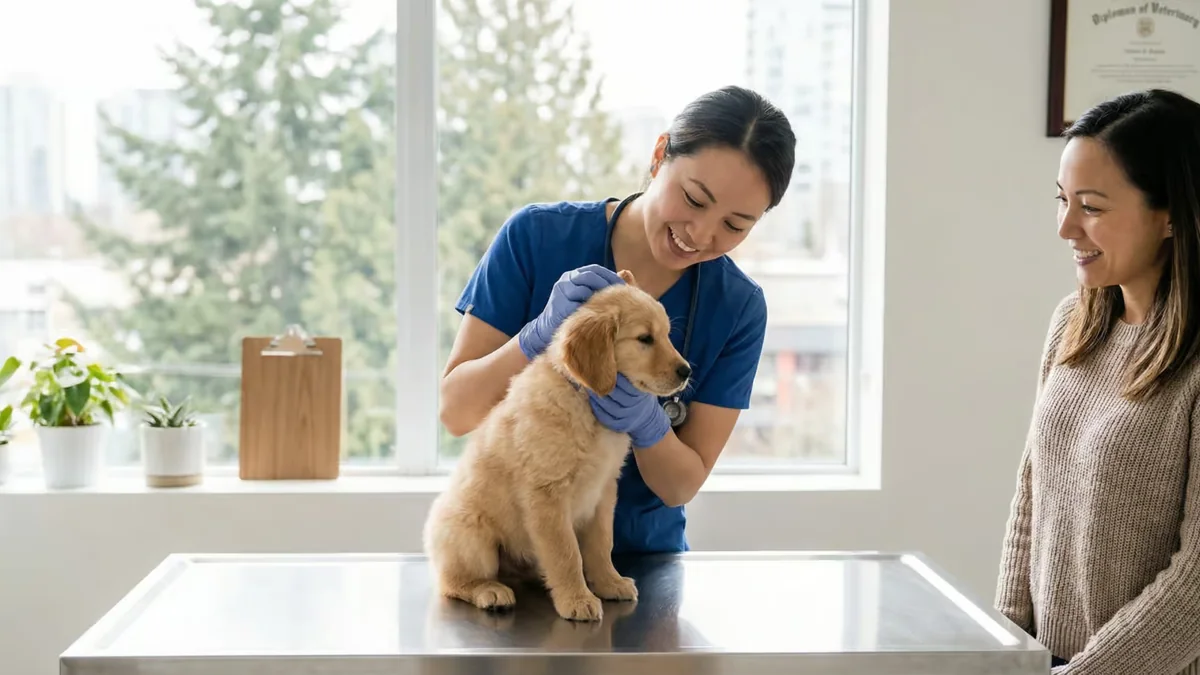
It also helps your puppy learn that the clinic can be a calm and friendly place. A prepared, low-stress first visit can make future appointments easier for both of you.
At Marpole Dog Walking & Boarding Service, we work with many puppies and new dog owners in Marpole and South Vancouver. This guide explains what to bring, what your vet may check, and how to make the appointment smoother.
Quick Answer
Bring your puppy’s health records, vaccination and deworming information, a fresh stool sample if the clinic requests one, a leash or carrier, treats, and a written list of questions. Expect a nose-to-tail exam and a conversation about vaccines, parasites, food, growth, behaviour, and what symptoms should prompt a same-day call.
What to Bring
Being prepared helps the appointment go smoothly. Before you leave home, gather anything your veterinarian may need to understand your puppy’s history and current routine.
- Health records from the breeder, rescue, shelter, or previous caregiver
- Vaccination and deworming information
- A fresh stool sample if the clinic requests one
- The food, treats, or supplements your puppy currently receives
- A secure leash, harness, collar, or carrier
- High-value treats for calm handling
- A written list of questions
If you do not already have a clinic, our guide to choosing a veterinarian in Vancouver can help you compare options before you book.
Puppy Vet Visit Prep Snapshot
Your first vet visit is easier when you bring practical routine details, not just paperwork.
- Bring vaccination or adoption records, medication details, and diet information.
- Ask about safe socialization, parasite prevention, and when outside care is appropriate.
- Write down appetite, bathroom habits, sleep, coughing, itching, or behavior concerns.
What the Vet Will Check
Your veterinarian will usually perform a nose-to-tail physical exam. This creates a useful baseline for your puppy’s health and gives you a chance to mention anything you have noticed at home.
- Eyes, ears, nose, mouth, teeth, and gums
- Heart and lungs
- Skin, coat, and signs of itching or irritation
- Belly, body condition, and growth
- Legs, joints, movement, and posture
- Behaviour, alertness, and comfort with handling
Tell your vet about appetite, stool, vomiting, coughing, itching, sleep, chewing, bathroom habits, and anything that feels unusual. Small details can be useful at a first visit.
Vaccines and Parasite Prevention
Your veterinarian will review your puppy’s age, health, lifestyle, and previous records before recommending next steps. Puppy vaccine schedules are individualized, so use your vet’s plan rather than trying to copy a generic schedule from the internet.
Topics may include core vaccines, booster timing, deworming, flea and tick prevention, stool testing, and when it is safe for your puppy to visit higher-traffic public areas. In Vancouver, flea prevention is often discussed because fleas can be a year-round concern.
For more detail, review the puppy vaccination schedule and our guide to parasite prevention in Vancouver.
Vancouver-Specific Notes for New Puppy Owners
A few topics come up more often in Vancouver than in a generic puppy guide, and the first visit is a good time to raise them.
Leptospirosis. Vancouver’s raccoons, rats, standing water and river foreshore mean many local vets recommend the leptospirosis vaccine, which is not a core vaccine everywhere. Ask whether it fits your puppy’s likely routine, especially if you expect to walk near the Fraser River or in wooded parks.
Rain-season socialization. A puppy whose critical socialization window falls in November through March will meet umbrellas, rain jackets, reflective gear and dark late-afternoon walks. Ask your vet how to balance safe early exposure with vaccine timing rather than waiting until the series is complete.
Licensing. The City of Vancouver requires dogs to be licensed. Our Vancouver dog licence guide covers current fees, how to apply, and why a licence, tag and microchip work best together. Ask the clinic to record the microchip number on your puppy’s file at this visit.
Records for care providers. If your puppy will join a walker, daycare or boarding home later, keep a copy of the vaccination record from this visit. We require standard vaccination and Bordetella records before a dog joins our daycare or boarding, and most reputable providers ask for the same.
Questions to Ask
It is easy to forget questions once you are in the clinic, so write them down ahead of time.
- What vaccine schedule should my puppy follow?
- When can my puppy safely meet other dogs?
- What food and portion size do you recommend?
- What signs should prompt a same-day call?
- When should we discuss spaying, neutering, or alternatives?
- Should my puppy be microchipped?
- How should I handle biting, chewing, sleep, and house training?
How to Make the Visit Less Stressful
A positive first experience matters. Puppies learn quickly, and your calm behaviour helps them feel safer.
- Arrive a few minutes early so you do not feel rushed.
- Bring small treats your puppy loves.
- Keep your voice calm and relaxed.
- Let your puppy observe before expecting interaction.
- Reward calm handling and recovery after the exam.
- Avoid crowded waiting-room greetings if your puppy is overwhelmed.
Some clinics allow short happy visits where puppies come in just for treats and gentle handling. Ask your clinic if that is an option.
Before Leaving: Confirm the Written Plan
- Next appointment: Confirm the date or booking window and who will arrange it.
- Any treatment: Ask the clinic to explain the written directions, storage and what to do if a dose is missed. Do not improvise instructions for a caregiver.
- Activity: Record what outings and dog contact are appropriate now, and when the advice should be reviewed.
- Follow-up: Ask which reactions or symptoms need a call, and which number to use outside regular hours.
Share only the care information a walker or sitter needs, with the veterinarian’s instructions kept intact. Use the socialization guide to plan suitable experiences and ask about local care availability once the activity plan is clear.
Frequently Asked Questions
How soon should I book my puppy’s first vet visit?
Book soon after your puppy comes home, especially if your breeder, rescue, or adoption paperwork recommends a timeline. If your puppy seems unwell, call a clinic promptly rather than waiting for a routine appointment.
Can I take my puppy outside before all vaccines are complete?
Ask your veterinarian. Puppies need careful socialization, but they also need protection from disease risk. Your vet can help you balance safe exposure with vaccine timing.
Should I bring my puppy’s food information?
Yes. Bring the brand, amount, feeding schedule, treats, and any supplements. Sudden food changes can upset a puppy’s stomach, so ask your vet before switching.
What if my puppy is nervous at the clinic?
That is common. Bring treats, keep handling gentle, and ask the clinic how they support nervous puppies. Early calm experiences can help your puppy build confidence.
Related Puppy Guides
- Preparing your home for a new puppy
- Introducing a new puppy to your home
- House training your puppy
- Puppy socialization in Vancouver
After your veterinarian confirms what is safe for your puppy, check availability with Marpole Dog Walking & Boarding Service for calm, consistent local puppy care support.
Check Boarding Availability & Fit