
Emergency First Aid for Dog Owners
As a dog owner, the best time to think about emergency first aid is before you actually need it. Knowing what to do — and what not to do — can help you stay calm and act quickly when your dog is injured or suddenly falls ill. Your first priority should always be safety: both yours and your dog’s. An injured or frightened dog may act unpredictably, so approach with caution.
First Things to Do in Any Dog Emergency
In a real emergency, simple steps matter most. Stay calm, keep yourself safe, move your dog away from immediate danger if you can do so safely, and call a veterinarian or emergency clinic before attempting treatment at home.
- Call first when possible. A clinic can tell you whether to come in immediately and what to do during transport.
- Keep movement limited. If trauma, pain, weakness, or neurological signs are possible, avoid unnecessary handling.
- Bring key information. Take medication names, packaging from anything your dog may have eaten, and notes about timing, symptoms, and recent events.
- Use first aid only as a bridge. The goal is to keep your dog stable until professional veterinary care is available.
Emergency Handoff Card
Every dog owner should have a simple emergency card that a walker, sitter, or boarding provider can use quickly.
- Vet clinic, emergency hospital, owner contact, alternate contact, and permission guidance.
- Medication, allergies, chronic conditions, mobility limits, and recent health concerns.
- Your dog’s normal behavior and signs that something is unusual.
Build a Canine First Aid Kit
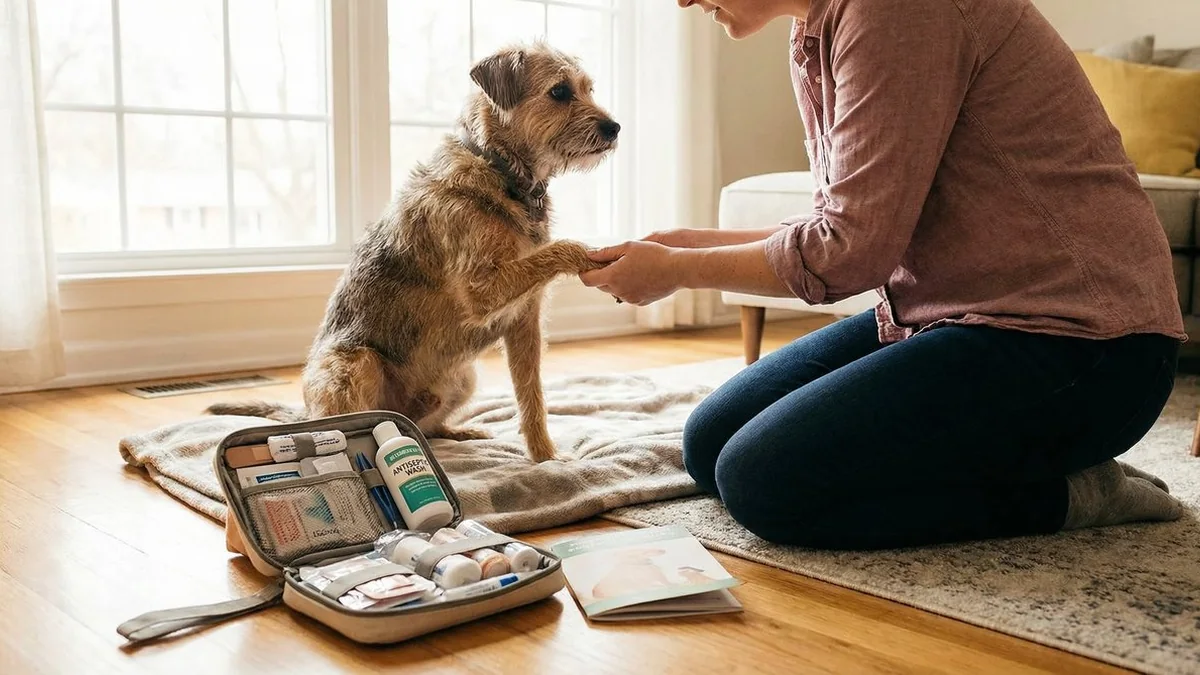
Every dog owner should have a basic first aid kit easily accessible at home and in the car. Key items to include:
- Contact information: Your primary vet’s phone number and the nearest 24-hour emergency clinic.
- Gauze and bandages: Non-stick sterile pads, gauze rolls, and self-clinging bandage tape (such as Vetrap).
- Cleaning supplies: Saline solution or a pet-safe wound wash. Do not use hydrogen peroxide or rubbing alcohol unless directed by a vet.
- Tools: Tweezers, blunt-nosed scissors for cutting bandages or trimming hair around a wound, and a digital thermometer.
- Safety gear: A muzzle or a soft roll of gauze to create a makeshift muzzle. Do not muzzle a dog that is vomiting, choking, or having difficulty breathing.
Recognizing Common Emergencies
Contact a veterinarian immediately if you observe any of the following signs:
- Breathing difficulties: Choking, excessive panting, pale or blue gums, or a sudden collapse.
- Trauma: Being hit by a vehicle, a severe dog bite, or a deep laceration.
- Suspected poisoning: Ingestion of chocolate, grapes, xylitol (found in some sugar-free products), antifreeze, rodenticides, or toxic plants.
- Bloat (Gastric Dilatation-Volvulus): Unproductive retching, a swollen or hard abdomen, restlessness, and signs of extreme pain. This is a critical emergency, especially in large and deep-chested breeds.
- Neurological signs: Seizures, sudden inability to use the hind legs, or severe disorientation.
Do-Not-Delay Signals
Some situations are not wait-and-see moments. When in doubt, call a vet or emergency hospital and follow their instructions.
- Trouble breathing, collapse, seizure, severe bleeding, bloat signs, poisoning concern, or major trauma.
- Repeated vomiting, inability to stand, pale gums, extreme pain, or sudden severe weakness.
- Heat distress, smoke exposure symptoms, or rapidly worsening behavior changes.
Basic First Aid Steps While En Route to the Vet
These steps are intended to stabilize your dog until professional veterinary care is available — they are not a substitute for it.
- Bleeding: Apply firm, direct pressure to the wound using a clean cloth or sterile gauze pad. If blood soaks through, do not remove the pad; place another one on top and continue applying pressure.
- Choking: Contact an emergency veterinarian immediately. Do not blindly sweep the throat or put yourself at risk of a bite. If your dog becomes unresponsive, promptly check breathing and heartbeat. If neither is present, or you cannot confirm both within 15 seconds, start CPR using the Red Cross dog CPR instructions, which show techniques for different body shapes. Have another person call the clinic and arrange urgent transport if possible. Veterinary assessment is needed even if the obstruction clears.
- Suspected heatstroke: Stop activity and move out of the heat. Start cooling immediately with cool running water over the body behind the neck, soaking through the coat; keep water away from the face. Cooling only the paws is not enough. Call an emergency veterinarian at once for cooling and transport instructions, including when to stop cooling. Do not delay while seeking an ideal water temperature. Urgent assessment is needed even if your dog seems better. See the RECOVER first-aid guidelines.
What NOT to Do
- Do not give human medications. Ibuprofen, acetaminophen, aspirin, and other common human drugs can be highly toxic or fatal to dogs.
- Do not induce vomiting without instruction. If your dog ingests a toxin, call your vet or an animal poison control line first. Some substances cause more damage coming back up.
- Do not delay professional care. First aid is meant to stabilize your dog until they can receive proper veterinary treatment, not to replace it.
Know Your Local Vancouver Emergency Resources
Familiarize yourself with the 24-hour emergency veterinary clinics in the Vancouver area before you need them. Program their numbers into your phone and know the fastest route to their locations. From Marpole, the practical question is which way you would drive: north up Oak or Granville into the city, or south over the Arthur Laing or Oak Street bridge into Richmond. Look up the two closest 24-hour hospitals in each direction now, confirm they still offer overnight emergency care (several Lower Mainland emergency clinics have changed hours since 2023), and save both numbers under a name you will find in a hurry. If poisoning is possible, your veterinarian may also direct you to an animal poison-control service. For guidance on finding a primary care provider, see our guide to How to Choose a Veterinarian in Vancouver.
Veterinary note: This guide provides general first-aid preparedness information for dog owners. It is not a substitute for professional veterinary care. In an emergency, contact your veterinarian or nearest emergency clinic immediately.
Poison Control and Vancouver-Specific Hazards
There is no free provincial animal poison line in BC. The two services most Canadian vets use are the ASPCA Animal Poison Control Center and the Pet Poison Helpline; both are open around the clock and both charge a consultation fee in US dollars, so keep a card handy and expect to be asked for the product, the amount, the dog’s weight and the time of exposure.
Hazards that come up repeatedly around Marpole and South Vancouver:
- Cannabis edibles and discarded joints on sidewalks and in parks. Dogs are far more sensitive to THC than people; wobbling, dribbling urine and a dazed look after a walk warrant a call to the vet.
- Dead fish on the Fraser foreshore in fall. Raw salmon and trout in this region can carry salmon poisoning disease, which is fatal without treatment but responds well when caught early. Vomiting, diarrhea and lethargy within a week of a riverbank scavenge is an emergency.
- Wild mushrooms after the first heavy autumn rains. Photograph what was eaten and call the vet; do not wait for symptoms.
- Blue-green algae in warm, still water in summer. Any pond with a posted advisory or visible scum is off limits, and a dog who swam in one and becomes ill needs immediate care.
- Coyotes are resident in Marpole, Oak Park and along the river. Small dogs are safest on leash at dawn and dusk.
- Rat and slug bait in laneways and gardens. Both are common in Vancouver and both are emergencies if eaten.
Frequently Asked Questions
What should I do first if my dog is hurt and I am alone?
Get yourself and the dog out of further danger, then call ahead to the clinic before you drive. A call lets them prepare and tells you whether to come in or manage at home. Muzzle or wrap a frightened dog in a towel before moving it; pain makes even gentle dogs bite.
What happens if a dog is injured or falls ill during a walk or a stay with you?
We contact you immediately using the numbers on file and, if the situation cannot wait, we seek veterinary care. This is why we ask for your vet’s details and an emergency contact before care begins.
Should I induce vomiting at home?
Not without a vet or poison-control service telling you to. Some substances cause more damage coming back up, and hydrogen peroxide is easy to overdose. Call first.
Is pet insurance worth it for emergencies?
A single emergency visit in Vancouver can run to several thousand dollars once imaging, overnight care or surgery is involved. Insurance, a dedicated savings account or a credit line are all workable; what matters is having one of them decided before the emergency. If cost is already a barrier, see our guide to low-cost veterinary help in Vancouver.
Sources and Further Reading
- VCA Animal Hospitals: First Aid for Dogs
- VCA Animal Hospitals: Common Emergencies in Dogs
- VCA Animal Hospitals: Heat Stroke in Dogs
- ASPCA Animal Poison Control Center
- Parasite Prevention in Vancouver
- Seasonal Dog Care in Vancouver
- Traveling with Your Dog from Vancouver
- Senior Dog Care in Vancouver
Need reliable daily care while you’re at work? Contact Marpole Dog Walking & Boarding Service to discuss your dog’s routine, fit, and current availability.
Looking for reliable dog walking in Marpole and South Vancouver in Marpole or nearby South Vancouver? Check Availability to see if we’re a good fit.
Check Boarding Availability & Fit