
Senior Dog Care:
Mobility, Comfort & Daily Routines
Senior dogs often need less intensity, but more thoughtfulness. A calm routine, good footing, shorter walks, familiar caregivers, and regular veterinary checkups can help an older dog stay comfortable and confident for years.
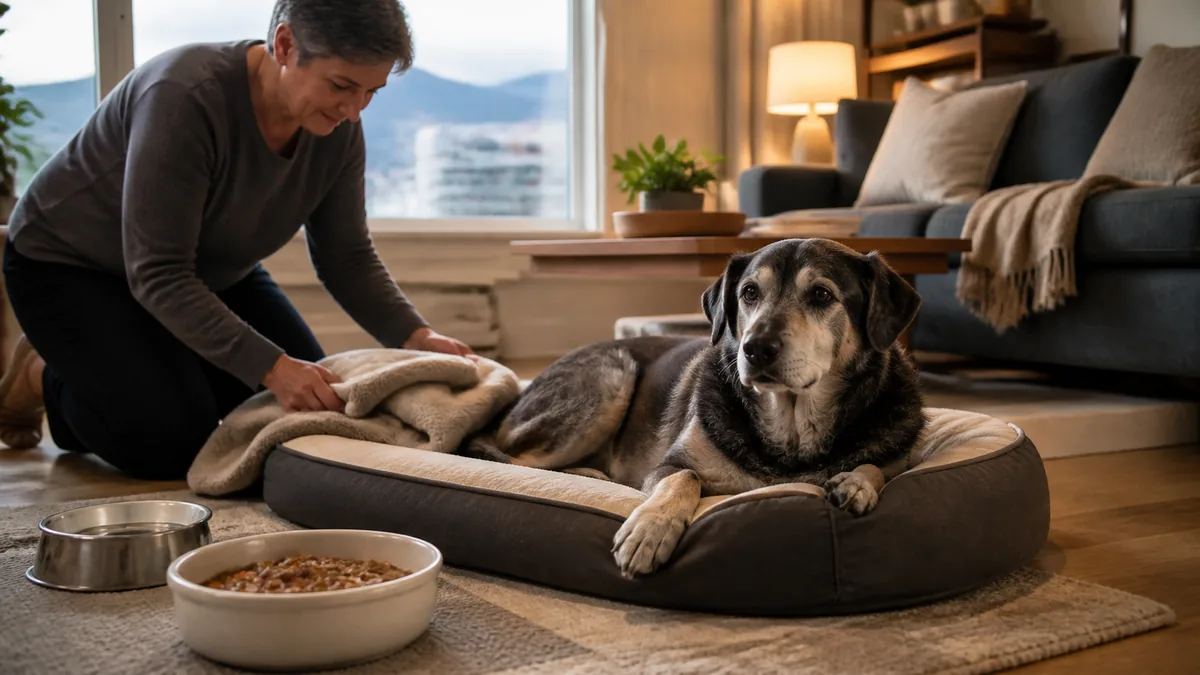
At Marpole Dog Walking & Boarding Service, senior care usually means slowing down, watching carefully, and respecting the dog in front of us. Some older dogs still love a brisk walk. Others do best with a quiet sniff around the block, help on stairs, and a predictable day.
Quick Answer
Most senior dogs benefit from shorter, more frequent walks, non-slip surfaces at home, a healthy body weight, and a routine that reduces jumping, slipping, and overexertion. Sudden limping, confusion, appetite changes, coughing, accidents in the house, or major behaviour changes should be discussed with a veterinarian.
Mobility Support
Mobility changes are one of the first things many owners notice. Your dog may hesitate before stairs, take longer to stand up, slip on hard floors, or tire more quickly on familiar routes.
- Use rugs, runners, or yoga mats on slippery floors.
- Add ramps or low steps for couches, beds, and vehicles.
- Choose a supportive harness for dogs who need help rising or walking.
- Keep nails trimmed so paws make better contact with the ground.
- Break one long walk into two or three shorter outings when needed.
If mobility changes come on suddenly, involve your vet. Arthritis is common in older dogs, but limping can also come from injury, infection, neurological issues, or pain that needs treatment.
Nutrition and Weight
Senior nutrition is not one-size-fits-all. Some older dogs need fewer calories because they move less. Others lose muscle and need a diet plan that protects strength. The best starting point is a body-condition discussion with your veterinarian.
In practical terms, watch for weight creep, sudden weight loss, changes in thirst, difficulty chewing, and new digestive problems. If you are changing foods, make the transition gradually unless your vet advises otherwise. Our dog food guide explains how to read labels and compare options more carefully.
Exercise and Mental Enrichment
Older dogs still need movement, but the goal changes from tiring them out to keeping joints, muscles, senses, and confidence working. Gentle walking, sniffing, food puzzles, simple training refreshers, and calm social time can all help.
- Choose flat, predictable routes when your dog is stiff or unsure.
- Let sniffing count as enrichment, not wasted time.
- Avoid intense fetch sessions if your dog has joint pain or poor traction.
- Use rainy-day indoor games when sidewalks are slippery.
- End walks before your dog is exhausted, especially in heat or heavy rain.
For a broader activity framework, see our guide to how much exercise dogs need.
What We Watch For on Senior Walks
When we care for older dogs, we pay close attention to the small changes that can be easy to miss in a busy day. A senior dog may start a walk happily but slow down sooner than expected, hesitate on stairs, slip on wet pavement, drink more than usual, or seem confused on a familiar route.
We do not diagnose those changes, but we do take them seriously. If something seems different, we adjust the pace, keep the outing gentle, and let the owner know what we noticed. For many senior dogs, that kind of steady observation is just as important as the walk itself.
Senior Walk Comfort Check
Senior dogs often need walks that protect comfort and confidence more than distance. Small changes in pace, posture, enthusiasm, or recovery can matter.
- Watch for stiffness, slipping, lagging, heavy panting, or reluctance to continue.
- Choose flatter routes, easier footing, and more sniff breaks when needed.
- Adjust for weather, medications, sleep quality, and recent vet guidance.
Senior Dogs and Vancouver’s Terrain
Three local conditions make a bigger difference to an older dog than most owners expect.
Wet surfaces. From October to April, painted crosswalks, metal grates, tile lobby floors and the polished concrete of newer condo buildings are slick. A senior with hind-end weakness can slip once and lose confidence for weeks. Rubber-backed runners inside the door, trimmed nails and, for some dogs, grip socks or booties for the lobby-to-sidewalk stretch all help.
The slope to the river. Marpole tilts downhill from about 57th Avenue to the Fraser. Walking down is harder on arthritic front ends than walking up; if your dog is stiff, plan routes that go down gently on the way out and take the flattest street home, or drive to the flat section rather than walking the hill both ways.
Damp and cold, then heat. Vancouver winters are rarely freezing but they are wet for months, and damp cold is hard on joints. A fleece or lined coat matters more here than in a dry, cold city. In July and August, older dogs overheat faster than they used to; early or late walks and shade over distance.
Flat, short senior-friendly routes near Marpole
- Fraser River Park path: flat gravel and boardwalk, benches, water views, and enough width to step aside from faster dogs. Park at the Angus Drive lot to skip the hill.
- Winona Park perimeter: a level loop on grass and sidewalk with good sightlines and quick exits.
- Arbutus Greenway from Milton Street: paved and flat at the southern end; turn around whenever the dog says so.
- Marpole Park (West 72nd): small, flat and quiet on weekday mornings, good for a sniff-heavy 15 minutes.
Our guide to dog walk routes in Marpole has more detail on each.
Home Comfort for Older Dogs
Small home changes often matter more than expensive gear. Keep beds in warm, quiet places. Put water where your dog can reach it easily. Use raised bowls only if they are comfortable for your dog and recommended by your vet. Keep pathways clear at night, especially for dogs with vision changes.
If your dog boards or spends time in daycare, ask how many dogs are present, where older dogs rest, and whether the routine can be adjusted. A senior dog may do better in a quieter, small-group setting than in a busy kennel or large daycare room. Our kennel-free boarding guide explains the difference.
When to Call the Vet
Collapse or difficulty breathing needs immediate veterinary attention. Call an emergency clinic now; do not wait for a routine appointment. For other new changes, including stiffness, appetite or weight changes, accidents, coughing, confusion or pain, contact your veterinarian promptly. Sudden or rapidly worsening symptoms need urgent telephone triage. See VCA guidance on emergencies in dogs.
Veterinary note
This guide is for general information only and is not a substitute for veterinary advice. For diagnosis, medication, supplements, pain management, or diet changes, speak with your veterinarian.
Senior Care Handoff Notes
If your senior dog is starting walks, daycare, or boarding, share practical details that help us notice what is normal and what has changed.
- Medication schedule, mobility limits, recent injuries, and vet instructions.
- Preferred pace, stair comfort, bathroom habits, and weather sensitivity.
- Signs that mean your dog needs a shorter walk, extra rest, or a call home.
Frequently Asked Questions
How often should a senior dog walk?
Many senior dogs do better with two or three shorter walks instead of one long walk. The right amount depends on pain level, heart health, weight, weather, and enthusiasm.
Should senior dogs still go to daycare?
Some senior dogs enjoy gentle daycare, especially if the group is small and familiar. Others find busy play groups stressful. Ask whether the dog can rest, avoid rough play, and follow a calmer schedule.
Is stiffness normal in older dogs?
Mild stiffness can happen with age, but it should still be discussed with your vet. Pain control, weight management, traction, and modified exercise can make a meaningful difference.
What is the best dog care routine for an older dog?
The best routine is predictable: regular meals, gentle walks, bathroom breaks, rest, medication if prescribed, and careful monitoring for changes. Consistency is especially helpful for dogs with anxiety, vision loss, or cognitive changes.
Related Dog Care Guides
- Seasonal dog care in Vancouver
- How much exercise does your dog need?
- Choosing the right dog food
- Check availability for senior-friendly dog care
- Low-Cost Veterinary Help in Vancouver
- Emergency First Aid for Dog Owners
Keep a daily comfort record
Record the walks your dog chose to take, rest stops and any changes you noticed. Share the record with your veterinarian and caregiver rather than relying on memory at the next appointment.