Dog Body Language in Vancouver
Dog body language is one of the most useful skills a Vancouver dog owner can learn. A dog may look calm, excited, nervous, or playful at a glance, but the real story comes from the whole body: tail, ears, eyes, mouth, posture, movement, and context.
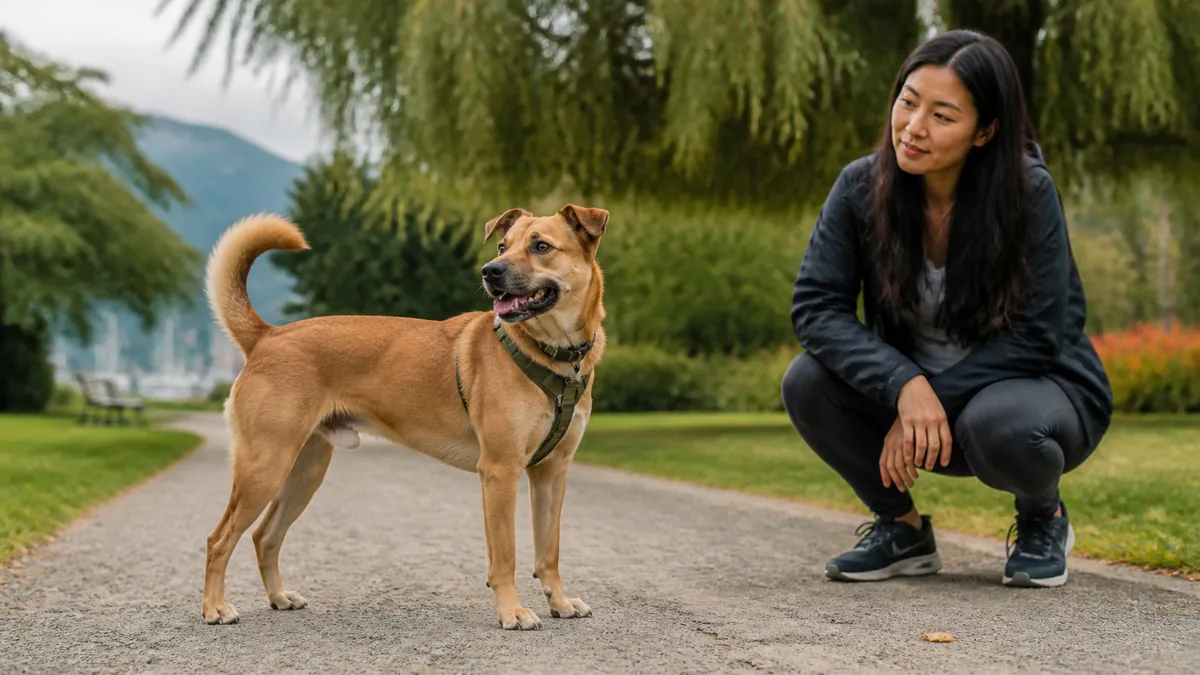
This matters in everyday places: narrow sidewalks in Marpole, busy park paths, elevator lobbies, vet waiting rooms, off-leash areas, and daycare introductions. When you notice stress early, you can create space before a dog has to bark, lunge, growl, freeze, or snap.
At Marpole Dog Walking & Boarding Service, we work with a small number of dogs in a calm, owner-operated setting. Reading body language is part of every walk, daycare day, and boarding stay because dogs do better when people listen before pressure builds.
Quick rule: Do not judge a dog from one signal. A wagging tail, a yawn, or a belly-up posture can mean different things depending on the rest of the body and what is happening around the dog.
Why Body Language Matters
Dogs usually signal discomfort before they escalate. The signals may be subtle: a head turn, lip lick, closed mouth, stiff body, tucked tail, or sudden stillness. If those early signals are ignored, a dog may need to become louder to protect their space.
Learning these signals helps you make better decisions: when to shorten a leash, cross the street, end a greeting, leave a dog park, pause training, or give your dog a quieter place to rest.
Read the Whole Dog, Not One Signal
A single cue rarely tells the full story. A wagging tail does not always mean friendly. A dog rolling onto their back does not always want a belly rub. A yawn can mean tiredness, but it can also appear when a dog is stressed.
Look for clusters of signals. A loose body, soft eyes, relaxed mouth, and curved movement usually tells a different story from a high tail, hard stare, closed mouth, and forward weight.
Signs of a Relaxed Dog
- Loose, wiggly body movement
- Soft eyes and relaxed blinking
- Mouth slightly open without tight facial muscles
- Tail moving in a loose, easy rhythm
- Weight balanced evenly or moving freely
- Able to disengage, sniff, pause, and check in
A relaxed dog can still be excited, but the body usually stays flexible. They can take treats, respond to familiar cues, and recover quickly after a surprise.
Common Stress Signals
Stress signals can be easy to miss because many look ordinary in other contexts. The key is whether they appear suddenly, repeatedly, or in a situation that may be difficult for the dog.
- Lip licking or tongue flicks when no food is present
- Yawning when the dog is not tired
- Turning the head or body away
- Panting when the dog is not hot or exercising
- Pacing, trembling, or repeated scanning
- Pinned ears, tucked tail, or crouched posture
- Whale eye, where the white of the eye shows
- Sudden shedding, drooling, or refusal of treats
- Freezing or becoming very still
If several of these appear together, give the dog distance and reduce pressure.
Walk Safety Signal Check
Stress signals matter most when they change what you do next. On a walk, early signals are a chance to create distance, slow down, or choose a calmer route before your dog feels trapped.
- Increase distance from triggers when your dog stiffens, freezes, scans, or cannot take food.
- Skip forced greetings if your dog is leaning away, lip licking, yawning, or avoiding eye contact.
- Use quieter Marpole routes when traffic, dogs, bikes, or construction add too much pressure.
What Tail Position Can Tell You
Tails are useful, but they are often misread. A loose, sweeping wag with a relaxed body is usually friendly. A high, stiff, fast wag can mean arousal, tension, or warning. A low or tucked tail often suggests fear, uncertainty, or an attempt to avoid conflict.
Some research and behaviour resources discuss wagging direction, but most owners will make better decisions by focusing on the larger picture: tail height, stiffness, speed, body tension, facial expression, and context.
Eyes, Ears, and Mouth
Soft eyes usually suggest comfort. A hard stare, wide eyes, or whale eye can suggest stress or conflict, especially if the body is still. Avoid forcing direct eye contact with an unfamiliar or worried dog.
Ear position varies by breed, but pinned-back ears often appear with worry or appeasement. Forward ears may show interest or alertness. A relaxed mouth is usually soft; a tightly closed mouth, tense jaw, repeated lip licking, or sudden panting can signal pressure.
Posture, Movement, and Freezing
A dog leaning away, crouching, hiding behind you, or shifting weight backward is asking for space. A dog leaning forward with a stiff body and hard stare may be preparing to confront something. Raised hackles mean arousal, not automatically aggression, so check the rest of the dog.
Freezing deserves special attention. When a dog suddenly becomes very still, stop what is happening and create distance. Stillness can be a final warning before a dog escalates.
The Ladder of Escalation
Dogs rarely go from calm to a bite in one step. Most climb a ladder, and each rung is a request for space. The order varies by dog, but the pattern below is typical, from quietest to loudest.
| Rung | What you see | What it means |
|---|---|---|
| 1 | Yawning, blinking, nose licking | Mild unease; the dog is self-soothing |
| 2 | Turning the head away, averting eyes | “I would rather not engage” |
| 3 | Turning the body away, sitting, pawing | Asking for distance more clearly |
| 4 | Walking away | Removing itself from the situation |
| 5 | Ears back, crouching, tail tucked | Fear is building |
| 6 | Lying down with a leg raised, rolling over | Appeasement, not an invitation for a belly rub |
| 7 | Stiffening, staring, freezing | The last quiet warning |
| 8 | Growling | A clear, honest warning |
| 9 | Snapping | A bite that deliberately misses |
| 10 | Biting | Every earlier signal was missed or punished |
Two points matter for Vancouver dog owners. First, a dog who has been scolded for growling learns to skip rung 8, which is how “he bit without warning” happens. Second, in a crowded elevator or a narrow sidewalk, rungs 3 and 4 are physically impossible; the dog cannot walk away, so it jumps to a freeze or a growl faster than it would in an open park. Giving the dog an exit, or taking the stairs, is often the whole fix.
Play, Pressure, or Bullying?
Healthy dog play is usually loose, bouncy, and mutual. Dogs take breaks, switch roles, pause, shake off, and re-engage. One dog should not be doing all the chasing, pinning, or cornering.
Interrupt play if one dog keeps trying to escape, hides behind people, tucks their tail, freezes, or repeatedly turns away while the other dog keeps pushing. A short pause can prevent a small mismatch from becoming a bad experience.
Vancouver Situations Where Signals Matter
- Narrow sidewalks: Cross the street or step aside if your dog stiffens, stares, or slows down when another dog approaches.
- Elevators and lobbies: Keep greetings brief or avoid them completely if either dog looks trapped or tense.
- Dog parks: Watch for one-sided chasing, crowding at gates, and dogs who hover near exits or owners.
- Vet visits: Yawning, panting, trembling, whale eye, and refusal of treats can all suggest stress. Our Vancouver veterinarian guide can help you choose a clinic that handles dogs thoughtfully.
- Newly adopted dogs: Rescue dogs often need quiet, predictable routines before busy social exposure. Our rescue adoption guide covers the first adjustment period.
What to Do When Your Dog Looks Uncomfortable
- Create distance instead of forcing the dog to “say hello.”
- Use calm movement and a softer voice.
- Let the dog look away, sniff, or move behind you.
- Reward check-ins and voluntary attention.
- Leave before the dog has to bark, growl, lunge, or snap.
- Ask for professional help if fear, reactivity, or anxiety is affecting daily life.
If your dog needs quieter support, structured dog walking or calm, small-group care may be more appropriate than busy group environments.
How We Use Body Language in Daily Care
In dog walking, daycare, and boarding, body language tells us when to slow down, create space, end a greeting, choose a quieter route, or give a dog more rest. A good fit is not just whether a dog is friendly. We look for dogs who can recover after excitement, take breaks, respond to space, and settle comfortably indoors.
That is one reason small-group, owner-operated care can work well for sensitive dogs. There is more room to notice small signals before they become big problems.
Care Handoff Body Language Notes
If your dog is starting walks, daycare, or boarding, tell us what their normal comfort and stress signals look like. That helps us notice changes early and adjust the routine with less guesswork.
- What your dog does when relaxed, tired, uncertain, or overstimulated.
- Known triggers such as dogs, doorways, elevators, traffic, bikes, or handling.
- What helps your dog recover: space, movement, sniffing, quiet, food, or going home.
Dog Body Language FAQ
Does a wagging tail always mean a dog is friendly?
No. Tail wagging usually means arousal, which can include happiness, excitement, uncertainty, frustration, or tension. Look at the whole body before deciding whether a dog is comfortable.
What does whale eye mean?
Whale eye means you can see the white of the dog’s eye, often because the dog is turning their head away while still watching something. It commonly appears when a dog feels worried, trapped, or uncomfortable.
Should I let my dog greet every dog on leash?
No. Many dogs feel restricted on leash. If either dog is stiff, staring, pulling hard, tucked, or trying to move away, skip the greeting and create space.
How can I tell if dog play is becoming too rough?
Watch for one-sided chasing, no role reversal, repeated pinning, freezing, tucked tails, hard stares, or one dog trying to leave. If in doubt, interrupt gently and let both dogs reset.
Can dog body language help with training?
Yes. Reading stress and comfort signals helps you know when your dog is ready to learn and when they need a break. Training works better when the dog feels safe enough to think.
Helpful Resources
- ASPCApro: Canine body language tips
- VCA: Interpreting dog communication
- VCA: Signs your dog is stressed
- BC SPCA: Anxious dogs
- Leash Training and Etiquette in Vancouver
- Managing Separation Anxiety in Dogs
- Puppy Socialization in Vancouver