
Understanding Dog Reactivity in Vancouver
If your dog barks, lunges, freezes, whines, or pulls hard when they see another dog, person, bicycle, skateboard, or noisy vehicle, it can feel embarrassing and discouraging. In a busy city like Vancouver, those triggers can appear around almost every corner.
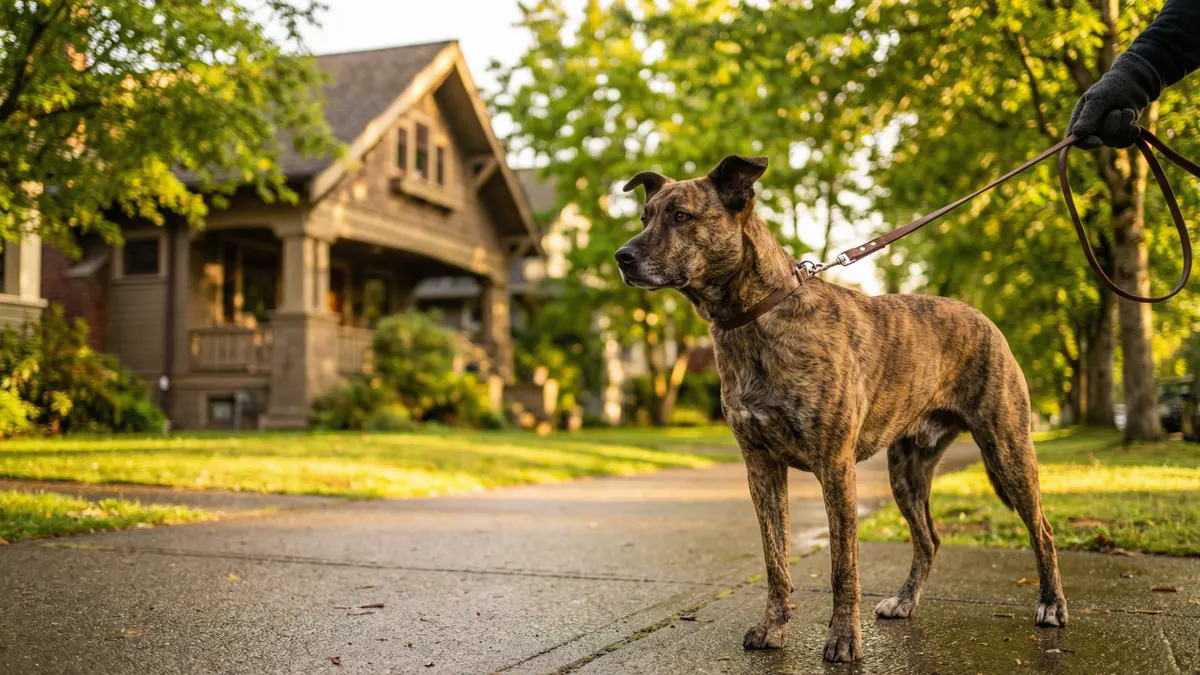
Reactivity is not a character flaw. Most reactive dogs are not trying to be difficult. They are overwhelmed, frustrated, fearful, or too aroused to think clearly. Understanding that difference changes how you respond and gives your dog a better chance to improve.
Quick Answer
Dog reactivity is an intense response to a trigger, often caused by fear, frustration, stress, pain, poor early experiences, or feeling trapped on leash. The first step is not obedience. The first step is creating enough distance that your dog can notice the trigger and still remain able to learn.
This guide explains why reactivity happens: the causes, the threshold, and the way stress stacks up over a day. If you already understand that and want the step-by-step plan, go to our companion guide, Reactive Dog Training in Vancouver, which covers management, counter-conditioning, route planning and finding a certified trainer.
What Dog Reactivity Means
Reactivity is an over-threshold response. A reactive dog may bark, lunge, stare, whine, pull away, spin, freeze, or redirect onto the leash. The behaviour can look aggressive, but the motivation is often different.
Many reactive dogs are trying to make space. Some are scared. Some are frustrated because they want to greet but cannot. Some have had bad experiences. Some are in pain. Some are simply too excited and under-skilled to cope with the environment.
The important point is this: once a dog is over threshold, they are not in a good learning state. Scolding, leash corrections, or forcing them closer usually adds more stress. Distance, calm handling, and prevention are more useful.
Why Dogs Become Reactive
Reactivity rarely has one single cause. Several factors may combine:
- Genetics: Some dogs are naturally more alert, sensitive, intense, or quick to react.
- Early socialization: Limited or overwhelming early exposure can affect confidence later.
- Negative experiences: A frightening encounter with a dog, person, vehicle, or environment can leave a strong association.
- Pain or health issues: A sore dog may have less tolerance for surprises, close greetings, or handling.
- Leash frustration: Dogs who want to move, sniff, or greet may become frustrated when restrained.
- Urban intensity: Busy sidewalks, narrow paths, elevators, traffic, and constant close passes can be hard for sensitive dogs.
If reactivity appears suddenly or becomes much worse, consider a veterinary check. Pain, vision changes, hearing changes, digestive discomfort, or other health issues can affect behaviour.
Threshold and Stress Stacking
Your dog’s threshold is the point where they move from coping to not coping. Below threshold, they can notice a trigger, take food, respond to a cue, sniff, turn away, or think. Above threshold, they may bark, lunge, freeze, or panic.
Threshold changes from day to day. A dog may handle another dog across the street on a quiet morning but react at a greater distance after poor sleep, an earlier scare, pain, or a stressful outing. This is often called stress stacking.
For owners, this means progress is not always linear. A quieter recovery day after a difficult walk is not a setback. It is good management.
Reactivity Walk Fit Boundary
Some reactive dogs can do well with calm, predictable walks. Others need a certified trainer or behavior professional before a regular walking service is the right next step.
- May be workable: clear triggers, manageable distance needs, and recovery after calm route adjustments.
- Needs specialist help first: bite history, unsafe lunging, redirected aggression, or inability to recover outdoors.
- Helpful details: triggers, threshold distance, equipment, cue words, and routes that feel safest.
Why Leash Reactivity Is So Common
Leash reactivity is common because the leash limits choices. Off leash, a dog can curve away, pause, sniff, retreat, or approach at an angle. On a sidewalk, the dog may feel trapped beside traffic, fences, parked cars, people, and other dogs.
The leash also carries human tension. If you tighten the leash every time another dog appears, your dog may learn that another dog predicts pressure, worry, or conflict. This does not mean you caused the problem. It simply means leash handling is part of the solution.
Our guide to leash training your dog in Vancouver covers practical walking skills that can support reactivity work.
What Helps Reactive Dogs
Start with safety and management. Avoid putting your dog in situations where they repeatedly practise explosive reactions. Choose quieter routes, cross the street early, use parked cars or hedges as visual barriers, and give yourself permission to turn around.
- Learn your dog’s early warning signs: staring, stiffening, scanning, slowing, whining, or refusing food.
- Create distance before your dog reacts.
- Reward calm noticing, turning away, checking in, sniffing, or moving with you.
- Use comfortable, secure equipment.
- Practise in easier environments before trying busy places.
- Work with a qualified, humane trainer or behaviour professional for serious cases.
Look for trainers who use reward-based methods and have real experience with reactivity. Avoid anyone who promises instant fixes, uses dominance language, or relies on intimidation, prong collars, shock collars, or harsh corrections for fear-based behaviour.
Calm Route Planning Notes
For reactive dogs, a successful walk is often a quiet, uneventful walk. Route planning should reduce surprises and protect the dog’s ability to stay under threshold.
- Choose wider sidewalks, quieter blocks, and predictable turnarounds.
- Avoid crowded dog areas, tight lobby exits, and blind corners when possible.
- Shorten the walk before stress stacks too high.
Frequently Asked Questions
Is reactivity the same as aggression?
No. Reactivity and aggression can overlap, but they are not identical. A reactive dog is responding intensely to a trigger. The reason may be fear, frustration, arousal, pain, or a desire for distance. Because risk can still be real, serious reactivity should be handled carefully.
Can a reactive dog improve?
Yes, many reactive dogs improve with management, distance, reward-based training, and professional support when needed. The goal is usually better coping and safer walks, not forcing the dog to love every trigger.
Should I take my reactive dog to the dog park?
Usually not as a training strategy. Dog parks are unpredictable and can push reactive dogs over threshold quickly. Work in controlled environments first.
What should I do when a trigger appears suddenly?
Create distance. Turn around, cross the street, step behind a barrier, scatter treats on the ground if your dog can eat, or calmly move away. The goal is to prevent rehearsal and help your dog recover.
A Vancouver Stress-Stacking Week
Stress stacking is easier to see with a calendar than a definition. Here is how an ordinary week can add up for a Marpole dog who is otherwise doing well.
| Day | What happened | Stress effect |
|---|---|---|
| Monday | Garbage and recycling trucks in the lane during the morning walk | Startled twice, recovered quickly |
| Tuesday | Off-leash dog ran up on the Arbutus Greenway | Big reaction, took most of the walk to settle |
| Wednesday | Elevator shared with a stranger and a stroller at Marine Gateway | Froze, then fine |
| Thursday | Construction pile-driving nearby all afternoon | Restless at home, did not nap |
| Friday | A calm dog appears half a block away on Granville | Explosive barking at a trigger that would normally be fine |
Friday’s reaction was not about Friday’s dog. By then the stress hormones from four smaller events had not fully cleared, and the threshold had dropped. The practical response is to give the dog one or two quiet days after a rough stretch: short, familiar routes, extra sniffing, no new places. Vancouver adds its own predictable stress spikes, among them Halloween and New Year fireworks, the Celebration of Light, summer construction season, and busy patio evenings; planning quieter days around those helps as much as any training drill.
Sources
- American Veterinary Society of Animal Behavior: position statements on humane training and punishment
- BC SPCA AnimalKind: accredited dog training and how to find a humane trainer
Related Guides
- Reactive Dog Training in Vancouver: A Compassionate Guide
- Leash Training Your Dog in Vancouver
- Dog Training Classes in Vancouver
- Understanding Your Dog’s Body Language
- How Much Exercise Does Your Dog Need?
- Managing Separation Anxiety in Dogs
If you need calm routine support in Marpole or South Vancouver, check availability with Marpole Dog Walking & Boarding Service. For true reactivity, we may also recommend working with a qualified trainer or behaviour professional.
Check Boarding Availability & FitPrepare a trigger note for the caregiver
Describe what you observed, where it happened and the circumstances, without assigning a diagnosis. Include the handling plan agreed with your qualified professional and how the caregiver should contact you.