House Training a Puppy in Vancouver
House training a puppy is not about scolding mistakes. It is about setting up a routine your puppy can understand: frequent bathroom breaks, close supervision, calm confinement when needed, and immediate rewards when they go in the right place.
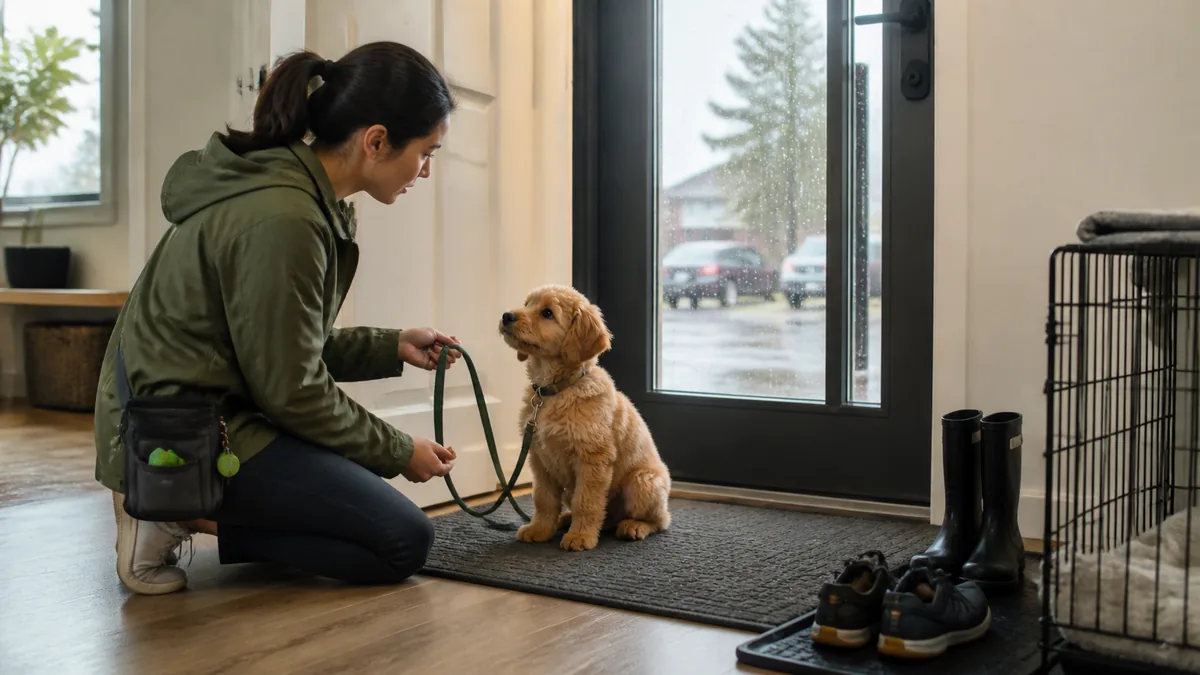
In Vancouver, house training can come with a few extra realities: rainy walks, elevators, shared lobbies, apartment hallways, and work schedules that make midday breaks important. A good plan keeps your puppy from practising accidents indoors while giving them many chances to succeed outside.
At Marpole Dog Walking & Boarding Service, we often help families during the early puppy stage. A predictable routine, gentle handling, and well-timed outdoor breaks can make house training less stressful for both you and your puppy.
Quick answer: Take your puppy out after waking, eating, drinking, playing, and before bedtime. Reward immediately when they go in the right place. Prevent unsupervised wandering indoors, clean accidents with an enzymatic cleaner, and never punish a puppy for an accident.
How Long Puppies Can Hold It
Puppies have limited bladder and bowel control. Many puppy guides use the rough guideline of one hour per month of age, sometimes with a little extra time, but this is only a starting point. Size, activity, water intake, health, stress, and sleep all matter.
- 8 to 10 weeks: very frequent breaks, often every 1 to 2 hours while awake
- 3 months: many puppies still need breaks every few hours
- 4 to 6 months: reliability usually improves, but accidents can still happen
Plan for more breaks after meals, drinking, naps, play, excitement, and first thing in the morning. If your puppy is having repeated accidents, assume the schedule needs to be easier before assuming the puppy is being difficult.
A Simple Daily House-Training Routine
- Choose one bathroom area. Use the same outdoor spot when possible so scent and routine help your puppy understand the goal.
- Go out often. Take your puppy out after waking, eating, drinking, active play, crate time, and before bed.
- Keep bathroom trips boring at first. Stand calmly and give your puppy a few minutes to sniff and go.
- Reward immediately outside. Praise and give a treat right after your puppy finishes, not after you return indoors.
- Offer supervised freedom afterward. Once your puppy has gone outside, they can have a short period of closer indoor freedom.
If your puppy does not go after a few minutes, return inside and supervise closely. Try again soon rather than giving full freedom to wander.
Supervision and Management Indoors
House training works best when your puppy is either supervised, safely confined, or outside for a bathroom break. If your puppy can wander out of sight, accidents become much more likely.
- Keep your puppy in the same room as you.
- Use baby gates, a pen, or a puppy-safe area when you cannot watch closely.
- Watch for sniffing, circling, sudden restlessness, whining, or heading toward the door.
- Interrupt calmly if you catch an accident starting, then take your puppy outside.
For apartment owners, it may help to carry a very young puppy through hallways at first so they do not practise eliminating before you reach the outdoor spot. If outdoor access is slow, a temporary balcony grass patch or pee-pad station may be useful as a management tool, but keep it in one consistent place and transition gradually toward outdoor breaks when your puppy is ready.
Using a Crate or Safe Area Humanely
A crate can help with house training when it is introduced gently and used for appropriate lengths of time. It should feel like a safe resting place, not a punishment. Feed meals near or inside the crate, toss treats in, keep sessions short at first, and never force your puppy inside.
The crate should be large enough for your puppy to stand, turn around, and lie down comfortably. If it is too large, some puppies may sleep at one end and eliminate at the other. If you need to be away longer than your puppy can reasonably hold it, arrange a potty break, puppy-safe pen setup, trusted neighbour, pet sitter, or midday visit.
Apartment and Rainy-Weather Tips for Vancouver
Vancouver weather and building layouts can make house training trickier, but not impossible.
- Use the same exit route. A predictable route helps your puppy learn what is happening.
- Prepare before opening the crate or pen. Have leash, treats, coat, and shoes ready so there is no delay.
- Make rain normal. Keep trips short and calm, reward generously, and avoid making rain feel like a big event.
- Use covered spots if available. A consistent covered area can help reluctant puppies.
- Plan midday breaks. Puppies cannot wait through a full workday. A family member, neighbour, pet sitter, or puppy walking visit can prevent setbacks.
Apartment Potty Routine Snapshot
In Vancouver apartments, house training often depends on timing, elevator patience, and rainy-day consistency.
- Plan extra time for elevators, lobbies, wet sidewalks, and cleanup.
- Use the same exit and potty area until your puppy understands the pattern.
- Keep towels and cleaning supplies ready so rainy accidents do not become stressful.
Condo and high-rise realities in Marpole
Much of Marpole’s housing is now towers and low-rise strata, and house training from the 14th floor is a different job. Budget five minutes from “puppy circles” to grass: leash on, elevator wait, lobby, doors. That means you go on the schedule, not on the signal, because the signal comes too late. Carry very young puppies through the lobby so they do not stop on the tile. Pick one patch of boulevard grass close to your door and use it every time; the scent helps. Keep in mind that the City asks owners to clean up on boulevards as on any public space, and neighbours notice a puppy who uses their planter. Balcony grass patches are a workable backup for late nights and heavy rain, but check your strata bylaws first; some prohibit them.
Sample schedules by age
| Time | 8-week-old puppy | 12-week-old puppy |
|---|---|---|
| Wake | Out immediately | Out immediately |
| After breakfast | Out within 10 minutes | Out within 15 minutes |
| Mid-morning | Out after play and after every nap | Out after play and naps |
| Midday | Out; a midday visit if you are away | Out; a midday visit if you are away |
| Afternoon | Every 1 to 2 hours while awake | Every 2 to 3 hours while awake |
| After dinner | Out within 10 minutes | Out within 15 minutes |
| Before bed | Last trip late | Last trip late |
| Overnight | One or two trips | Usually one, then none |
What to Do When Accidents Happen
Accidents are information. They usually mean the puppy had too much freedom, waited too long, was too excited, or did not understand the routine yet.
- Do not punish. Yelling, scolding, or rubbing a puppy’s nose in a mess is unfair and can make the puppy hide accidents from you.
- Interrupt gently if you catch it happening. A calm “outside” or “oops” is enough. Take the puppy out right away.
- Clean thoroughly. Use an enzymatic cleaner designed for pet urine so scent does not invite repeat accidents.
- Adjust the plan. Add more breaks, reduce freedom, or supervise more closely for a while.
Nighttime Potty Training
Very young puppies may need overnight breaks. Keep nighttime trips quiet and practical: leash on, outside, reward if they go, then back to bed. Avoid turning the trip into playtime.
As your puppy matures, they will usually sleep for longer stretches. If nighttime accidents suddenly increase after progress, consider whether water timing, evening activity, stress, or a medical issue may be involved.
Troubleshooting Common Setbacks
My puppy has accidents even though I am following a routine.
Make the schedule easier for a week. Add more frequent bathroom breaks, reduce indoor freedom, and reward every outdoor success. If accidents are very frequent or sudden, ask your veterinarian about possible medical causes.
My puppy goes outside, then pees again indoors.
Stay outside a little longer, especially after the first pee. Some puppies need a second chance after a few more minutes of sniffing. When you come back inside, supervise instead of giving immediate full freedom.
My puppy was doing well, then regressed.
Regression is common during growth, teething, schedule changes, visitors, stress, or illness. Return to the basics: more breaks, closer supervision, calm rewards, and thorough cleaning.
My puppy will not go outside in the rain.
Keep rainy trips calm, short, and rewarding. Try a covered bathroom spot, use a jacket if your puppy tolerates it, and bring especially good treats. Do not wait until your puppy is desperate; practise rainy potty trips as part of normal life.
When to Ask for Help
Talk to your veterinarian if your puppy is urinating very frequently, straining, having diarrhea, suddenly regressing, or seeming unwell. A training plan cannot solve a medical problem.
Need help with midday potty breaks? Young puppies cannot hold it for a full workday, even with good training. If you are in Marpole or nearby South Vancouver and need a reliable midday break, contact Marpole Dog Walking & Boarding Service to check whether a gentle puppy visit would be a fit.
Puppy Walker Handoff Notes
If a walker or helper is involved, clear potty notes reduce accidents and confusion.
- Last potty time, usual cue, preferred spot, and accident patterns.
- Crate or safe-area instructions, cleaning supplies, and reward routine.
- What counts as normal versus a sign to message you or call the vet.
House Training FAQ
How long does house training usually take?
Many puppies make major progress by 4 to 6 months, but timelines vary. Consistency, health, age, breed, schedule, and supervision all affect the pace.
Should I use pee pads in a Vancouver apartment?
Pee pads can help in specific situations, such as very young puppies in high-rises or owners with mobility limitations. They can also confuse the goal if you want your puppy to eliminate outdoors. If you use pads, be consistent and transition gradually.
Should I punish my puppy for accidents?
No. Punishment can create fear and does not teach the puppy where to go. Prevent accidents where possible, reward outdoor success, and clean mistakes calmly.
How often should I take my puppy outside?
Very young puppies may need to go out every 1 to 2 hours while awake, plus after meals, naps, play, drinking, and before bedtime. Adjust based on your puppy’s age and success rate.
Can a dog walker help with house training?
Yes, if timing is the issue. A midday bathroom break can help a young puppy avoid practising indoor accidents while they are still too young to wait through a full day.
Related puppy guides: Start with preparing your home for a new puppy, then use our Vancouver puppy socialization guide to build calm, positive early experiences.
Helpful Resources
- BC SPCA: How do I house train my dog?
- BC SPCA: Humane training position statement
- VCA: House training for puppies and dogs
- VCA: How to potty train your puppy
- Introducing a New Puppy to Your Home
- Seasonal Dog Care in Vancouver
Use a consistent caregiver record
Keep a simple log of outings, meals and accidents, and agree on the same words and handover instructions with everyone caring for the puppy. Bring questions about unexpected changes to your veterinarian.