Puppy Socialization in Vancouver: Calm Confidence, Not Chaos
Puppy socialization is not about letting your puppy meet every dog, person, and noise in the city. Good socialization means helping your puppy feel safe around normal life: people, traffic, umbrellas, elevators, bikes, children, grooming, vet handling, and calm dogs.
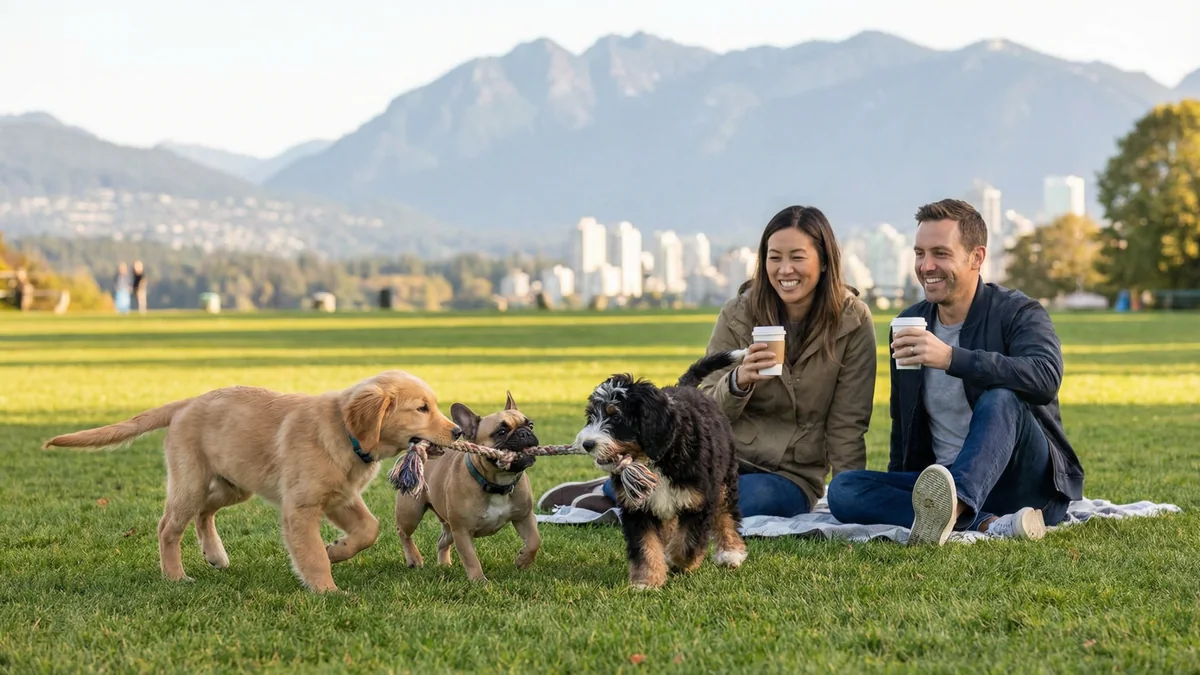
In Vancouver, that matters because puppies quickly encounter busy sidewalks, rainy weather, condo lobbies, parks, traffic noise, and dogs of every size. The goal is a puppy who can notice the world without panicking, lunging, barking, or shutting down.
Quick Answer
Start socialization early, keep it positive, and avoid overwhelming your puppy. Before full vaccination, ask your veterinarian what is safe. In many cases, puppies can still learn from carried outings, controlled visits, clean puppy classes, and calm exposure to normal city life.
What Socialization Really Means
Socialization is exposure plus a good emotional experience. A puppy who is dragged into a frightening situation is not being socialized; they are learning that the world is scary. A puppy who watches something new from a comfortable distance, gets treats, and leaves before becoming overwhelmed is learning confidence.
Think of socialization as building a library of safe memories: different people, sounds, surfaces, handling, environments, and routines.
Calm Exposure Scorecard
Good socialization is not about meeting every person or dog. A better goal is calm recovery after seeing normal Vancouver life at a distance your puppy can handle.
- Green: notices the thing, takes food, explores, and recovers quickly.
- Yellow: hesitates, startles, or needs more distance and a quieter pace.
- Red: freezes, panics, refuses food, barks intensely, or cannot settle afterward.
Safe Exposure Before Full Vaccination
Many puppy owners feel stuck between two real concerns: disease risk and under-socialization. Your veterinarian should guide you based on your puppy’s vaccine status and local risk. In the meantime, there are lower-risk ways to introduce the world.
- Carry your puppy near traffic, school zones, parks, and shops without setting them down in high-dog-traffic areas.
- Invite calm, vaccinated adult dogs to meet your puppy in a controlled space.
- Practice handling paws, ears, collar, harness, and gentle brushing at home.
- Let your puppy watch umbrellas, scooters, delivery trucks, and bicycles from a comfortable distance.
- Use short sessions and end while your puppy is still doing well.
A Simple First-Week Plan
The days below are examples, not a deadline or progression test. Repeat or skip an experience according to your puppy and your veterinarian’s advice. In the first week, think small and successful. Let your puppy watch the world from a safe distance, then end the session before they become overwhelmed. A short calm exposure teaches more than a long outing filled with barking, pulling, or fear.
- Day 1 or 2: Sit near your home or building entrance and reward calm noticing.
- Day 3: Watch light traffic, umbrellas, delivery carts, or bikes from a comfortable distance.
- Day 4: Practice gentle handling at home: paws, ears, collar, harness, and brief brushing.
- Day 5: Visit a quiet outdoor area, keeping your puppy away from unknown dog waste and crowded dog areas until your veterinarian says it is appropriate.
- Day 6 or 7: Meet one calm, healthy, well-matched dog if your vet says that is safe for your puppy’s vaccination stage.
If your puppy startles, move farther away, soften your voice, and make the next exposure easier. Confidence grows from many small wins.
A Vancouver Puppy Socialization Checklist
| Experience | What to practise | Keep it positive by |
|---|---|---|
| Rain and wet sidewalks | Light rain, towels, jackets, paw wiping | Using treats and keeping the first sessions short |
| Condo or building life | Elevators, hallways, lobby sounds | Watching quietly from a distance before greeting anyone |
| Urban sounds | Buses, trucks, construction, sirens | Starting far away and rewarding calm observation |
| People | Hats, sunglasses, children, mobility aids | Letting your puppy approach voluntarily |
| Handling | Paws, ears, mouth, brushing, harness | Pairing each touch with food and stopping early |
| Dog encounters | Calm adult dogs and suitable puppies | Avoiding crowded dog parks and rough play |
Choose the Next Exposure From the Last Response
Keep a brief note: the experience, distance, duration, body language and how easily your puppy settled afterward. This is not a quota of people or dogs to meet.
- Comfortable: Repeat the familiar version before making it harder.
- Uncertain: Increase distance, lower intensity or choose a quieter setting.
- Overwhelmed: End the exposure and seek help if fear persists. Do not use food to lure the puppy closer to something frightening.
These are observation prompts, not a diagnostic test. The American Veterinary Society of Animal Behavior explains why exposure alone is not socialization. Bring questions about disease risk to your first vet appointment.
A Marpole Socialization Map
Socialization works best in graded doses, so it helps to know which local spots deliver which experience. All of these are within a short walk or drive of Marpole. Start at the calm end and move along only when your puppy is relaxed at the previous step.
| Spot | What your puppy meets | Intensity |
|---|---|---|
| Quiet residential blocks west of Granville | The odd passerby, parked cars, garden smells, a distant dog | Low |
| Winona Park perimeter | Open sightlines, joggers, dogs at a comfortable distance | Low |
| Fraser River Park path (weekday morning) | Cyclists, joggers, water, birds, other dogs passing on leash | Low to medium |
| Arbutus Greenway | Bikes and scooters passing close, strollers, steady foot traffic | Medium |
| A Granville Street bus stop | Buses braking and hissing, doors, crowds gathering and dispersing | Medium |
| Marine Gateway plaza | Canada Line trains overhead, escalators, shopping carts, dense crowds, elevator rides | High |
| Under the YVR flight path along the river | Low aircraft noise, helpful for puppies who will live with it | Medium |
| Oak Street or Marine Drive sidewalk (briefly) | Heavy traffic noise and air movement from trucks | High |
Two Vancouver-specific notes. A puppy whose socialization window falls between November and March will meet umbrellas, rain shells, reflective vests and 4:30 pm darkness; treat each as a deliberate exposure rather than a nuisance. A spring or summer puppy will meet patios, cyclists in numbers and off-leash dogs at the river; the same rule applies, from a distance first.
The same ladder applies when a puppy joins any walker or daycare: ask for a short solo walk first, then parallel walking with one calm adult dog, before any group time. Our puppy vet visit guide covers the vaccine timing questions that go with early outings.
Choosing a Puppy Class
A good puppy class can be extremely helpful, but it should not be a free-for-all. Look for small groups, clean floors, age-appropriate puppies, vaccination requirements, positive-reinforcement methods, and an instructor who interrupts bullying or fearful play.
Ask these questions before enrolling:
- What vaccine records are required?
- How many puppies are in each class?
- How do you handle shy or overwhelmed puppies?
- Do you teach calm observation, handling, and settling, or only play?
- What training methods do you use?
Common Socialization Mistakes
- Going too fast: More exposure is not better if your puppy is frightened.
- Using dog parks too early: Unknown dogs can be overwhelming and unsafe for young puppies.
- Forcing greetings: Your puppy does not need to meet every person or dog.
- Ignoring body language: Lip licking, yawning, hiding, freezing, and tucked tails can mean stress.
- Skipping rest: Puppies need sleep to process new experiences.
Puppy health note
Ask your veterinarian when your puppy can safely walk in public dog areas, attend classes, or meet unfamiliar dogs. Vaccine timing and local disease risk matter.
Frequently Asked Questions
When should puppy socialization start?
Start as soon as your puppy comes home, using safe, age-appropriate exposure. Your veterinarian can help you balance socialization and vaccine safety.
Does socialization mean meeting lots of dogs?
No. Dog meetings are only one part of socialization. Calm exposure to people, sounds, handling, surfaces, and environments is just as important.
What if my puppy is scared?
Increase distance, lower the intensity, use food and praise, and end the session. If fear is persistent or worsening, work with a qualified positive-reinforcement trainer.
When can my puppy join daycare or group walks?
That depends on age, vaccination status, temperament, and the daycare or walker. A puppy should be healthy, appropriately vaccinated, and emotionally ready for group care.
Related Puppy Guides
- Preparing your home for a new puppy
- Introducing a new puppy to your home
- House training your puppy
- Dog walking and in-home dog care services
- Dog Training Classes in Vancouver
- Understanding Your Dog’s Body Language
- Seasonal Dog Care in Vancouver