
Planning a Dog-Friendly Hike Near Vancouver
Vancouver is a wonderful place to live with an active dog, but a good trail choice depends on more than scenery. Before you go, check leash rules, seasonal closures, parking, terrain, crowd levels, weather, water access, wildlife risk, and your dog’s fitness.
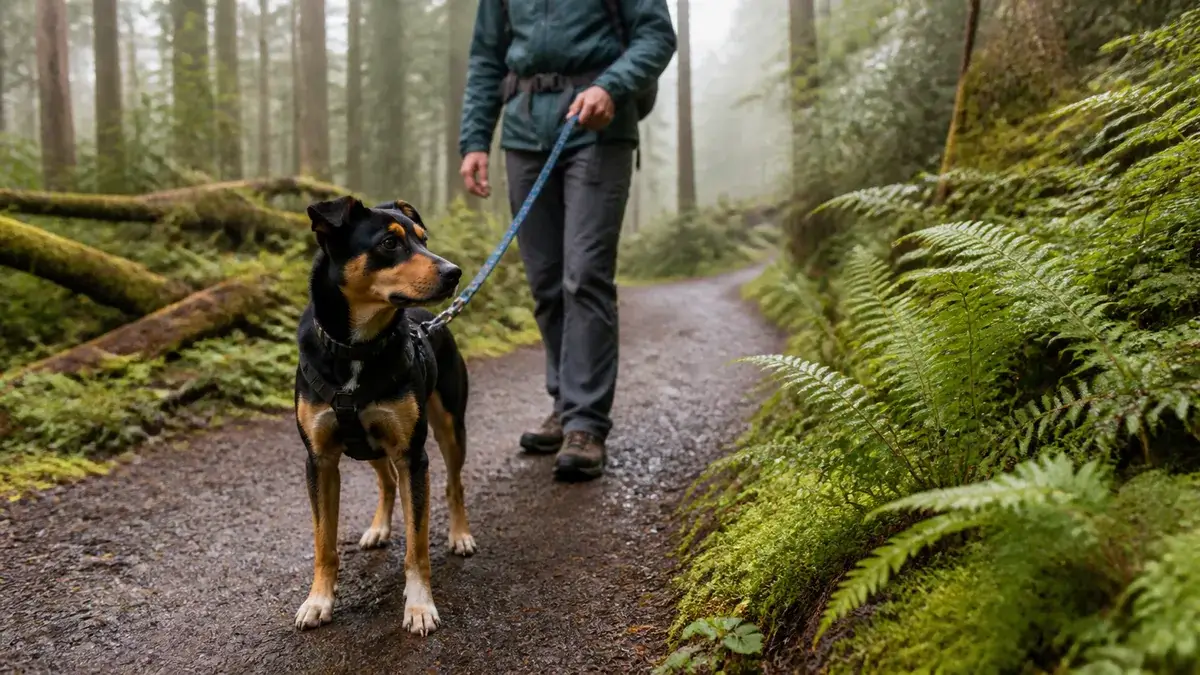
Use this planning guide to match terrain, weather and distance to your dog, check current park rules and prepare for the outing.
Quick Answer
For most Vancouver dogs, start with easier leashed walks such as Fraser River routes, neighbourhood greenways, and flatter park trails before moving to longer forest or mountain hikes. Keep your dog leashed unless signs clearly say off-leash use is allowed, carry water and waste bags, and check official park pages for seasonal closures and dog rules.
Before You Choose a Trail
A trail can be dog-friendly in theory and still be a poor match for your dog that day. Think about the dog in front of you, not the dog you wish you had.
- Fitness: Has your dog built up to the distance and elevation?
- Feet and joints: Is the surface suitable for your dog’s paws, age, and body?
- Leash skills: Can your dog pass people, bikes, children, and other dogs calmly?
- Heat and cold: Is there shade, water, snow, ice, or hot pavement?
- Wildlife: Could your dog chase birds, squirrels, coyotes, or other wildlife?
- Rules: Are dogs allowed, and is the route on-leash, off-leash, or mixed?
If your dog struggles with pulling, barking, or lunging on walks, see our guides to leash training your dog in Vancouver and understanding dog reactivity before trying narrow or crowded trails.
Should You Hike Today?
A dog-friendly hike is only a good idea if it fits your dog on that specific day. Some days, the best choice is a shorter neighbourhood walk, a quiet sniff loop, or indoor enrichment instead of a trail drive.
| Choose a trail if… | Choose an easier outing if… |
|---|---|
| Your dog is eating, moving normally, and recovering well after activity. | Your dog is stiff, limping, unusually tired, or recovering from illness or injury. |
| The weather, trail surface, and expected crowd level match your dog’s comfort. | It is hot, icy, smoky, crowded, or likely to push your dog over threshold. |
| You have enough time to turn around early without pressure. | You are rushed, travelling at peak time, or relying on a trail your dog has never tried. |
| Your dog can pass people, dogs, bikes, and wildlife calmly on leash. | Your dog is already reactive, overexcited, or unable to settle before leaving home. |
For many dogs, the most helpful routine is not one heroic weekend hike. It is a steady mix of appropriate walks, rest, training, sniffing, and occasional bigger outings when conditions are right.
Trail Day Fit Check
A good hiking day depends on your dog’s fitness, heat tolerance, paw condition, recall, and the trail’s difficulty.
- Choose easier routes for puppies, seniors, short-nosed dogs, or dogs returning from injury.
- Check heat, smoke, ice, trail closures, leash rules, and water access before leaving.
- Turn around early if your dog is lagging, limping, overheating, or unable to recover.
Easy Dog-Friendly Options
Fraser River and South Vancouver walks
For Marpole and South Vancouver dog owners, river-adjacent walks can be an excellent starting point. They tend to be flatter than mountain trails, easier to shorten, and more forgiving for puppies, seniors, and dogs returning from a break.
Because riverbanks, shared paths, cyclists, and wildlife can create surprises, keep your dog close and under control. For off-leash time, use officially designated areas rather than assuming a quiet riverside path permits off-leash walking.
Neighbourhood greenways and park loops
Not every good dog outing needs to be a destination hike. A well-chosen neighbourhood loop with shade, sniffing time, low traffic, and a predictable route may be better for many dogs than a crowded weekend trail.
For dogs who need steadier daily movement, our guide to how much exercise dogs need can help you match activity to age, breed type, and temperament.
Forest Trails and Regional Parks
Pacific Spirit Regional Park is one of the most useful forest options near Vancouver, but its dog rules vary by trail and habitat area. Some trails permit leash-optional use, while others require leashes or restrict dogs to protect sensitive areas. Follow posted signs and review the current Metro Vancouver map before your visit.
Forest trails are also more stimulating than neighbourhood sidewalks. For many dogs, that is wonderful. For anxious, reactive, adolescent, or prey-driven dogs, it can be a lot. Give space, step aside for narrow pass-bys, and keep greetings brief or avoid them entirely.
North Shore and Mountain Hikes
North Shore and mountain trails can be beautiful, but they are not the right starting point for every dog. Steeper grades, roots, mud, snow, crowds, wildlife, and limited turnaround points make planning more important.
Before choosing a mountain route, check the official park page for current dog rules, seasonal access, snow conditions, closures, and parking requirements. Bring more water than you think you need, and turn around early if your dog is hot, limping, worried, or slowing down.
| Trail type | Better for | Be careful with |
|---|---|---|
| Flat river or neighbourhood routes | Puppies, seniors, warm-up walks, dogs building fitness | Cyclists, traffic crossings, slippery river edges |
| Urban forest trails | Dogs who enjoy sniffing, shade, softer surfaces, moderate outings | Mixed leash rules, narrow paths, wildlife, mud |
| Mountain hikes | Fit adult dogs with good leash manners and trail experience | Heat, snow, steep terrain, paw wear, crowds, limited exits |
Trails at a Glance: Distance From Marpole
These are the trails and parks we hear about most from South Vancouver dog owners. Drive times are rough off-peak estimates from Marpole. Leash rules change, so check the park’s current signage or website before you go, and treat every trail as on-leash unless a sign says otherwise.
| Trail or park | Approx. drive from Marpole | Terrain | Good for | Watch for |
|---|---|---|---|---|
| Fraser River Park foreshore (Marpole) | Walk from home | Flat gravel and boardwalk | Seniors, puppies, short outings | Cyclists, river edge, seasonal off-leash zone rules |
| Arbutus Greenway (from Milton St north) | Walk from home | Flat paved path | Steady loose-leash practice | Bikes and scooters, little shade in summer |
| Iona Beach Regional Park (Richmond) | 15 min | Flat sand and dyke | Long flat walks, wind and views | Exposed in heat and wind, birds nesting in spring |
| Pacific Spirit Regional Park (UBC) | 15 min | Forest trails, mostly flat | Shade on hot days, variety | Trail-by-trail leash rules, muddy in winter |
| Deer Lake Park (Burnaby) | 25 min | Flat lake loop | Calm dogs, easy footing | Busy weekends, waterfowl |
| Burnaby Lake Regional Park | 25 min | Flat gravel loop, about 10 km | Fit dogs who want distance | Long with few shortcuts, wet sections |
| Boundary Bay dyke (Delta) | 35 min | Flat gravel dyke | Long flat walks, low crowds | No shade, wind, shorebird closures |
| Lynn Loop (North Vancouver) | 35 min | Forest, moderate climb | Confident, fit dogs | Roots and rocks, crowded parking |
| Lighthouse Park (West Vancouver) | 40 min | Rocky forest paths | Sure-footed dogs | Cliff edges, slippery rock when wet |
| Buntzen Lake (Anmore) | 50 min | Lake loop, moderate | Full-day outings | Gate closes at capacity in summer, on-leash rules |
Closer to home, the Fraser River Park foreshore and the Arbutus Greenway need no driving at all. Our guide to dog walk routes in Marpole covers both in detail.
Seasonal Trail Tips
- Spring: Expect mud, active ticks, wet roots, and seasonal trail work.
- Summer: Start early, avoid hot pavement, carry water, and watch for overheating.
- Fall: Wet leaves and darker evenings can make footing and visibility harder.
- Winter: Lower-elevation routes may be better than snowy mountain trails unless you and your dog are prepared.
Post-Hike Recovery Notes
After a hike, recovery tells you whether the route was a good match.
- Check paws, ticks, stiffness, appetite, hydration, and energy that evening and the next day.
- Give senior dogs and puppies extra rest after bigger outings.
- Stop strenuous activity if your dog is sore, limping or unusually fatigued. Contact your vet about persistent symptoms, pain or difficulty bearing weight rather than assuming more walks will resolve them. Collapse or breathing difficulty is an emergency.
Frequently Asked Questions
Are dogs allowed off leash on Vancouver trails?
Only where off-leash use is officially designated. Many trails and parks require leashes, and some mixed-use trail systems have different rules by section. Posted signs and official park maps should guide your visit.
What should I bring on a dog-friendly hike?
Bring a leash, waste bags, water, a collapsible bowl, ID tags, treats, a towel, and a basic first-aid kit. For longer or rougher hikes, consider paw protection, extra food, and a plan for carrying your dog if they cannot walk out.
Can puppies go hiking?
Ask your veterinarian what is safe for your puppy’s age, vaccination status, growth, and breed type. Short, positive outings are usually better than long hikes while a puppy is still developing.
What if my dog gets overexcited on trails?
Choose wider, quieter routes, keep distance from other dogs, practise leash skills, and avoid peak times. If your dog barks, lunges, or cannot settle, start with easier environments before attempting narrow trails.
Sources and Related Guides
Sources
- City of Vancouver: Dog off-leash areas
- Metro Vancouver Regional Parks
- BC Parks
- BC CDC: Tick-borne diseases
Related Guides
- Best dog parks in South Vancouver
- Dog walking routes in Marpole
- Emergency first aid for dog owners
- Parasite prevention in Vancouver
- Seasonal dog care in Vancouver
Need help keeping your dog active between bigger trail days? Check availability with Marpole Dog Walking & Boarding Service for calm, consistent local dog walking and care.
Check Boarding Availability & Fit