
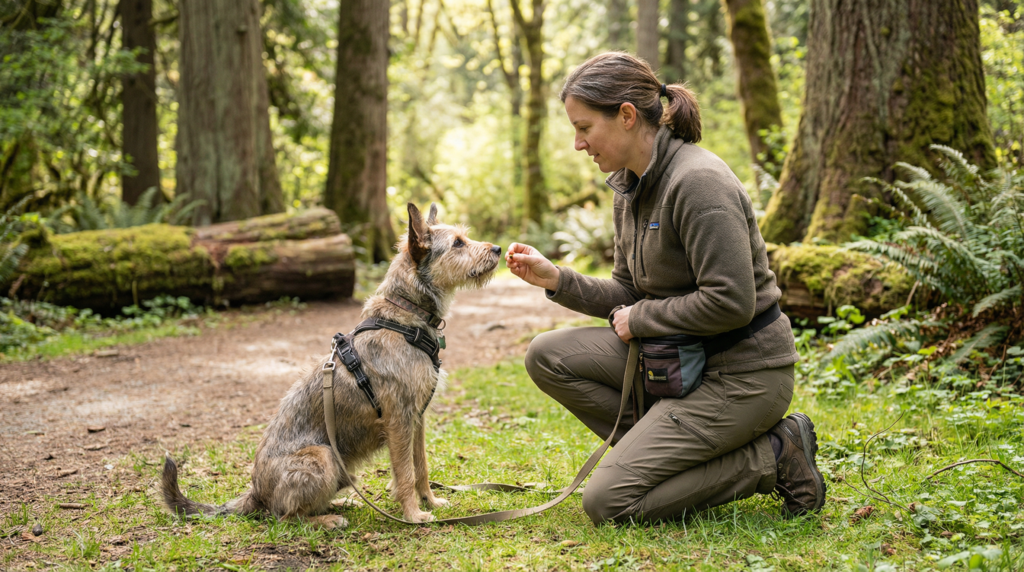
# Reactive Dog Training in Vancouver: A Compassionate Guide (2026)**TLDR:** Managing a reactive dog in a busy city like Vancouver can be challenging, but you’re not alone. This guide offers compassionate, modern, and effective strategies for helping your reactive dog, including management techniques and a list of certified, force-free trainers in Vancouver who specialize in reactivity.—Living in Vancouver means navigating bustling sidewalks, popular parks, and crowded trails. For the owner of a reactive dog—one that barks, lunges, or overreacts to triggers like other dogs, people, or skateboards—this environment can feel overwhelming. But with the right approach, it is possible to help your dog feel safer and more comfortable, making walks and outings enjoyable again.This guide is designed to provide a compassionate starting point for understanding and managing dog reactivity in Vancouver.## Understanding Reactivity: Fear, Not AggressionIt’s crucial to understand that **reactivity is most often rooted in fear or anxiety, not aggression.** A reactive dog is usually experiencing a “big feeling” and is trying to create distance from something that scares them. They are not being “bad” or “dominant”; they are communicating their discomfort in the only way they know how.Common triggers for reactivity include:* Other dogs (especially on-leash) * Strangers (people) * Bicycles, skateboards, or strollers * Loud noises * Specific locations or objects## Management: Your First and Most Important ToolBefore you can begin training, you must manage your dog’s environment to prevent them from practicing the reactive behavior. Every time your dog has a reaction, their stress levels increase, making future reactions more likely. Management is about preventing these rehearsals.* **Identify Triggers:** Make a list of what causes your dog to react. * **Increase Distance:** The easiest way to help your dog is to create more space between them and their triggers. * **Change Your Route/Time:** Walk at quieter times of the day or in less crowded areas. Avoid popular, narrow trails. * **Use Visual Barriers:** Use parked cars, trees, or your own body to block your dog’s view of a trigger.## Training: Building New AssociationsOnce you have management strategies in place, you can start to change your dog’s emotional response to their triggers. The goal is to help them associate the scary thing with something positive, like high-value treats.This process, known as **counter-conditioning and desensitization (CC/DS)**, should be done under the guidance of a certified professional, but the basic principle is:1. **Find the Threshold:** Determine the distance at which your dog can see their trigger without reacting. 2. **Mark and Reward:** The moment your dog sees the trigger (and before they react), mark the moment with a clicker or a verbal “yes!” and immediately give them a very high-value treat (e.g., chicken, cheese). 3. **Trigger Disappears, Treats Stop:** When the trigger is gone, the treats stop. 4. **Repeat:** Over many sessions, your dog will start to associate the appearance of the trigger with the arrival of delicious treats, changing their emotional response from fear to happy anticipation.## Finding a Certified Trainer in VancouverWorking with a qualified, force-free trainer is essential for safely and effectively addressing reactivity. These professionals will create a customized plan for you and your dog. Look for trainers with the following certifications:* **KPA CTP** (Karen Pryor Academy Certified Training Partner) * **CPDT-KA/KSA** (Certified Professional Dog Trainer – Knowledge Assessed/Skills Assessed) * **VSA-CDT** (Victoria Stilwell Academy – Certified Dog Trainer)Here are a few highly-regarded, certified trainers and facilities in Vancouver that specialize in reactivity:* **Pawsitive Connection Dog Training:** Known for their compassionate approach and small class sizes. [1] * **Bravado Dog Training:** Offers private consultations and group classes focused on real-world skills. [2] * **When Hounds Fly:** Provides comprehensive programs for reactive dogs, including their popular “Reactive Dog Class.” [3]Living with a reactive dog takes patience and dedication, but with the right management and training, you can make a profound difference in your dog’s quality of life—and your own.—### References[1] Pawsitive Connection Dog Training. (2026). *Vancouver Dog Training*. [https://www.pawsitiveconnection.ca/](https://www.pawsitiveconnection.ca/) [2] Bravado Dog Training. (2026). *Dog Training Vancouver*. [https://www.bravadodogtraining.com/](https://www.bravadodogtraining.com/) [3] When Hounds Fly. (2026). *Reactive Dog Class*. [https://www.whenhoundsfly.com/](https://www.whenhoundsfly.com/)
Deep Dive AI Prompts
Use these prompts with ChatGPT or any AI assistant to explore this topic further:
- “Explain the difference between reactivity and aggression in dogs. What are the underlying emotional states driving each, and why does this distinction matter for treatment?”
- “Describe the BAT (Behaviour Adjustment Training) and LAT (Look At That) protocols for reactive dogs. How do they work, what does the research say about their effectiveness, and when is each most appropriate?”
- “What are the most common triggers for leash reactivity in Vancouver dogs (other dogs, cyclists, skateboards, strangers), and how should a training plan be structured to address multiple triggers simultaneously?”
- “When should a reactive dog owner seek help from a veterinary behaviourist rather than a certified dog trainer? What role can anti-anxiety medication play in reactive dog rehabilitation?”
Frequently Asked Questions
Is my reactive dog dangerous? Reactivity and dangerousness are not the same thing. Most reactive dogs are reacting out of fear, frustration, or over-arousal — not predatory intent. A dog that lunges and barks at other dogs on leash is usually saying ‘I am scared’ or ‘I am frustrated that I cannot get to that thing,’ not ‘I want to hurt something.’ That said, reactivity can escalate to biting if the dog is pushed past their threshold repeatedly, which is why management and training are important. A qualified trainer can help you assess your dog’s specific risk level.
Will my reactive dog ever be ‘normal’? Many reactive dogs improve dramatically with consistent training and management — to the point where casual observers would never know they had a history of reactivity. A complete cure is not always realistic, but a manageable dog who can walk past triggers without exploding is absolutely achievable for most dogs. The key variables are the severity of the reactivity, how long it has been practised (rehearsed reactivity is harder to change), and the consistency of the owner’s training.
What is the threshold distance, and why does it matter? Threshold distance is the distance at which your dog first notices a trigger but has not yet reacted. Working below threshold — keeping enough distance that your dog can see the trigger but remain calm enough to take treats and respond to cues — is the foundation of all effective reactive dog training. Working above threshold (too close to the trigger) just rehearses the reactive behaviour and makes it stronger. Finding and respecting your dog’s threshold distance is the single most important concept in reactive dog training.
Are there reactive dog training classes in Vancouver? Yes. Several Vancouver trainers and training schools offer reactive dog classes specifically designed for dogs who struggle in regular group classes. These classes use carefully managed setups with visual barriers and controlled distances to keep dogs below threshold while building positive associations. Look for trainers who are certified through the CPDT-KA (Certified Professional Dog Trainer) or IAABC (International Association of Animal Behavior Consultants) credentials and who use force-free, positive reinforcement methods.
Related Reading
- Mastering the Walk: A Guide to Leash Training and Etiquette in Vancouver
- Dog Training Classes in Vancouver: Finding the Right Fit for You and Your Dog
- House Training Your…
Sources & Further Reading
Consistent exercise from a professional dog walking routine helps lower baseline arousal in reactive dogs.
Controlled group settings like our dog daycare can complement reactive dog training with supervised socialization.
Vancouver’s Most Trusted Dog Walking Service
Serving Marpole, Kerrisdale, and South Vancouver. Insured, GPS-tracked walks with daily photo updates. First walk free for new clients.
Pingback: How Much Exercise Does Your Dog Need? A Complete Guide
Pingback: The Ultimate Guide to Dog-Friendly Patios in Vancouver (2026)
Pingback: Leash Training Your Dog in Vancouver: Mastering the Walk
Pingback: Seasonal Dog Care in Vancouver: Rain, Cold, and Everything Between
Pingback: Dog Separation Anxiety in Vancouver: Signs, Causes, and Solutions