
Introducing a New Puppy to Your Home
Bringing a new puppy home is exciting, but the first few days can feel like a lot for both of you. A calm setup, predictable routine, and gentle introductions help your puppy feel safe before you ask too much of them.
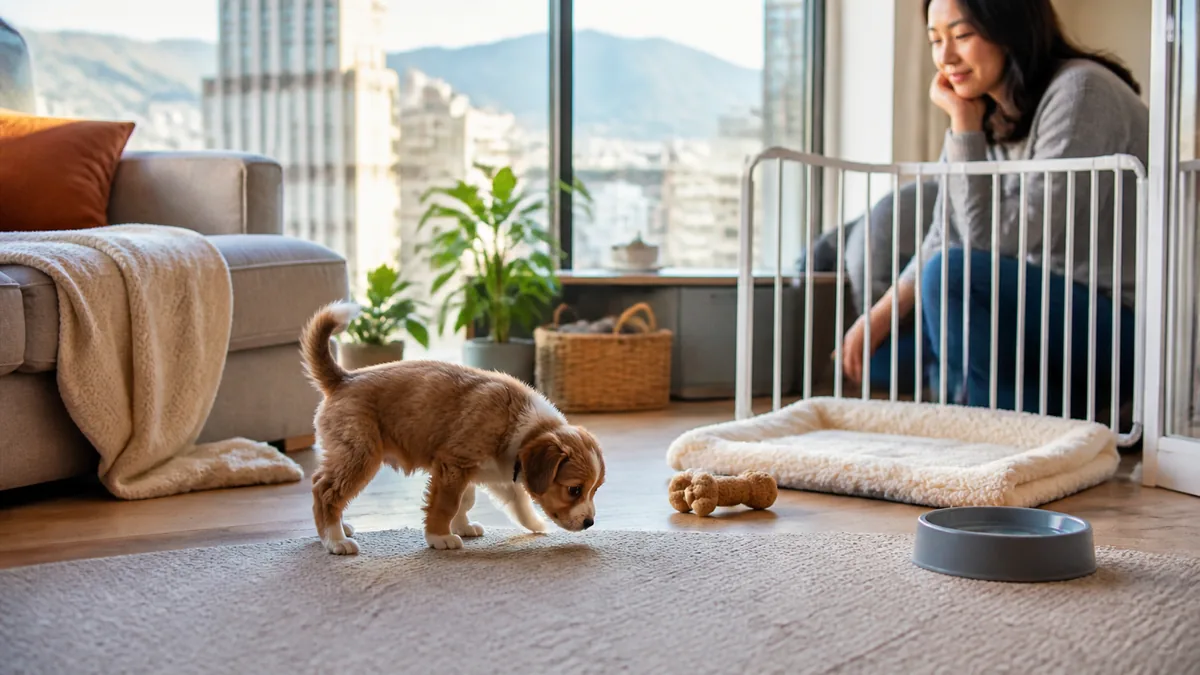
This guide focuses on the first week at home: where your puppy should sleep, how to manage bathroom breaks, how to introduce people and pets, and when to begin safe socialization. For a room-by-room checklist before your puppy arrives, start with our guide to preparing your home for a new puppy in Vancouver.
Quick Answer
For the first week, keep your puppy’s world small, calm, and predictable. Use a safe sleeping area, take frequent bathroom breaks, keep introductions short, reward quiet confidence, and wait for your veterinarian’s advice before visiting busy dog areas.
The First Day Home
Your puppy’s first day should be quiet. They have left familiar smells, littermates, and routines, so the goal is not to show them everything at once. The goal is to help them feel safe.
Before going inside, take your puppy to the place you want them to use for bathroom breaks. If they go, praise calmly and head inside without turning it into a big party. Once indoors, let them explore one prepared area instead of the whole home. A kitchen, gated room, playpen, or crate-and-pen setup can all work, as long as the space is safe and easy to clean.
Keep visitors away for the first day or two if possible. Family members can sit on the floor and let the puppy approach on their own. Gentle handling, soft voices, and short interactions are better than constant excitement.
Calm Introductions to People and Pets
If you have children in the home, teach them to let the puppy come to them, avoid grabbing, and leave the puppy alone while eating or sleeping. Puppies need a lot of rest, and tired puppies can become mouthy, frantic, or overwhelmed.
If you already have a dog, manage introductions carefully. Start with brief, calm contact and give the older dog space to step away. Do not expect an adult dog to tolerate nonstop puppy energy. Separate resting areas, supervised interactions, and short positive sessions are much safer than letting them sort it out alone.
Cats and small pets need even more patience. Use barriers, controlled distance, and rewards for calm behavior. A puppy’s curiosity can feel threatening to an established pet, so slow progress is a good sign, not a failure.
Building a Simple Routine
Puppies do best when the day has a pattern. Feeding, bathroom breaks, naps, short play sessions, and quiet time should happen in a predictable rhythm. You do not need a perfect schedule, but your puppy should begin to learn what happens after eating, waking, playing, and settling.
House training depends on repetition. Take your puppy outside after waking, after meals, after drinking, after play, and before sleep. Reward immediately when they go in the right place. If accidents happen indoors, clean them thoroughly and adjust the schedule. Punishment after the fact does not teach a puppy what to do next.
Food changes should be gradual unless your veterinarian tells you otherwise. If the breeder, rescue, or previous home provided food, keep that food at first and transition slowly if you plan to switch. For more help, see our guide to choosing the right dog food.
First Week Calm Routine
A calm first week helps your puppy learn the household pattern before you add busier walks, visitors, or outings.
- Repeat the same sleep, food, potty, play, and rest rhythm each day.
- Keep introductions short and end before your puppy is frantic or overtired.
- Write down what helps your puppy settle so future caregivers can follow the same cues.
The First Few Nights
The first nights are often the hardest. A puppy who cries is not being difficult; they are adjusting to sleeping away from familiar company. Keep their sleeping area close enough that they know you are nearby, especially at the beginning.
A crate, playpen, or small puppy-safe area can all work. The space should be comfortable, secure, and boring enough for sleep. If your puppy wakes and cries, give them a quiet bathroom break, then return them to bed without playtime. This helps them learn that nighttime is for sleeping and necessary bathroom trips.
Some puppies settle quickly. Others need more reassurance. The important thing is consistency: predictable bedtime, calm handling, and a safe place where your puppy cannot wander into trouble overnight.
Safe Early Socialization
Socialization is not the same as meeting every dog in the neighbourhood. Good socialization means helping your puppy experience normal life at a level they can handle: people, sounds, surfaces, elevators, traffic, grooming, handling, and calm observation from a safe distance.
Before your puppy is fully vaccinated, ask your veterinarian where it is safe to go. Avoid busy dog parks and high-traffic dog areas until your vet says they are appropriate. You can still build confidence by carrying your puppy, watching traffic from a bench, inviting trusted visitors, and arranging controlled contact with healthy, vaccinated dogs you know well.
For a deeper plan, see our guide to puppy socialization in Vancouver.
Early Care Handoff Notes
If someone else helps with your puppy, share the routine that keeps them safe and settled.
- Vaccination guidance from your vet, handling notes, and approved walking areas.
- Potty timing, feeding schedule, sleep cues, and fear triggers.
- What to do if your puppy refuses to walk, has an accident, or becomes overwhelmed.
When to Get Help
Ask your veterinarian about health concerns, vaccine timing, parasites, diet, vomiting, diarrhea, coughing, or sudden changes in energy. For training help, look for positive-reinforcement support early, especially if your puppy is fearful, frantic, biting hard, guarding resources, or struggling to settle.
As your puppy grows, extra support can also help with routine. Marpole Dog Walking & Boarding Service provides owner-operated dog care for a small number of trusted clients in Marpole and South Vancouver. Young puppies often need care that is different from regular group walks, but we are happy to discuss what may be appropriate as your puppy matures.
Keep First-Week Notes That Another Carer Can Use
A short observation record can reduce conflicting instructions between household members. It is not a diagnostic chart, and you do not need to record every minute.
Note the event and what followed
- After waking: When was the bathroom break, and did the puppy go?
- At meals: Was the usual food offered as instructed, and was anything different noticed?
- During a new experience: What happened immediately before the puppy became worried or excited, and what helped them settle?
- At handoff: What has already happened, what is due next, and who is responsible?
Use observations instead of labels
“The lift door opened, the puppy stepped back, and we moved farther away” is more useful than “bad in lifts.” “Settled in the pen while I sat nearby” gives the next carer something specific to repeat. Avoid forcing an interaction to finish an exercise.
Review one adjustment at a time
At the end of the day, agree on one practical adjustment: fewer visitors, a clearer handoff, supplies nearer the door or a quieter resting place. Keep the existing food and veterinary instructions available so that nobody improvises treatment.
If you notice a health concern or a sudden change, contact your veterinarian rather than waiting to complete a week of notes. For broader settling-in advice, see the BC SPCA’s new-dog guidance.
Use the home preparation handoff before arrival and the first vet visit guide to prepare questions. When asking about future walking or care, share a brief routine summary through our contact page, not private access codes or medical records.
Frequently Asked Questions
How long does it take a new puppy to settle in?
Many puppies begin to relax within a few days, but full adjustment can take several weeks. A predictable routine, gentle handling, and enough sleep make the transition easier.
Should my puppy sleep in my bedroom?
Many puppies settle better when they sleep near you at first. You can gradually move the sleeping area later if that fits your household.
When can my puppy meet other dogs?
Ask your veterinarian. Controlled contact with healthy, vaccinated dogs may be appropriate before busy public dog areas are safe, but the right timing depends on your puppy’s age, vaccine status, and local risk.
What if my puppy cries at night?
Stay calm and assume they may need a bathroom break. Keep the outing quiet, avoid play, and return them to their sleeping area afterward.
Related Puppy Guides
- Preparing Your Home for a New Puppy in Vancouver
- House Training Your Puppy: A Step-by-Step Guide
- Puppy Vaccination Schedule and Why It Matters
- Parasite Prevention in Vancouver
- Managing Separation Anxiety in Dogs
- Understanding Your Dog’s Body Language
When you are ready to talk about care options for your growing dog, check availability and tell us about your puppy, neighbourhood, routine, and goals.
Check Boarding Availability & Fit