Training your dog is one of the most important investments you can make in your relationship. A well-trained dog is safer, happier, and more enjoyable to live with. They can accompany you to more places, interact politely with people and other dogs, and respond reliably to your cues. But with so many training options available in Vancouver—from group classes to private sessions, puppy kindergarten to advanced obedience—how do you choose the right fit for you and your dog?
TL;DR: Finding the Right Dog Training Class in Vancouver
- Professional training offers expert guidance and socialization opportunities.
- Positive reinforcement is the most effective and humane training method.
- Choose a trainer whose philosophy matches your values and your dog’s needs.
- Classes range from puppy kindergarten to advanced obedience to fit every stage.
At Marpole Dog Walking & Boarding, we’ve worked with hundreds of dogs over the years, and we’ve seen the transformative power of good training. We’ve also seen the frustration that comes from choosing the wrong trainer or method. This guide will help you navigate Vancouver’s dog training landscape, understand different training philosophies, and find a trainer who will help you and your dog succeed.
Why Professional Training Matters
While it’s possible to train your dog at home using books, videos, and online resources, professional training offers significant advantages:
- Expert guidance : Trainers can identify and address behavioral issues you might not recognize or know how to fix
- Structured curriculum : Classes follow a logical progression, building skills systematically
- Socialization opportunities : Group classes expose your dog to other dogs and people in a controlled environment
- Accountability : Regular classes keep you consistent and motivated
- Problem-solving : Trainers can troubleshoot challenges and adjust techniques to suit your dog’s learning style
- Foundation for advanced skills : Basic obedience classes lay the groundwork for more advanced training, dog sports, or specialized work
Even if you’re an experienced dog owner, a professional trainer can offer fresh perspectives, refine your technique, and help you address specific challenges.
Training Philosophies
One of the most important decisions you’ll make is choosing a trainer who uses methods that align with your values and are effective for your dog. The dog training world has evolved significantly over the past few decades, and modern, science-based training emphasizes positive reinforcement.
Positive Reinforcement Training
Positive reinforcement training focuses on rewarding desired behaviors rather than punishing unwanted ones. When your dog performs a behavior you like (sitting, coming when called, walking calmly on a leash), you immediately reward them with something they value—treats, praise, toys, or play. Over time, your dog learns that certain behaviors lead to good outcomes, and they’re motivated to repeat those behaviors.
Positive reinforcement training is:
- Effective : Research consistently shows that positive reinforcement is as effective—or more effective—than punishment-based methods
- Humane : It builds trust and strengthens the bond between you and your dog
- Safe : It doesn’t risk causing fear, anxiety, or aggression
- Fun : Training becomes an enjoyable activity for both you and your dog
Organizations like the American Veterinary Society of Animal Behavior (AVSAB) and the Canadian Veterinary Medical Association (CVMA) strongly recommend positive reinforcement training and discourage the use of aversive methods.
Aversive Training Methods
Aversive training relies on punishment to discourage unwanted behaviors. This can include leash corrections (jerking the leash), prong or shock collars, physical corrections (alpha rolls, scruff shakes), or verbal reprimands. While these methods can suppress behaviors in the short term, they come with significant risks:
- Fear and anxiety : Punishment can make dogs fearful of their owners, other people, or specific environments
- Aggression : Dogs punished for growling or other warning signals may skip warnings and bite without warning
- Learned helplessness : Dogs may shut down emotionally and stop trying to learn
- Damaged relationship : Trust is eroded when dogs associate their owners with discomfort or fear
Most modern, reputable trainers in Vancouver use positive reinforcement methods. If a trainer recommends prong collars, shock collars, or physical corrections, consider looking elsewhere.
Types of Training Classes
Vancouver offers a wide range of training options to suit different needs, goals, and budgets.
Puppy Kindergarten (8-16 Weeks)
Puppy kindergarten classes are designed for young puppies during their critical socialization window. These classes focus on:
- Socialization : Exposing puppies to other puppies, people, sounds, and environments in a safe, controlled setting
- Basic manners : Sit, down, come, and loose-leash walking
- Bite inhibition : Teaching puppies to control the force of their mouths
- House training and crate training : Practical advice for common puppy challenges
- Handling and grooming : Getting puppies comfortable with being touched, examined, and groomed
Puppy kindergarten is one of the most valuable investments you can make. Early socialization and training set the foundation for a well-adjusted, confident adult dog.
Basic Obedience (All Ages)
Basic obedience classes teach fundamental skills that every dog should know:
- Sit, down, stay : Foundation behaviors for impulse control
- Come when called : Reliable recall for safety
- Loose-leash walking : Walking politely without pulling
- Leave it / drop it : Preventing your dog from picking up dangerous items
- Polite greetings : Not jumping on people
Basic obedience classes are suitable for puppies who have completed puppy kindergarten, adolescent dogs, and adult dogs who need a refresher or are new to training.
Intermediate and Advanced Obedience
Once your dog has mastered the basics, intermediate and advanced classes build on those skills with:
- Off-leash reliability : Practicing commands without a leash in distracting environments
- Distance and duration : Holding stays for longer periods and responding to cues from farther away
- Distractions : Working around other dogs, people, and environmental distractions
- Advanced skills : Tricks, scent work, agility foundations, or preparation for Canine Good Citizen certification
Behavior Modification Classes
If your dog has specific behavioral issues—such as reactivity, fear, anxiety, or aggression—specialized behavior modification classes or private training may be necessary. These classes use desensitization and counter-conditioning techniques to help dogs feel more comfortable and confident in challenging situations.
Behavior modification requires expertise and individualized attention, so private sessions with a certified behavior consultant or veterinary behaviorist are often recommended.
Group Classes vs. Private Training
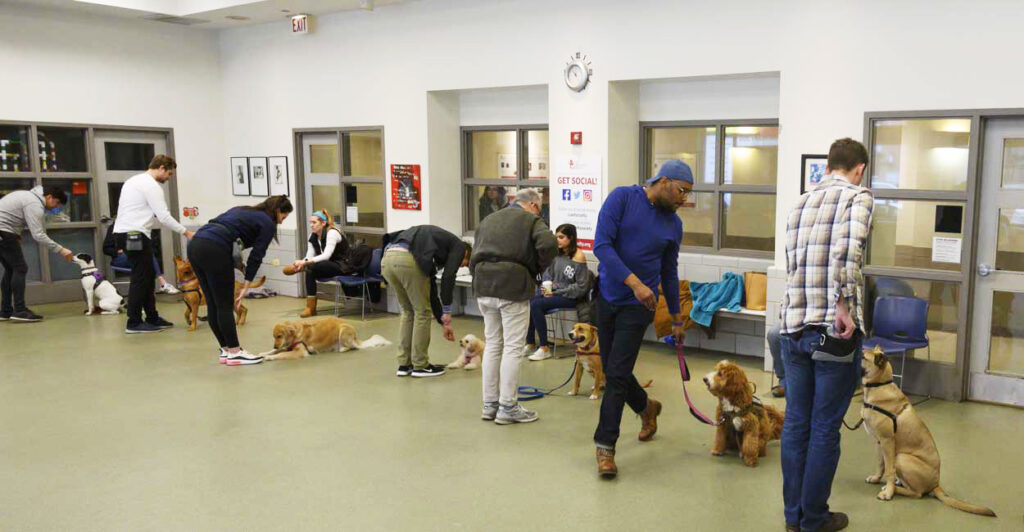
Group Classes are the most common and affordable option. They typically involve 6-10 dog-handler teams working together in a structured environment. Group classes offer:
- Socialization : Exposure to other dogs and people
- Real-world distractions : Learning to focus despite distractions
- Community : Meeting other dog owners and sharing experiences
- Cost-effective : Generally $150-$300 for a 6-8 week session
Private Training involves one-on-one sessions with a trainer, either at your home, the trainer’s facility, or a neutral location. Private training is ideal for:
- Behavior problems : Aggression, severe anxiety, or reactivity
- Customized training : Addressing specific goals or challenges
- Scheduling flexibility : Sessions tailored to your availability
- Shy or reactive dogs : Dogs who struggle in group settings
Private training is more expensive ($100-$200+ per session) but offers personalized attention and faster progress for complex issues.
Top Dog Training Schools in Vancouver
Vancouver is home to many excellent dog training schools and independent trainers. Here are some of the most reputable options:
| Training School | Location | Specialties | Contact |
|---|---|---|---|
| Dogma Training & Pet Services | Multiple locations | Puppy classes, basic/advanced obedience, agility | dogmatraining.ca |
| Bark Busters Home Dog Training | In-home (Vancouver-wide) | Private in-home training, behavior modification | barkbusters.ca |
| Paws on Main | Mount Pleasant | Puppy socialization, obedience, tricks, agility | pawsonmain.ca |
| Ruffin’ It Dog Training | North Vancouver | Puppy classes, obedience, reactive dog classes | ruffinitdogtraining.com |
| Sit Happens Dog Training | Vancouver | Positive reinforcement, obedience, behavior modification | sithappensdogtraining.com |
| Coastal Canine Academy | Richmond | Obedience, agility, scent work, competition prep | coastalcanineacademy.com |
| Unleashed Potential Canine Training | Vancouver | Private training, behavior modification, puppy training | unleashedpotential.ca |
What to Look for in a Dog Trainer
Not all trainers are created equal. Heres what to look for
Certifications and Credential
While dog training is an unregulated industry in Canada, reputable trainers often hold certifications from recognized organizations such as:
- CPDT-KA (Certified Professional Dog Trainer – Knowledge Assessed)
- CBCC-KA (Certified Behavior Consultant Canine – Knowledge Assessed)
- KPA CTP (Karen Pryor Academy Certified Training Partner)
- IAABC (International Association of Animal Behavior Consultants)
These certifications require trainers to pass exams, demonstrate practical skills, and commit to continuing education.
Training Philosophy
Ask trainers about their methods. Look for trainers who:
- Use positive reinforcement as their primary training method
- Avoid or minimize the use of aversive tools (prong collars, shock collars)
- Focus on building trust and communication
- Tailor their approach to each dog’s individual needs
Experience and Specialization
Consider the trainer’s experience with your dog’s breed, age, and any specific behavioral issues. Some trainers specialize in puppies, while others focus on reactive dogs, aggression, or dog sports.
Class Size and Environment
Visit the training facility or observe a class before enrolling. Look for:
- Clean, safe environment : Well-maintained space with secure fencing (for outdoor classes)
- Manageable class size : Ideally 6-10 dogs per class to ensure individual attention
- Positive atmosphere : Dogs and owners should look engaged and happy, not stressed or fearful
Communication and Support
A good trainer should:
- Explain techniques clearly and answer your questions patiently
- Provide written materials or resources to support your training at home
- Be available for follow-up questions between classes
- Celebrate your successes and help you troubleshoot challenges
Preparing for Your First Training Class
To get the most out of your training classes, come prepared:
- Bring high-value treats : Small, soft treats that your dog loves (cheese, hot dogs, chicken)
- Use a comfortable collar or harness : Avoid choke or prong collars
- Bring a 6-foot leash : Standard length for most training exercises
- Arrive on time : Give your dog a chance to settle before class starts
- Exercise beforehand : A tired dog is more focused and less reactive
- Be patient : Training takes time, and every dog learns at their own pace
Training Beyond the Classroom
Classes provide structure and guidance, but the real work happens at home. To reinforce what you learn in class:
- Practice daily : Short, frequent training sessions (5-10 minutes) are more effective than long, infrequent ones
- Be consistent : Use the same cues and rewards every time
- Gradually increase difficulty : Start in low-distraction environments and slowly add challenges
- Stay positive : Training should be fun for both you and your dog
- Seek help when needed : If you’re struggling, reach out to your trainer for guidance
The Benefits of a Well-Trained Dog
Investing in training pays dividends throughout your dog’s life. A well-trained dog:
Is safer : Responds reliably to recall, stays out of dangerous situations
Is more welcome : Can join you at cafes, parks, and social gatherings
Is less stressed : Understands what’s expected and feels confident in various situations
Strengthens your bond : Training builds communication, trust, and mutual respect
At Marpole Dog Walking & Boarding, we love working with well-trained dogs. They’re calmer, happier, and more enjoyable companions. If you’re considering training classes, we encourage you to take the leap—you and your dog will both benefit.
References
Learn more: house training
Learn more: read your dog’s body language
Learn more: choosing the right dog for your Vancouver lifestyle
Your Questions About Dog Boarding & Daycare, Answered
Whats the difference between group classes and private dog
Group classes offer socialization opportunities for your dog and are usually more affordable. They are great for learning basic obedience in a distracting environment. Private training, on the other hand, provides one-on-one attention and is tailored to your dogs specific needs and your training goals.
Its ideal for addressing behavioural issues or for dogs that are not comfortable in a group setting. Many Vancouver-based trainers offer both options.
How much do dog training classes cost in Vancouver?
The cost of dog training in Vancouver varies widely depending on the type of training, the trainer’s experience, and the duration of the course. Group classes can range from $150 to $300 for a multi-week course. Private training sessions are more expensive, typically costing between $80 and $200 per hour. It’s always a good idea to check with individual trainers for their specific rates and packages.
What qualifications should I look for in a dog trainer?
Look for a trainer who uses positive reinforcement methods. Certifications from reputable organizations like the Certified Council for Professional Dog Trainers (CCPDT), the Karen Pryor Academy (KPA), or the Academy for Dog Trainers (ADT) are a good indicator of a qualified professional. Don’t hesitate to ask for references from past clients and observe a class before signing up.
AI Prompts
Try These AI Prompts
- “Generate a list of questions to ask a potential dog trainer in Vancouver to ensure they are the right fit for my puppy’s separation anxiety.”
- “Create a 4-week training plan for my 6-month-old Golden Retriever to learn basic obedience commands like ‘sit’, ‘stay’, and ‘come’, including tips for practicing in Vancouver parks like Queen Elizabeth Park.”
- “Draft an email to a dog trainer in Kitsilano to inquire about their private training services for my reactive dog. Include details about my dog’s behaviour and my training goals.”
- “List five positive reinforcement techniques I can use to train my dog to walk politely on a leash in busy Vancouver neighbourhoods like Gastown.”
- “Summarize the pros and cons of group vs. private dog training for a busy professional living in downtown Vancouver.”
Looking for trusted dog care in Vancouver? Contact Yvonne & Ken to try a daycare experience — kennel-free, in-home boarding and daycare in Marpole.
Related Reading
Reinforcing training between classes is easier when your dog gets consistent daily dog walks with a professional walker.
Our dog daycare provides a structured environment to practice socialization skills learned in training class.
Next Steps: Dog Training Checklist for Vancouver Owners
- Research local trainers and read reviews specific to Vancouver and Marpole.
- Contact trainers to ask about their methods, class sizes, and schedules.
- Visit a trial class or observe a session if possible before committing.
- Prepare your dog with basic supplies and ensure vaccinations are up to date.
- Commit to regular practice at home to reinforce what you learn in class.
- Stay patient and celebrate small wins—training is a journey for you and your dog.
Deep Dive AI Prompts
Use these prompts with ChatGPT or any AI assistant to explore this topic further:
- “Explain the benefits of positive reinforcement dog training compared to traditional methods.”
- “List the top dog training schools and trainers in Vancouver with a focus on positive reinforcement.”
- “Create a step-by-step plan for socializing a puppy in an urban environment like Marpole.”
Frequently Asked Questions
How do I know if a dog training class is right for my dog? Look for classes that match your dog’s age, temperament, and skill level. A good trainer will assess your dog’s needs and recommend the best fit.
Are group classes or private sessions better for training? Group classes provide valuable socialization and are often more affordable, while private sessions offer personalized attention for specific challenges. Many Vancouver trainers offer both options.
What should I bring to a training class in Vancouver? Bring your dog’s favorite treats, a sturdy leash, waste bags, and any toys or equipment your trainer recommends. Dress for the weather, as many classes are held outdoors.
How long does it typically take to see results from training classes? Most owners notice improvements within a few weeks, but consistency and practice at home are key. Progress depends on your dog’s age, breed, and previous experience.
Pingback: Reactive Dog Training in Vancouver: A Compassionate Guide (2026)
Pingback: Preparing Your Home for a New Puppy: The Ultimate Vancouver Checklist
Pingback: Finding a Reputable Dog Breeder in BC: What Every Buyer Should Know
Pingback: Leash Training Your Dog in Vancouver: Mastering the Walk