Bringing a new puppy into your life is a momentous decision, and for many Vancouverites, the journey begins with finding the right breeder. A reputable breeder is more than just a source for a puppy; they are the architect of your future companion’s first weeks of life, influencing their health, temperament, and socialization. In a province with a vast landscape of breeders, from the Fraser Valley to Vancouver Island, distinguishing the ethical and responsible from the rest is the single most important step you can take.
TL;DR: Finding a Reputable Dog Breeder in BC
- Start with the Canadian Kennel Club’s PuppyList for trusted breeders.
- Look for breeders who prioritize health, temperament, and socialization.
- Avoid breeders who can’t provide health clearances or let you visit their dogs.
- Connect with local BC breed clubs for referrals and support.
- Remember, a good breeder is a lifelong resource, not just a seller.
This guide is designed to empower you with the knowledge to navigate the world of dog breeding in British Columbia. We will cover the essential roles of organizations like the Canadian Kennel Club (CKC), provide a comprehensive checklist for identifying a great breeder, and highlight the critical red flags that should make you walk away. With this information, you can confidently find a breeder who is a true partner in your dog ownership journey.
The Gold Standard: What a Reputable Breeder Does
A reputable breeder is a dedicated hobbyist who is passionate about the health, temperament, and betterment of a specific breed. They are not in it for profit; any money they make is reinvested into the care of their dogs, health testing, and providing an enriching environment. They view themselves as custodians of their breed and are deeply committed to every puppy they produce for its entire life.
These breeders follow a strict code of ethics, often dictated by organizations like the Canadian Kennel Club. They perform extensive health testing on their breeding dogs for genetic conditions common to the breed, ensuring they are only producing the healthiest possible offspring. Their dogs are part of their family, living in their home, not in a separate kennel facility. They prioritize socialization from birth, exposing puppies to various sights, sounds, and gentle handling to build a foundation of confidence and resilience.
The goal of a good breeder is to produce dogs that are healthy, temperamentally sound, and a good representation of the breed standard. They are a lifelong resource for their puppy buyers.
Your Breeder-Finding Toolkit in BC
Navigating the search for a breeder can feel overwhelming, but several key resources can guide you toward the right people. Your primary tool should be the national and regional breed clubs, which maintain lists of members who have agreed to adhere to a strict code of ethics and breeding practices.
| Resource | Description & How to Use | Website |
|---|---|---|
| **Canadian Kennel Club (CKC)** | The primary registry for purebred dogs in Canada. Their “PuppyList” is a searchable database of member breeders. This is the best place to start your search. | [ckc.ca](https://www.ckc.ca/Choosing-a-Dog/PuppyList/Default.aspx) |
| **BC Breed-Specific Clubs** | Most CKC-recognized breeds have a regional club in British Columbia (e.g., the Golden Retriever Club of BC). These clubs often have a breeder directory or referral service for members in good standing. | Search for “[Breed Name] Club of BC” |
| **BC SPCA Guidelines** | The BC SPCA provides an excellent guide on how to find a good breeder, with a checklist of questions to ask and signs to look for. | [spca.bc.ca](https://spca.bc.ca/faqs/how-find-good-breeder/) |
The Reputable Breeder Checklist: Green Flags vs. Red Flags
When you begin contacting breeders, use this checklist to evaluate them. A reputable breeder will welcome your questions and be transparent in their answers. Be prepared to walk away if you encounter any of the red flags.
| Green Flags (Signs of a Good Breeder) | Red Flags (Signs to Be Wary Of) |
|---|---|
| Gladly shows you their entire home/facility where dogs are kept. | Refuses to let you see the parents or where the dogs live. |
| Introduces you to the puppy’s mother (and father, if on-site). | Sells puppies from a pet store, broker, or online classified site. |
| Provides verifiable health testing certificates for the parent dogs (e.g., OFA for hips/elbows, CERF for eyes). | Cannot provide proof of health testing or makes excuses. |
| Asks you many questions about your lifestyle, home, and experience with dogs. | Is willing to sell a puppy to anyone with the money, no questions asked. |
| Has a clean, spacious, and enriching environment for puppies. | Puppies are kept in dirty, cramped, or isolated conditions. |
| Puppies are well-socialized, confident, and comfortable with handling. | Puppies are fearful, shy, lethargic, or show signs of illness. |
| Provides a written contract and health guarantee. | No contract or health guarantee is offered. |
| Insists on taking the puppy back at any point in its life if you cannot keep it. | Offers no support after the puppy goes home. |
| Specializes in only one or two breeds. | Breeds multiple different “designer” or popular breeds at once. |
| Has a waitlist for their puppies. | Always has puppies available for immediate sale. |
The First Meeting: Questions to Ask Your Potential Breeder
Once you have a promising candidate, the next step is a conversation, ideally in person at their home. This is your opportunity to interview them as much as they are interviewing you. Here are some essential questions to ask:
Health & Genetics
: “What genetic health tests do you perform on your breeding dogs, and can I see the results?”
Temperament
: “What is the temperament of the parents like? What do you do to socialize the puppies?”
History
: “How long have you been involved in this breed? What are your goals for your breeding program?”
Environment
: “Where are the puppies raised? What experiences have they been exposed to before they go home?”
Support
: “What kind of support do you offer to new puppy owners? Do you have a contract that includes a health guarantee and a return-to-breeder clause?”
Finding the right breeder is a process that requires patience and diligence. It is not a transaction, but the beginning of a relationship. By taking the time to do your research and ask the right questions, you are not only ensuring you get a healthy, well-adjusted puppy but also supporting the ethical and responsible breeding of dogs in British Columbia. This foundational step will pay dividends for the entire life of your new best friend.
References
[1] BC SPCA. (n.d.). How do I find a good breeder? Retrieved from https://spca.bc.ca/faqs/how-find-good-breeder/
[2] Canadian Kennel Club. (n.d.). The Puppy List. Retrieved from https://www.ckc.ca/Choosing-a-Dog/PuppyList/Default.aspx
Deep Dive AI Prompts
Use these prompts with ChatGPT or any AI assistant to explore this topic further:
- “What are the key differences between a responsible breeder, a backyard breeder, and a puppy mill? What specific questions should a prospective buyer ask, and what answers should raise red flags?”
- “Explain the genetic health testing that responsible breeders should perform for the most popular breeds in BC (Labrador Retrievers, Golden Retrievers, French Bulldogs, German Shepherds). What tests are breed-specific and what are universal?”
- “What are the legal requirements for dog breeders in British Columbia? Include information on the Prevention of Cruelty to Animals Act, licensing requirements, and how to report suspected puppy mills.”
- “Compare the pros and cons of getting a puppy from a breeder versus adopting from a rescue or shelter in BC. What factors should influence this decision for different types of owners?”
Frequently Asked Questions
How much should I expect to pay for a puppy from a reputable breeder in BC? Prices vary significantly by breed, but for popular breeds from health-tested parents in BC, expect to pay between $2,000 and $4,500 for a pet-quality puppy. Breeds with extensive health testing requirements (such as Cavalier King Charles Spaniels or Bernese Mountain Dogs) or those with small litter sizes often cost more. Be very cautious of puppies priced significantly below the breed average — this is often a sign of a puppy mill or backyard breeder cutting corners on health testing and early care.
What health tests should a responsible breeder have done on the parents? At minimum, both parents should have OFA (Orthopedic Foundation for Animals) or PennHIP hip evaluations, OFA elbow evaluations for large breeds, and breed-specific cardiac and eye clearances. DNA tests for breed-specific genetic conditions (such as progressive retinal atrophy, exercise-induced collapse, or degenerative myelopathy) are increasingly standard among responsible breeders. Ask to see the actual certificates — not just the breeder’s word — and verify them on the OFA website.
Is it a red flag if a breeder has puppies available immediately? It can be. Responsible breeders typically have waitlists of several months to over a year because they breed infrequently and carefully. A breeder who always has puppies available may be running multiple litters simultaneously, which is a potential indicator of a puppy mill or high-volume operation. That said, occasionally a litter has an unexpected opening — the key is to evaluate the whole picture, not any single factor in isolation.
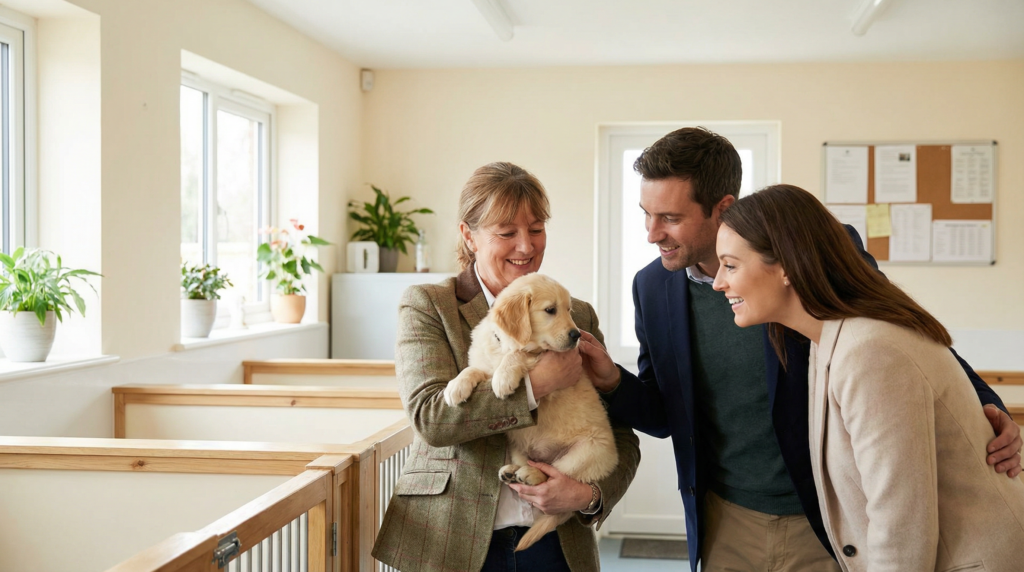
Can I visit the breeder before committing to a puppy? Yes — and you should insist on it. A reputable breeder will welcome a visit to their home or kennel, allow you to meet at least the mother (and ideally the father), and show you where the puppies are raised. Puppies raised in a home environment with regular human contact are far better socialised than those raised in a kennel or garage. If a breeder refuses a visit or insists on meeting in a neutral location to hand over the puppy, walk away.
Related Reading
- How to Choose a Veterinarian in Vancouver: A Guide for New Dog Owners
- Adopting a Rescue D…
- Dog Training Classes in Vancouver: Finding the Right Fit for You and Your Dog
Sources & Further Reading
- AKC: How to Find a Reputable Breeder
- SPCA BC: Responsible Breeding
- Humane Society: Puppy Mills vs. Responsible Breeders
Next Steps: Finding Your Ideal Puppy Checklist
- Visit the Canadian Kennel Club PuppyList to identify reputable breeders in BC.
- Contact BC breed-specific clubs for breeder recommendations and local insights.
- Arrange visits to meet breeders and see puppies in their home environment.
- Request health testing documentation and ask about the puppy’s socialization experiences.
- Speak with previous buyers or references to learn about their experiences.
- Prepare your home and schedule for welcoming a puppy, including local vet and training resources in Vancouver.