
How to Choose a Veterinarian in Vancouver
Choosing a veterinarian is one of the most important decisions you make for your dog. The best clinic for you is not necessarily the closest, largest, or most heavily reviewed. It is the clinic that communicates clearly, handles your dog thoughtfully, explains options and costs, and has a sensible plan for urgent care.
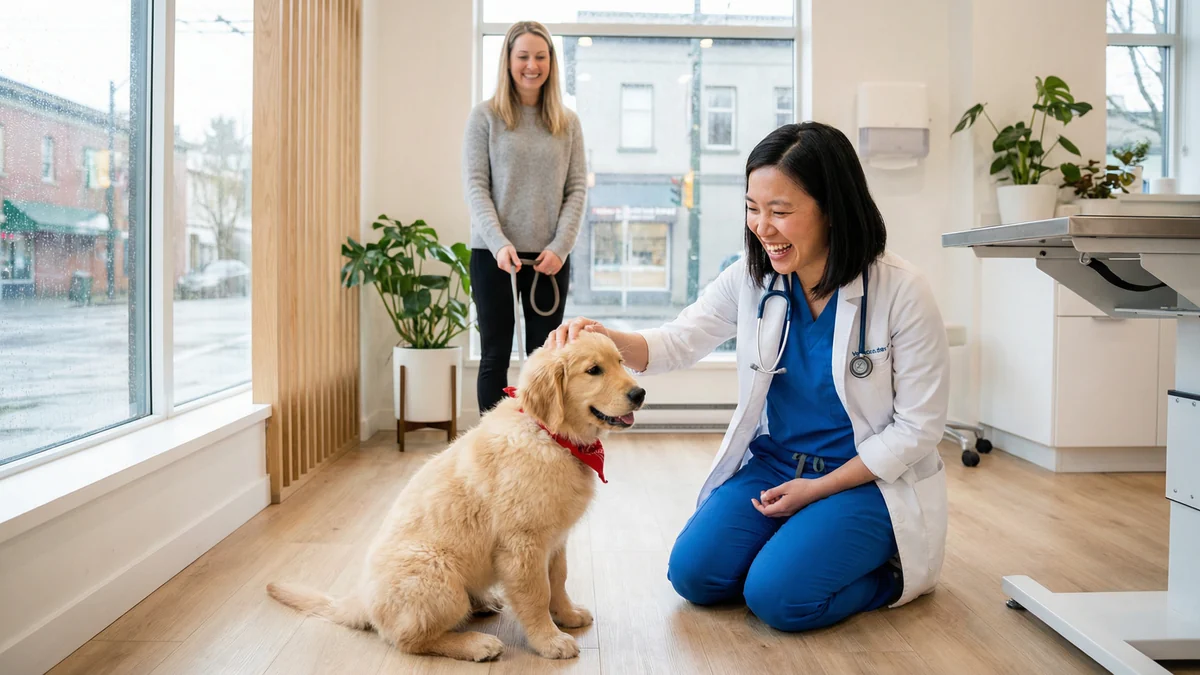
This guide will help you build a shortlist, compare clinics, ask better questions, and use the first appointment as a practical two-way test.
Quick Answer
Choose a veterinarian who is properly registered, communicates in plain language, treats your dog with patience, provides clear estimates, explains urgent-care options, and makes you feel comfortable asking questions. Reviews are useful, but the first visit often tells you more than the star rating.
Start With a Shortlist
Ask neighbours, friends, trainers, groomers, and other local dog owners which clinics they use and why. Recommendations are most useful when people describe specific experiences: communication, handling, follow-up, scheduling, and fees.
Online reviews can reveal patterns, but do not let one dramatic review make the decision. Look for repeated themes across recent reviews. Do people mention kind handling, clear explanations, rushed appointments, billing surprises, or difficulty getting urgent help?
In British Columbia, veterinarians are regulated by the College of Veterinarians of British Columbia. Registration confirms professional standing, but it does not rank clinics or guarantee a particular experience.
What to Compare Between Clinics
- Communication: Does the veterinarian explain findings, options, risks, and next steps clearly?
- Handling: How does the team work with anxious, reactive, senior, or pain-sensitive dogs?
- Access: Is the clinic accepting new patients, and how long is the wait for routine care?
- Urgent care: What happens if your dog becomes sick during business hours?
- After-hours plan: Which emergency hospital does the clinic recommend?
- Continuity: Can you usually see the same veterinarian?
- Costs: Are written estimates provided before non-emergency tests or procedures?
- Records: Can you access and transfer your dog’s medical records easily?
AAHA accreditation can be one useful signal, but many capable Canadian clinics are not AAHA-accredited. Treat it as one data point, not a guarantee that one clinic is automatically better than another.
Match the Clinic to Your Dog’s Needs
A good clinic for one dog is not automatically the best clinic for another. Before you choose, think about the type of support your dog is most likely to need.
| Your dog | What to look for |
|---|---|
| New puppy | Clear guidance on vaccines, parasite prevention, nutrition, socialization, and first-year checkups. |
| Senior dog | Comfort with chronic conditions, mobility concerns, dental health, medication reviews, and quality-of-life conversations. |
| Anxious or reactive dog | Patient handling, flexible appointment timing, low-stress options, and calm communication before and during visits. |
| Dog with ongoing symptoms | Careful follow-up, diagnostics when appropriate, and willingness to refer to specialists when needed. |
| Busy family schedule | Convenient hours, online booking, clear reminders, accessible records, and practical follow-up instructions. |
Compare Two Clinics With the Same Call
Briefly describe your dog’s age, handling needs and any ongoing care. Ask each clinic the same questions, then record the answer and date rather than relying on a star rating.
- Are new patients being accepted, and what is the next routine appointment?
- What should we do if a concern cannot wait for that appointment?
- Can you arrange a quieter arrival or another handling adjustment?
- What does the initial consultation fee include, and how are additional costs discussed?
- How do we transfer records and receive follow-up instructions?
Mark unanswered items for follow-up. A convenient appointment is useful, but it does not establish emergency capacity or specialist services. Once you book, use the first-visit preparation guide to organize records and questions.
Questions to Ask Before Choosing
| Topic | Questions |
|---|---|
| New patients | Are you accepting new dogs? How long is the usual wait for routine appointments? |
| Urgent care | What should I do if my dog becomes ill during business hours? |
| After hours | Which emergency hospital do you recommend when you are closed? |
| Anxious dogs | How do you handle fearful, reactive, or pain-sensitive dogs? |
| Costs | Do you provide written estimates? What payment or insurance-billing options are available? |
| Follow-up | How are test results, written instructions, and follow-up questions handled? |
Use the First Visit as a Test
The first appointment is a chance to evaluate the working relationship. Notice whether the team confirms your dog’s history, listens to your concerns, explains recommendations, and gives you clear next steps.
You are allowed to ask questions. You can ask why a test is recommended, what alternatives exist, what happens if you wait, and what the estimated cost includes. A good clinic should not make you feel foolish for wanting to understand your dog’s care.
If something feels unclear, ask for written instructions. If you repeatedly feel rushed, dismissed, or confused, it is reasonable to consider another clinic or a second opinion. In an emergency, though, timely care matters more than finding the perfect long-term match.
Choosing a Clinic From Marpole: Geography Matters
For a South Vancouver owner, “convenient” has two practical meanings, and it is worth deciding which one you need before you shortlist.
North, along Oak, Granville or Cambie. Most of Vancouver’s clinics sit along these corridors between Marine Drive and Broadway. The advantage is choice and, further north, access to the specialist and emergency hospitals. The cost is traffic: a 5 pm appointment on Oak Street can take 30 minutes from Marpole, and parking near Broadway is tight. Ask where clients park, and whether the clinic can text you when a room is ready so a nervous dog can wait in the car.
South, over the bridges into Richmond. The Arthur Laing and Oak Street bridges put several Richmond clinics within 10 to 15 minutes off-peak, often with free surface parking and easier drop-offs. The trade-off is bridge traffic at rush hour and the fact that some pet insurance and emergency referrals assume a Vancouver address.
Transit and on foot. If you do not drive, the Canada Line along Cambie and the Granville and Oak buses set your options. Dogs are permitted on TransLink in a carrier that fits on your lap, and small dogs travel that way routinely; larger dogs cannot ride, so a clinic within walking distance or a friend with a car becomes part of the plan. A pet taxi or our pet transportation service can cover scheduled visits when neither is available.
A vet card for your walker or sitter
Whoever cares for your dog when you are away needs the same information you would want in an emergency. Print or share a note with: clinic name, address and phone; after-hours or emergency clinic name and phone; your dog’s microchip number; current medications and doses; known allergies or conditions; your written permission for the carer to authorize treatment up to a dollar limit you choose; and two contacts who can make decisions if you cannot be reached. We ask for this before care begins, and it is the single most useful document a client can hand us.
Have an Emergency Plan Before You Need It
Your regular vet may not be open at night, on holidays, or during every urgent situation. Keep the contact information for your regular clinic and your nearest emergency hospital somewhere easy to find. If your dog has a known medical condition, ask your regular vet which signs should prompt same-day or emergency care.
This matters in daily care too. At Marpole Dog Walking & Boarding Service, we ask owners to provide veterinary and emergency-contact information before care begins, especially for boarding, medication routines, allergies, mobility concerns, or senior-dog needs.
Care Provider Vet Notes
If someone else walks, boards, transports, or cares for your dog, make vet information easy to access before there is an urgent situation.
- Vet clinic name, phone number, after-hours plan, and emergency contact.
- Medication instructions, allergies, mobility limits, and permission guidance.
- What symptoms or behavior changes should trigger a call home or vet visit.
If Veterinary Costs Are a Concern
Tell the clinic about your budget before tests or treatment begin whenever possible. Ask which steps are urgent, which are optional, whether care can be staged safely, and whether the clinic knows of current community-assistance programs.
For non-emergency care, request a written estimate and ask what is included. Pet insurance may help with some future unexpected costs, but coverage, exclusions, deductibles, and waiting periods vary. Review the actual policy before assuming it will cover a condition.
If affordability is a major concern, our guide to low-cost and subsidized vet help in Vancouver may help you find starting points.
Red Flags When Choosing a Vet
- Staff will not explain estimates, follow-up steps, or after-hours instructions clearly.
- You feel rushed when asking basic questions about your dog’s care.
- The clinic cannot tell you how records, test results, prescriptions, or referrals are handled.
- Your dog is handled in a way that feels unnecessarily stressful and no one is willing to adjust the approach.
- The clinic is not listed in the College of Veterinarians of BC online registry.
Frequently Asked Questions
How often should my dog see a veterinarian?
It depends on age, health, medications, vaccination needs, lifestyle, and your veterinarian’s assessment. Puppies, seniors, and dogs with active health concerns usually need more frequent visits than healthy adult dogs.
Should I choose a corporate or independent clinic?
Ownership structure alone does not tell you whether the care will be good. Compare the individual veterinarian, team, availability, communication, fees, continuity, and emergency plan at the specific location.
What if I want a second opinion?
You can ask for copies of your dog’s records, test results, and imaging and consult another registered veterinarian. For urgent or rapidly worsening problems, do not delay needed care only to compare clinics.
What information should I keep handy?
Save your regular clinic number, after-hours instructions, emergency hospital information, medication details, vaccine records, and your dog’s microchip number. If someone else cares for your dog, make sure they can access the important information too.
Sources
Related Guides
- Your Puppy’s First Vet Visit in Vancouver
- Dog Dental Care at Home
- Parasite Prevention in Vancouver
- Puppy Vaccination Schedule in Vancouver
- Emergency First Aid for Dog Owners
- Adopting a Rescue Dog in Vancouver
- Senior Dog Care in Vancouver
Once your dog’s health needs and routine are clear, check availability with Marpole Dog Walking & Boarding Service for dependable local walking, daycare, or boarding support.
Check Boarding Availability & Fit