
Reactive Dog Training in Vancouver
Living with a reactive dog in Vancouver can make ordinary walks feel stressful. Narrow sidewalks, busy parks, bicycles, skateboards, construction noise, and other dogs can appear quickly, and many owners start planning their routes around what their dog might react to.
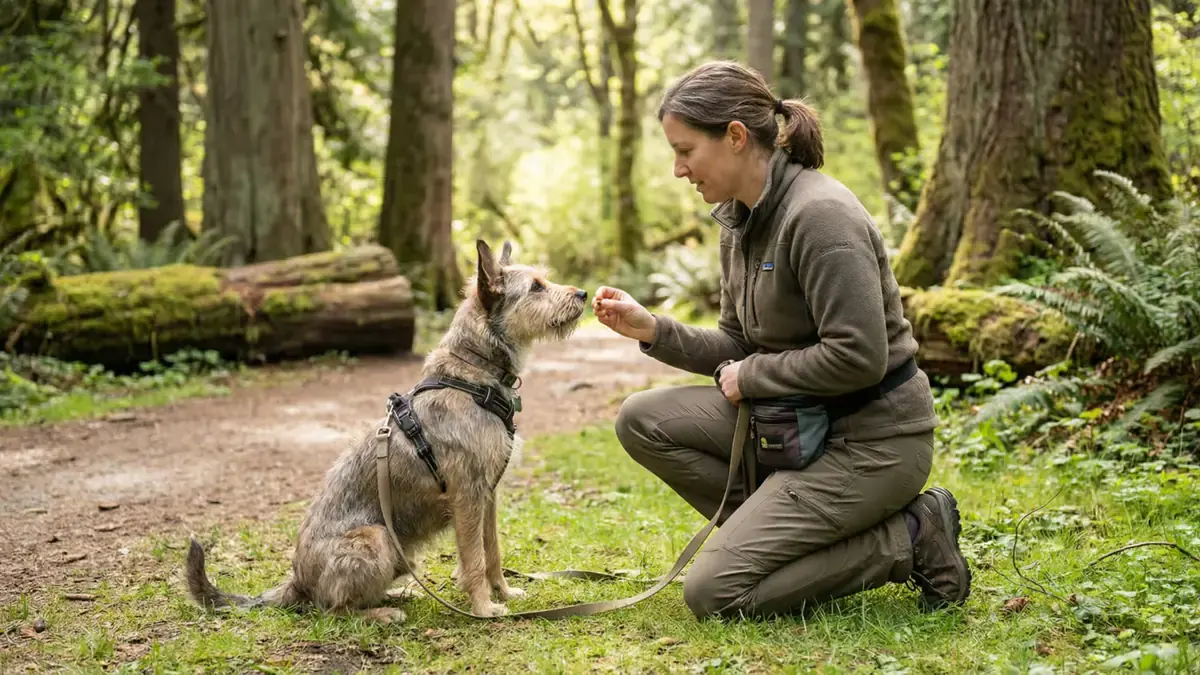
Reactivity is not a character flaw. Many reactive dogs are afraid, frustrated, overwhelmed, or too aroused to think clearly. The goal is not to force a dog through big feelings, but to reduce rehearsal, build safety, and create better choices at a distance where the dog can still learn.
What Reactivity Can Look Like
A reactive dog may bark, lunge, freeze, growl, whine, spin, pull hard, or refuse food when they see a trigger. Common triggers include other dogs, unfamiliar people, bicycles, skateboards, strollers, loud vehicles, narrow paths, or surprise greetings.
Those behaviours can look dramatic, but they do not always mean the dog is aggressive. Often the dog is trying to create distance, release frustration, or cope with a situation that feels too intense.
Start with Management
Management is not giving up on training. It is how you stop your dog from practicing the same reaction over and over while you build better skills.
- Choose quieter routes and times of day when possible.
- Cross the street, turn around, or step behind a parked car before your dog explodes.
- Use distance instead of waiting to see whether your dog can “handle it.”
- Avoid crowded narrow paths where you cannot create space.
- Carry high-value food your dog rarely gets at home.
- Use a secure harness or collar setup that your dog cannot slip out of.
Reactive Dog Support Path
Management, training, and walking support are related, but they are not the same thing. A regular walker can follow a calm plan, but severe reactivity should be guided by a qualified trainer or behavior professional.
- Management: avoid known triggers, create distance, and choose quieter routes.
- Training: build skills with a qualified professional using a clear behavior plan.
- Walking support: maintain predictable, lower-stress routines once safety and fit are clear.
Threshold Distance
Threshold distance is the distance at which your dog can notice a trigger and still think, eat, respond, and recover. For one dog that may be half a block away. For another, it may be across a field.
Training works best below threshold. If your dog is already barking, lunging, or unable to take food, the trigger is probably too close or the situation is too hard. Create distance first, then try again another day at an easier level.
Training Foundation
Many reactive-dog plans use some version of counter-conditioning and desensitization. In plain language, that means helping your dog notice the trigger at a safe distance, then pairing that moment with something good before the dog tips into panic or frustration.
- Find a distance where your dog can notice the trigger calmly.
- Mark the moment with a soft “yes” or click, then offer a high-value treat.
- Let the trigger disappear, then let the treats stop.
- Repeat in short sessions and avoid pushing closer too quickly.
This process is simple to describe but easy to rush. A certified trainer can help you read body language, choose safe setups, and avoid accidentally making the reaction stronger.
Vancouver Walk Planning
Vancouver can be difficult for reactive dogs because many neighbourhood walks include tight sidewalks, sudden dogs around corners, busy school routes, delivery vehicles, and shared park paths. A calmer plan often helps more than a longer walk.
- Use wider streets or quieter residential blocks for decompression walks.
- Give extra space near playgrounds, sports fields, cafe patios, and off-leash boundaries.
- Skip busy trails if your dog is already stressed before you arrive.
- Build in sniffing time, because sniffing can help many dogs settle.
- End while the walk is still going well instead of waiting for one more trigger.
Vancouver Trigger Map Notes
A simple trigger map can make walks safer and calmer. Note where your dog struggles and where they recover well, then use that information to plan easier routes.
- Mark tight sidewalks, busy dog corners, school pickup times, construction, and lobby bottlenecks.
- Identify quiet blocks, wider crossings, and places where your dog can sniff and reset.
- Share this map with anyone helping with walks so the plan stays consistent.
Finding a Certified Trainer
If reactivity starts suddenly, worsens or comes with pain or other health changes, arrange a veterinary assessment alongside training support. For bite risk or severe distress, discuss a coordinated plan with your vet and a qualified behaviour professional.
If your dog’s reactions are intense, frequent, or hard to interrupt, a qualified trainer can make the process safer and less lonely. Look for force-free professionals who are comfortable with reactivity and can explain how they keep dogs below threshold.
Useful credentials to look for include CPDT-KA, KPA CTP, VSA-CDT, and IAABC-related qualifications. Ask whether the trainer uses positive reinforcement, whether they offer private sessions before group classes, and how they handle dogs who cannot work close to other dogs yet.
Frequently Asked Questions
Is my reactive dog dangerous?
Not necessarily. Reactivity and dangerousness are not the same thing. Many reactive dogs are fearful, frustrated, or overwhelmed. However, any dog can bite if pushed past their limits, so management and professional guidance matter.
Will my reactive dog ever be normal?
Many reactive dogs improve significantly with thoughtful management and consistent training. Some become much easier to walk in public. Others still need careful route planning, but their reactions become less intense and easier to recover from.
Should my reactive dog go to daycare?
Only if the daycare can assess your dog carefully and provide a setup that is genuinely appropriate. Some reactive dogs do not belong in group daycare. Others may do well with familiar dogs, small groups, and careful introductions.
Can a dog walker help with reactivity?
A dog walker is not a substitute for a trainer, but a calm, predictable walking routine may help some dogs maintain a steadier baseline between training sessions. The walker should understand your dog’s triggers, route needs, and safety plan.
Related Guides
- Understanding dog reactivity in Vancouver
- Leash training your dog in Vancouver
- Dog training classes in Vancouver
- American Veterinary Society of Animal Behavior position statements
- Understanding Your Dog’s Body Language
- Dog Walk Routes in Marpole
Need a calmer walking routine? If your dog is a suitable fit for our care model, contact Marpole Dog Walking & Boarding Service to discuss your dog’s routine, temperament, and neighbourhood needs.