
Kennel-Free Dog Boarding in Vancouver: Benefits, Limits & Fit
Kennel-free dog boarding means your dog stays in a home environment rather than a traditional kennel run. For the right dog, that can mean a quieter routine, fewer dogs, more individual attention, and a stay that feels closer to normal life.
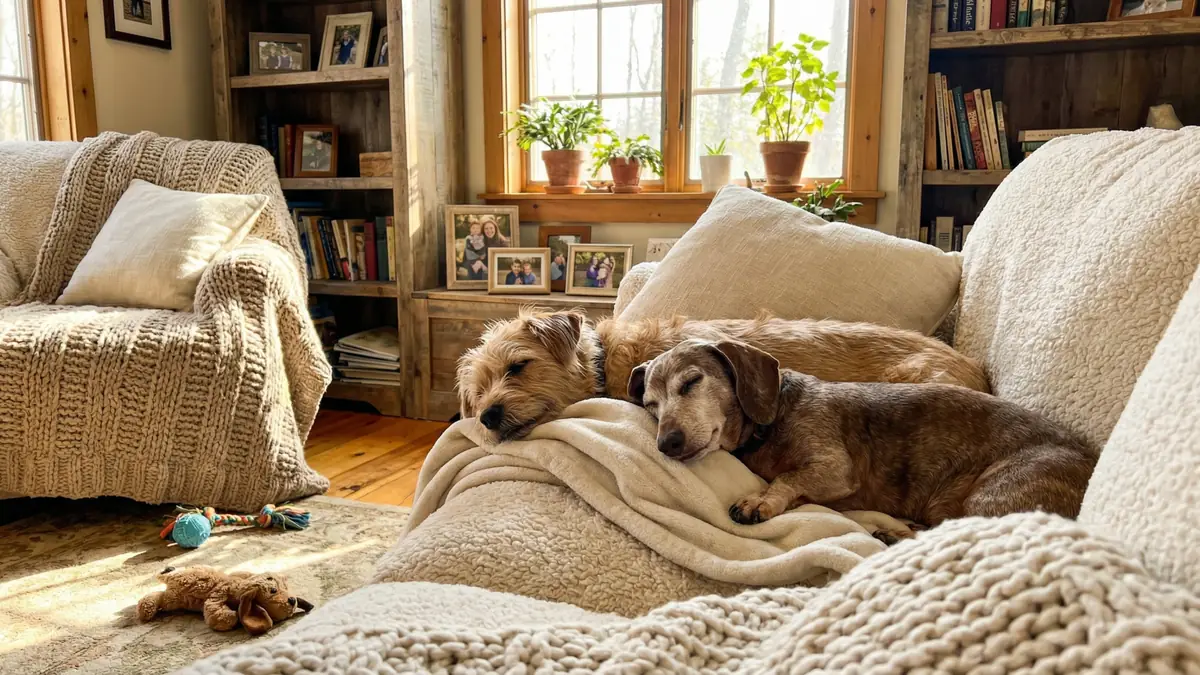
It is not automatically the best choice for every dog. Some dogs are happier in a structured kennel, a private-room dog hotel, or their own home with a sitter. The real question is fit: your dog’s temperament, the caregiver’s supervision style, the number of dogs present, and the details of the daily and overnight routine.
Quick Answer
Kennel-free boarding can be a good fit for dogs who settle well in a calm home, prefer a smaller group, and benefit from familiar routines. It is especially worth considering for small dogs, senior dogs, and dogs who find large facilities stressful, but the right choice still depends on supervision, compatibility, overnight care, and your dog’s temperament.
What Kennel-Free Boarding Means
In a kennel-free setup, dogs usually live as part of the caregiver’s household. They rest indoors, follow a home routine, go for walks, eat on a schedule, and sleep in an arrangement agreed on before the stay. There may still be gates, crates, separate rooms, or other safety boundaries when needed. “Kennel-free” should not mean unstructured.
A good provider should be able to explain where dogs sleep, how dogs are supervised, how meals are separated, how introductions are handled, and what happens overnight.
Kennel-Free vs. Kennel vs. Sitter
| Care model | May suit | Important questions |
|---|---|---|
| Kennel-free / in-home boarding | Dogs who settle well in a home and are compatible with a small group. | How many dogs are present? Who is there overnight? Where does each dog sleep? |
| Traditional kennel | Dogs comfortable with structure, separate runs, and a facility routine. | How often are dogs exercised? How much individual attention is included? |
| Dog hotel or resort | Owners who want private rooms or added amenities. | Which services are included, and how much time is group play versus rest? |
| In-home pet sitter | Dogs who are most comfortable staying in their own home. | Is the sitter staying overnight or visiting? What is the backup plan? |
Main Benefits for the Right Dog
1. A quieter home routine
Some dogs settle better with household rhythms than with the noise and movement of a busy facility. A calmer environment can be especially helpful for dogs who enjoy predictable walks, meals, naps, and evening routines.
2. Fewer dogs and more individual attention
Small-scale boarding can make it easier for a caregiver to notice changes in appetite, mood, bathroom habits, sleep, or comfort. Lower numbers are not a guarantee by themselves, but they can support closer supervision when the provider is attentive.
3. Familiar daily patterns
Dogs often feel more secure when the day has a familiar shape: breakfast, walk, rest, outdoor breaks, dinner, quiet evening, and sleep. A home-style setting can make that rhythm easier to maintain.
4. Better fit for some small or senior dogs
Small dogs and senior dogs may appreciate a quieter environment, but fit still matters. Age or size alone does not determine the right care model. Ask how the provider handles stairs, slippery floors, rest, medication, separation, and dog compatibility.
5. Less exposure to large rotating groups
A smaller group may reduce exposure to constant introductions and high-energy play. It does not eliminate health or behavior risks, so providers should still have clear policies for illness, vaccines, sanitation, and separating dogs when needed.
Which Dogs May Do Well
Kennel-free boarding may be a good fit for dogs who:
- Are comfortable in a home environment.
- Can settle around one or a few compatible dogs.
- Enjoy predictable walks, meals, and rest.
- Do not guard food, toys, sleeping spaces, or people.
- Can sleep calmly in the agreed overnight arrangement.
Kennel-Free Fit Snapshot
Kennel-free boarding is often strongest for dogs who value routine, familiar people, quiet rest, and a home environment over high-energy group activity.
- Often a good fit: small dogs, senior dogs, lower-energy dogs, and dogs who relax well in a calm home.
- Helpful signs: your dog can nap away from you, eat normally in a new place, and recover after a short transition period.
- Worth discussing: medication, mobility limits, nighttime needs, anxiety cues, and any handling sensitivities.
Which Dogs May Need Another Setup
A different care option may be safer if your dog has severe separation distress, significant reactivity, escape behavior, resource guarding, complex medical needs, or difficulty settling in unfamiliar homes. That does not mean your dog is “bad.” It means the care environment needs to match the dog honestly.
When Another Setup May Be Kinder
A good boarding decision should protect the dog’s comfort, not just fill a booking. Some dogs may do better with veterinary boarding, an in-home sitter, a behavior specialist, or care from someone they already know.
- Dogs with complex medical monitoring or urgent medication schedules.
- Dogs with bite history, severe separation distress, or unsafe escape attempts.
- Dogs who cannot settle in a new home even after a careful familiarization step.
- Dogs who need a higher-exercise or more specialized environment than small-scale boarding can provide.
Questions to Ask a Provider
- How many dogs are typically present at one time?
- Where will my dog sleep overnight?
- Who is responsible for the dogs overnight?
- How are meals, chews, toys, and rest areas managed?
- How are new dogs introduced?
- What happens if dogs do not get along?
- Can you follow my dog’s feeding, medication, and bathroom routine?
- How do you handle illness, injury, or emergency care?
- What updates will I receive during the stay?
Our Kennel-Free Boarding Model
Marpole Dog Walking & Boarding Service provides small-scale, in-home boarding in Marpole and South Vancouver for compatible dogs. Our focus is calm routine, careful fit, owner communication, and individual attention rather than large-group play or kennel-style turnover.
Many people like to try a day of daycare so that everyone can get to know each other. Although this is not required, we do find that it can be helpful. For longer stays, we will talk through your dog’s temperament, routine, comfort around other dogs, and any health or handling needs before deciding whether our home setting is appropriate.
FAQ
Is kennel-free boarding always better than a kennel?
No. Kennel-free boarding may be calmer and more personal for some dogs, while a traditional kennel or dog hotel may be better for others. The best choice depends on your dog and the provider’s actual routine.
Is kennel-free boarding good for anxious dogs?
Sometimes, but not always. Mildly nervous dogs may benefit from a quiet home routine. Dogs with severe distress, escape behavior, or strong reactivity may need a private sitter or another specialized arrangement.
How many dogs should be in a kennel-free home?
There is no universal number. Ask how many dogs are present, how they are selected, and how the caregiver supervises meals, rest, introductions, and overnight sleep.
What should I ask before booking?
Ask about sleep, supervision, group size, introductions, health policies, emergency plans, medication, updates, pricing, and what happens if the provider decides your dog is not a fit.
Related Reading
- How to choose safe dog boarding in Vancouver
- Preparing your dog for overnight boarding
- How to choose a safe dog daycare in Vancouver
- Contact us to discuss fit and availability
- Kennel-Free Boarding for Small and Senior Dogs
- Managing Separation Anxiety in Dogs
Considering kennel-free boarding? If you live in Marpole, South Vancouver, Oakridge, Kerrisdale, or nearby, we can talk through your dog’s routine and whether a calm home-style boarding setup is a good match.