
Dog Training Classes in Vancouver: Find the Right Fit
Dog training should make daily life easier, not more stressful. The right class can help your dog learn useful skills, help you understand your dog more clearly, and give both of you a calmer way to handle busy Vancouver life.
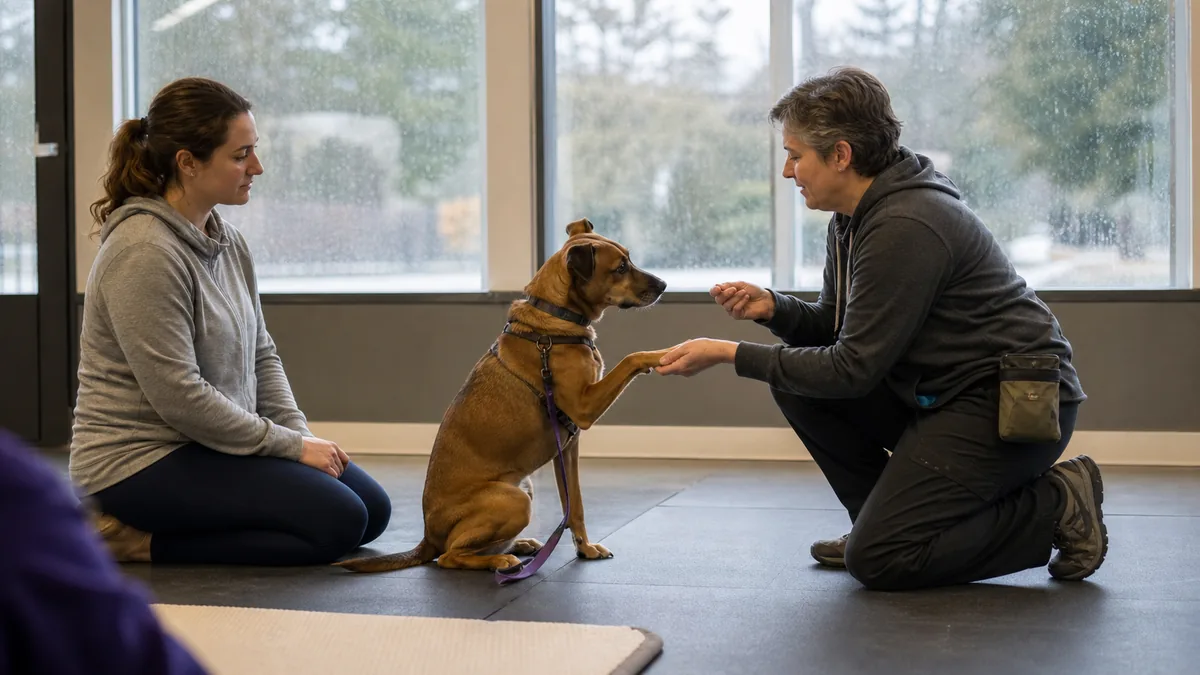
This guide is for Vancouver dog owners comparing puppy classes, basic manners, leash training, private coaching, and behaviour support. It will help you choose a humane trainer, avoid red flags, and decide whether a group class or private session is the better fit.
Quick Answer
Choose a dog training class that uses reward-based methods, keeps class sizes manageable, explains what happens if a dog is fearful or reactive, and fits your dog’s age, temperament, and current skill level. For serious fear, aggression, or reactivity, private coaching is often safer than a busy group class.
Why Training Matters
Good training is not about creating a robotic dog. It is about communication. A dog who understands simple cues, leash expectations, settling skills, and polite greetings is easier to include in family life and safer around traffic, other dogs, visitors, and neighbourhood distractions.
Training also helps owners. A good trainer can watch your timing, explain your dog’s body language, and show you how to practise in small steps. That outside perspective is hard to get from videos alone.
At Marpole Dog Walking & Boarding Service, we notice how much easier daily care becomes when a dog has calm leash manners, a reliable recall foundation, and the ability to settle. Training does not have to be fancy to be valuable. It just has to be kind, clear, and consistent.
Types of Dog Training Classes
| Class type | Best for | What to ask |
|---|---|---|
| Puppy kindergarten | Young puppies learning confidence, handling, gentle play, and basic manners | How do you balance socialization with vaccination safety? |
| Basic manners | Dogs learning sit, down, recall, loose-leash walking, settle, and polite greetings | How much individual coaching is included? |
| Leash skills | Dogs who pull, zigzag, or struggle to focus on walks | Do you use reward-based methods and comfortable equipment? |
| Reactive-dog classes | Dogs who bark, lunge, freeze, or panic around triggers | How much distance is provided, and what happens if a dog is overwhelmed? |
| Private training | Specific behaviour goals, scheduling needs, fearful dogs, or complex cases | Will I receive a written plan and follow-up exercises? |
Provider lists change quickly, so treat directories as starting points. BC SPCA AnimalKind, certification directories, veterinarian referrals, and local recommendations can all help, but you still need to ask about methods, class size, experience, and fit for your dog.
Training Class Fit Snapshot
The best class is the one your dog can learn in, not simply the closest or busiest option.
- Group classes may suit social dogs who can focus around mild distractions.
- Private training may be better for fear, reactivity, handling issues, or specific home problems.
- Puppies, seniors, and anxious dogs may need smaller or calmer setups.
Group Classes vs. Private Training
Group classes are useful for puppies and dogs who can learn around other dogs without becoming too stressed. They are usually more affordable than private training and give owners a chance to practise with normal distractions.
Private training is better when your dog needs more space, has a specific behaviour concern, or cannot focus safely in a group. It can also be useful for busy families who need help building a practical routine at home.
If your dog is barking, lunging, hiding, snapping, or unable to take food in class, they may not be stubborn. They may be over threshold. In that case, private coaching or a specialized reactivity program is usually kinder and more effective.
How to Choose a Trainer
Dog training is not regulated in the same way as veterinary medicine, so owners need to do some screening. A good trainer should be able to explain what they do, why they do it, and how they adapt when a dog is worried or frustrated.
- Ask what training methods they use and what equipment they recommend.
- Look for reward-based, force-free, or humane training language backed by practical detail.
- Ask whether you can observe a class before enrolling.
- Check class size and whether assistants are present.
- Ask how they handle barking, lunging, fear, or dogs who cannot participate comfortably.
- Look for clear communication, realistic expectations, and respect for your dog.
Credentials can help, but they are not the whole story. Useful signals may include CPDT, KPA, IAABC, Academy for Dog Trainers, Fear Free, or BC SPCA AnimalKind involvement. The most important thing is whether the trainer uses humane methods and has experience with your dog’s actual needs.
Walker & Trainer Role Boundary
A dog walker can support a routine, but behavior modification should be led by a qualified trainer or behavior professional.
- Ask trainers about credentials, methods, safety plans, and experience with your dog’s issue.
- Share the trainer’s plan with walkers or caregivers so handling stays consistent.
- Do not expect daycare or walks to replace a structured training plan.
Questions Before Enrolling
Before you choose a class, ask a few practical questions. Good answers should sound specific, kind, and realistic rather than vague or salesy.
- How many dogs are in each class, and how much individual coaching is included?
- What happens if my dog is scared, overexcited, barking, or unable to focus?
- Do you use food rewards, play, praise, or other positive reinforcement?
- What equipment do you recommend, and what tools are not allowed?
- Can I observe a class before registering?
- Will I receive homework or a simple practice plan between sessions?
If the answers leave you uneasy, keep looking. The right trainer should make you feel more informed, not pressured.
Red Flags to Avoid
Be cautious if a trainer promises instant results, guarantees a cure, blames behaviour on dominance, refuses to let you observe, or requires tools that cause pain or fear. Also be careful with anyone who dismisses fear, tells you to punish growling, or makes you feel embarrassed for asking questions.
A good trainer should help both you and your dog feel safer and more capable. Training can be challenging, but it should not rely on intimidation.
How to Prepare for the First Class
Before class, ask what to bring and whether your dog needs vaccination records, a mat, special treats, a harness, or a fixed-length leash. Avoid feeding a large meal right before class, and bring small treats your dog truly likes.
Arrive early enough to let your dog settle, but not so early that they become exhausted before class starts. If your dog is nervous, stay farther from the entrance and give them space. The first class is often about learning the environment as much as learning the exercises.
Between classes, practise for a few minutes at a time. Short daily sessions work better than one long weekend session. For leash-specific help, see our guide to leash training your dog in Vancouver.
Where to Practise Between Classes in Marpole
A weekly class is an hour; the other 167 hours are where the skills either stick or fade. These local spots give you a ladder of difficulty for the homework most trainers assign.
- Your own block: sits at every curb, loose-leash walking with no distractions. Do this first and often.
- Winona Park: open space with long sightlines, good for recall on a long line and for watching other dogs from a distance your dog can handle.
- Fraser River Park path: passing cyclists and joggers make it a natural place to practise “leave it” and settling on a bench.
- Marpole Village on Granville: storefronts, doorways and crossings for polite waits and short stays with real-life distractions.
- Marine Gateway plaza: the graduate level: crowds, trains overhead and elevators. Bring your best treats and keep sessions short.
From November to March, indoor class venues matter more than the trainer’s website suggests. Ask where the class actually runs on a wet night and whether there is somewhere dry to wait with a puppy.
On our walks we reinforce the basics most classes teach: a pause at curbs, a loose leash past other dogs, and waiting at doors. Tell us the cues your dog is learning and we will use the same words.
Frequently Asked Questions
How much do dog training classes cost in Vancouver?
Costs vary by trainer, class length, location, and whether the format is group or private. Group classes are usually less expensive than private sessions. Always check the current provider’s price, refund policy, and what support is included.
Are group classes right for reactive dogs?
Sometimes, but only if the class is specifically designed for reactive dogs and provides enough space, structure, and safety. Many reactive dogs do better with private coaching first.
What should I bring to dog training class?
Bring high-value treats, a comfortable harness or collar, a fixed-length leash, waste bags, water if needed, and anything your trainer requests. Avoid retractable leashes in class unless the trainer specifically asks for one.
How soon will I see results?
You may notice small improvements within a few sessions, but lasting change depends on daily practice, the dog’s age and temperament, and how difficult the behaviour is. The best training progress is steady, not dramatic.
Related Guides
- Leash Training Your Dog in Vancouver
- Reactive Dog Training in Vancouver
- Puppy Socialization in Vancouver
- Understanding Your Dog’s Body Language
Training and routine work best together. If you need consistent walks or calm owner-operated care in Marpole or South Vancouver, check availability with Marpole Dog Walking & Boarding Service.
Check Boarding Availability & FitAsk the same questions of each class
Record the trainer’s methods, class size, observation policy, total cost and approach when a dog struggles. Compare the answers before choosing, and ask how the class fits your dog’s current needs.