Vancouver Dog Licence:
Cost, Rules and How to Apply
Licence fees and application channels checked: September 7, 2026.
In Vancouver, every dog and service dog over 3 months old must have a City dog licence. A standard licence costs $68 per dog, per year, and renewing before the expiry date helps you avoid the City’s $10 late-renewal penalty.
This guide explains the current dog-licence cost, who needs one, how to apply or renew, what to do if you lose a tag, and how transfers and service-dog licences work. For the latest official details, confirm with the City of Vancouver dog-licence page.
Vancouver Dog Licence at a Glance
- Who needs one: All dogs and service dogs over 3 months old living in Vancouver.
- Standard licence: $68 per dog, per year, with no tax.
- Late renewal: $10 penalty if renewed after the licence expires.
- Replacement tag: $8, tax included.
- Transfer from another municipality: $8, tax included, with proof of a valid current licence.
- Service dogs: Free licence with valid Province of BC Guide Dog and Service Dog Certification.
- Where to apply: Online through the City, by phone, or in person through Vancouver Animal Services or City Hall.
Who Needs a Dog Licence?
A dog licence is mandatory in Vancouver. The City’s dog-licensing page says dogs and service dogs over 3 months old must have a licence if they live in the city. This applies whether you live in Marpole, South Vancouver, Oakridge, Kerrisdale, or another Vancouver neighbourhood.
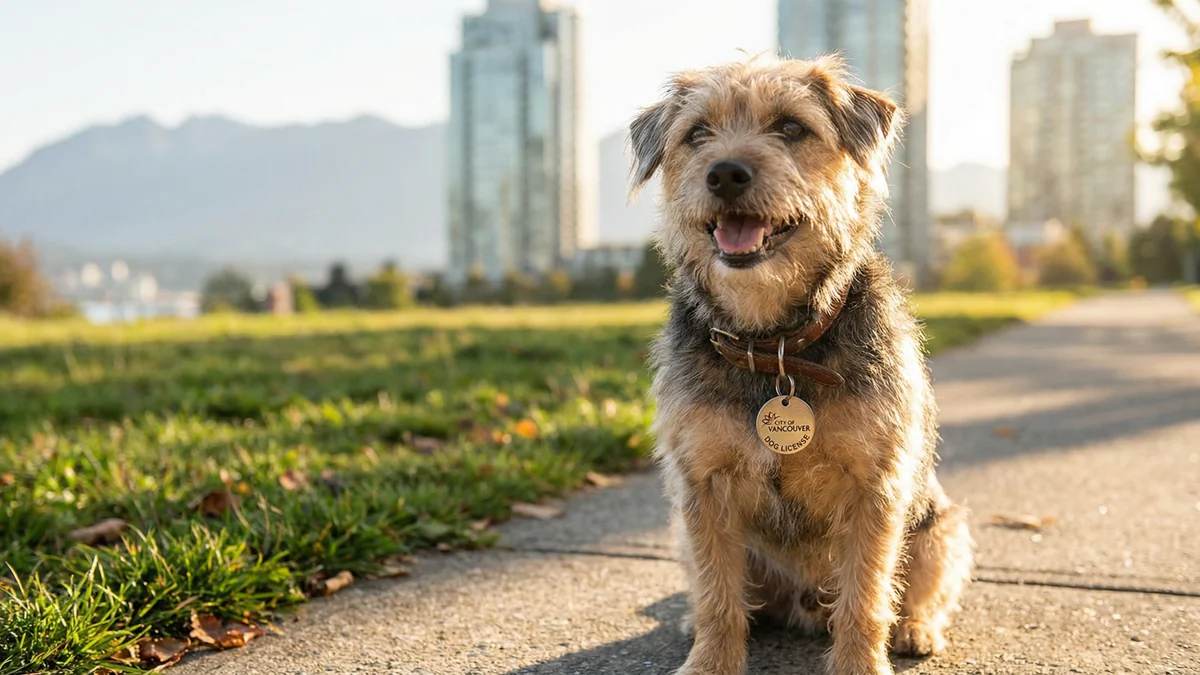
The licence tag should be attached securely to your dog’s collar or walking harness when your dog is outside. If your dog slips out of a yard, backs out of a collar, or gets separated from you at a park, the tag gives City staff and neighbours another way to identify your dog and connect them with you.
Vancouver Dog-Licence Fees
| Licence or service | Current cost | Details |
|---|---|---|
| Standard dog licence | $68 per dog, per year | No tax. Applies to most dogs. |
| Standard renewal | $68 per dog, per year | No tax. Renew before expiry to avoid the late penalty. |
| Late renewal penalty | $10 | Applies when a licence is renewed after it has expired. |
| Replacement tag | $8 | Tax included. For lost or damaged licence tags. |
| Transfer from another municipality | $8 | Tax included. Requires proof of a valid current licence from another municipality. The expiry date stays the same. |
| Certified service dog | Free | Requires valid Province of BC Guide Dog and Service Dog Certification. |
| Aggressive dog licence | $222 per dog, per year | No tax. Applies only when the owner has received an official Aggressive Dog letter from the City. |
Fees and procedures can change, so check the City’s current fee information before applying or renewing.
How to Apply or Renew
The fastest option is to start with the City’s official dog-licence page and follow the current online application or renewal instructions. If you are renewing, check the expiry date first so you can avoid the $10 late penalty.
Before You Apply
- Have your dog’s basic information ready, including name, age, breed or mix, colour, and identifying details.
- Have your current contact information ready, including address, phone number, and email.
- If your dog is microchipped, keep the microchip number handy.
- If you are transferring a valid licence from another municipality, have proof of that licence available.
- If you are applying for a free service-dog licence, have the required Province of BC certification available.
Ways to Apply
- Online: Apply or renew through the City of Vancouver dog-licence page.
- By phone: Call 3-1-1 and follow the City’s current phone-payment instructions.
- In person: Visit Vancouver Animal Services or City Hall during current public hours.
Once your tag arrives, attach it securely to your dog’s everyday collar or harness. Update your City account, personal ID tag, and microchip registry whenever your address or phone number changes.
Moving, Transfers, and Service Dogs
Moving to Vancouver from Another Municipality
A licence from another municipality does not automatically replace a Vancouver licence. However, if your dog already has a valid current licence from another municipality, the City of Vancouver allows a transfer for $8, tax included, with proof of the existing licence. The licence expiry date remains the same.
Changing Owners
Dog licences are not transferable between owners. If a dog has a new owner, the new owner must apply for a new licence.
Service Dogs
Service dogs must also be licensed in Vancouver, but the annual licence is free for certified teams with valid Province of BC Guide Dog and Service Dog Certification. Confirm the current documentation requirements with the City when applying.
Why Licensing Matters
A licence is a practical safety tool. If your dog gets away during a walk or slips out while a gate is open, a current licence tag helps identify your dog as registered with the City and gives Animal Services another route to contact you.
The City says dog-licence fees support services such as lost-dog reunification, shelter support, dog park planning, public education and enforcement, and emergency pet registry support. That makes licensing useful for individual owners and for the wider Vancouver dog community.
What a Licence Does When a Dog Goes Missing
The licence fee is easiest to understand as insurance for the worst afternoon of the year. When Vancouver Animal Services picks up a loose dog, the tag number is the fastest route back to you: a call or a text from the officer, often before the dog reaches the shelter. An unlicensed dog is impounded and held while staff try to trace an owner through a microchip or public notices, and the owner pays impound and boarding fees on top of buying the licence before release. Hold periods for unclaimed dogs are short, so the difference between a tag and no tag can be the difference between a same-day reunion and a much harder outcome.
Vancouver Animal Services operates from its shelter at 1280 Raymur Avenue in East Vancouver. If your dog goes missing in Marpole, report it to Animal Services through 3-1-1 straight away, check the City’s found-animals listing, and post to the local neighbourhood groups; dogs from the south side of the city are regularly found near the river and around Marine Gateway.
One practical note from a walker’s perspective: a tag with your phone number on the collar reunites a dog faster than anything else, and the licence is what makes the City’s system work for you. Keep both current, along with the microchip registration, and tell your walker or sitter if a tag comes off.
Licence Tag, ID Tag, and Microchip
A City licence tag matters, but it should be part of a layered identification plan:
- City licence tag: Shows that your dog is registered with Vancouver.
- Personal ID tag: Gives a neighbour or passerby a direct phone number to call.
- Microchip: Provides permanent identification if a collar or tag is lost.
For everyday walks, we like redundancy: a current licence, a readable personal tag, and an up-to-date microchip record give your dog more than one way home.
Check the Contact Details, Not Just the Tag
After moving or changing phone numbers, check three separate records: your City licence, the number printed on the personal tag and the microchip registry. Updating one does not mean the others have changed.
- Read the tag and make sure the number is still reachable.
- Confirm the licence expiry and set a reminder before it lapses.
- Ask your vet which registry holds the microchip record if you are unsure.
- Give your caregiver a current owner and backup contact before the next outing.
The City licence page includes the update and replacement routes. Preparing a new puppy’s records? Use the first vet visit guide.
Vancouver Dog-Licence Checklist
- Confirm your dog is over 3 months old and lives in Vancouver.
- Decide whether you need a new licence, renewal, replacement tag, municipal transfer, or service-dog licence.
- Check the current City fee and expiry details before paying.
- Apply or renew through the official City process.
- Attach the licence tag securely to your dog’s collar or harness.
- Update your City account, personal ID tag, and microchip registry if your contact details change.
- Set a calendar reminder before the next renewal date to avoid the $10 late penalty.
Frequently Asked Questions
Do all dogs in Vancouver need a licence?
Yes. The City says dogs and service dogs over 3 months old must have a Vancouver dog licence.
How much is a Vancouver dog licence?
A standard dog licence costs $68 per dog, per year, with no tax. Renewing after expiry can result in a $10 late penalty.
What does a replacement dog tag cost?
A replacement licence tag costs $8, tax included.
Can I transfer my dog’s licence when I move to Vancouver?
If your dog has a valid current licence from another municipality, the City of Vancouver allows a transfer for $8, tax included, with proof of the existing licence. The expiry date remains the same. A licence cannot be transferred to a new owner.
Do service dogs need a Vancouver licence?
Yes. Service dogs still need a City licence, but the licence is free with valid Province of BC Guide Dog and Service Dog Certification.
What happens if I renew late?
The City lists a $10 late renewal penalty. Renew before your licence expiry date to avoid it.
Official Source and Related Guides
For the latest rules, fees, hours, forms, and contact information, use the City of Vancouver dog-licence page.
- Best off-leash dog parks in Vancouver
- Dog walking routes in Marpole
- Dog walking and in-home dog care services
- Adopting a Rescue Dog in Vancouver
- Preparing Your Home for a New Puppy
- Leash Training and Etiquette in Vancouver
New Vancouver Dog Owner Checklist
After licensing, build the basic local-care file you would want any trusted helper to have.
- Vet contact, emergency contact, vaccination status, and medication notes.
- Walking routine, leash setup, triggers, and safe routes.
- Building access, pickup instructions, and rainy-day care preferences.
Need Local Dog Care in Marpole or South Vancouver?
Licensing is one small part of keeping your dog safe and well cared for. If you need reliable help with walks, daycare, boarding, or pet-care routines, Marpole Dog Walking & Boarding Service provides owner-operated care for a small number of trusted clients.
Contact us to ask whether we are a good fit for your dog.
Check Boarding Availability & Fit