
Preparing Your Home for a New Puppy in Vancouver
A little preparation before puppy day can make the first week calmer for everyone. Before your puppy arrives, set up a safe space, remove obvious hazards, gather the essentials, and agree on a simple routine for meals, bathroom breaks, sleep, and supervision.
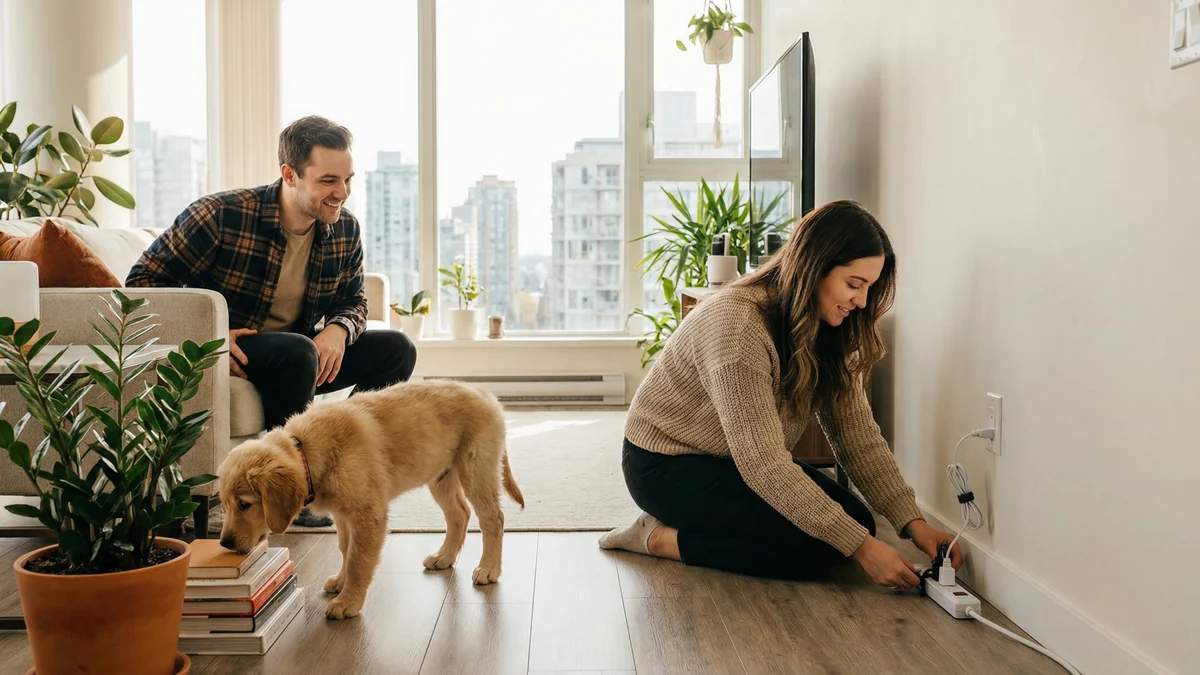
This guide is written for Vancouver homes, where puppies may be growing up in condos, townhouses, rental suites, busy family homes, or rainy neighbourhood walks. The goal is not to buy every product. The goal is to make the first days safer, quieter, and easier to manage.
Quick Answer
Before bringing a puppy home, secure cords, remove toxic plants and chemicals, set up a contained resting area, choose safe chew toys, prepare food and water stations, and decide where bathroom breaks will happen. A predictable first-week routine helps prevent accidents, chewing, and overwhelm.
Puppy-Proofing Your Home
Puppies explore with their mouths. Anything reachable may be chewed, stolen, swallowed, or dragged proudly across the room. Start by walking through your home at puppy height and removing risks before your puppy arrives.
- Hide or protect electrical cords and chargers.
- Move medications, cleaning products, cannabis products, and supplements behind closed doors.
- Check houseplants and remove anything unsafe for pets.
- Keep shoes, socks, laundry, small toys, and office supplies off the floor.
- Use covered garbage bins, especially in kitchens and bathrooms.
- Block stairs, balconies, fireplaces, and rooms you cannot supervise.
Do not rely on a puppy to make good choices. Make the safe choice the easy choice.
Creating a Safe Puppy Space
Your puppy needs a calm place to rest when you cannot supervise directly. This might be a crate, an exercise pen, or a gated area with easy-to-clean flooring. It should feel comfortable, not like punishment.
Include a bed or blanket, water, safe chews, and a few simple toys. Keep the space away from heavy household traffic, but close enough that your puppy does not feel isolated. If you live in a condo or suite, think about noise early. A tired, secure puppy is usually quieter than a puppy who has too much freedom and no routine.
Puppy Care Readiness Snapshot
A safe puppy setup should make daily care easier for you and for anyone helping with walks, visits, or daycare later. Keep the routine simple enough that another trusted person could follow it clearly.
- Keep food, leash, harness, cleaning supplies, and vet details easy to find.
- Write down nap times, bathroom timing, feeding instructions, and any sensitive handling notes.
- Use gates, crates, or puppy-safe rooms to reduce accidents and overexcitement.
Essential Puppy Supplies
| Category | Useful supplies | Notes |
|---|---|---|
| Containment | Crate, exercise pen, baby gates | Helps with safety, rest, and house training |
| Feeding | Food, water bowls, measuring cup | Start with the food your puppy already eats unless your vet advises otherwise |
| Walking | Harness or collar, leash, ID tag | Use short, positive practice before busy outings |
| Cleaning | Enzymatic cleaner, paper towels, poop bags | Regular household cleaners may not remove urine scent fully |
| Chewing | Puppy-safe chews and toys | Choose size-appropriate items and supervise chewing |
| Grooming | Brush, nail trimmer, puppy shampoo | Introduce handling gently before grooming becomes necessary |
Vancouver Home Setup Tips
Vancouver homes often add a few practical challenges: condo elevators, shared hallways, rainy sidewalks, small entryways, and limited outdoor space. A little planning makes these easier.
- Create a drying station: Keep towels, paw wipes, and a washable mat near the door for rainy walks.
- Plan elevator practice: If you live in a condo, reward calm waiting, entering, and exiting before the elevator becomes exciting or stressful.
- Use a leash indoors when needed: Use a lightweight house line only while an adult is actively supervising. Remove it before crating, sleep or leaving the puppy unattended; a trailing line can catch on furniture or other objects.
- Protect shared spaces: Carry your puppy or keep them close in lobbies and hallways until house training and vaccinations are further along.
- Think about noise: White noise, a covered crate, or a quiet interior room can help puppies settle in busy buildings.
Vancouver Puppy Weather Setup
Vancouver puppies often learn routines through rain, elevators, traffic noise, and shared building spaces. Planning for those details early makes walks and bathroom breaks calmer.
- Keep towels near the door for rainy potty breaks and paw drying.
- Practice short, calm lobby and elevator exits before adding longer walks.
- Use gentle exposure to umbrellas, buses, bikes, and wet sidewalks at your puppy’s pace.
The First Day at Home
Keep the first day quiet. Before going inside, take your puppy to the bathroom spot you plan to use. Once inside, let them explore a small area instead of the whole home. Too much space too soon can make accidents and chewing more likely.
Limit visitors for the first few days. Everyone may want to meet the puppy, but your puppy is already processing a new home, new smells, new people, and a new sleep routine. Calm is kinder than excitement.
The First Week Routine
The first week should be predictable: bathroom break, meal, short play, quiet rest, repeat. Puppies need more sleep than many new owners expect. Over-tired puppies often bite more, bark more, and struggle to settle.
- Take your puppy out after waking, eating, drinking, and playing.
- Reward outdoor bathroom success immediately.
- Use short training moments instead of long sessions.
- Keep walks brief until your veterinarian confirms what is safe.
- Start gentle handling of paws, ears, collar, and harness.
- Book the first vet visit and discuss vaccines, parasites, food, and socialization.
Puppy health note
This guide is general preparation advice. Ask your veterinarian about your puppy’s vaccination schedule, parasite prevention, diet, and when it is safe to walk in public dog areas.
Do a Care Handoff Before Pickup Day
Walk a trusted helper through the setup before the puppy arrives. If they cannot find the supplies or understand the plan without asking you, simplify it now.
Agree on who is responsible
- Arrival: Who meets the puppy, manages doors and keeps visitors from crowding the entry?
- Meals and breaks: Who follows the existing feeding instructions and records the last meal and bathroom break?
- Rest: Where is the quiet area, and how will children and visitors know not to disturb it?
- Unexpected delay: Who takes over if the main carer is late? Agree on a reachable backup rather than assuming someone is available.
Rehearse the doorway
Check that gates latch, supplies are within reach and the path to the agreed bathroom area is clear. In a condo, include the lift and shared entrance in your plan. Keep access codes and key arrangements private; do not put them in a general enquiry form or public message.
Keep a short care sheet
Record the puppy’s name, usual food and amount, equipment location, calming routine, veterinary contact and the person authorised to make care decisions. Keep medication instructions exactly as provided by the veterinarian. This is a household handoff, not a reason to start new treatments or change food suddenly.
The BC SPCA’s new-dog guidance is a useful preparation reference. Continue with our first-days-at-home guide and first vet visit checklist.
Need help planning future care? Ask Marpole Dog Walking about suitability and availability, including your puppy’s age, neighbourhood and the type of help you need. An enquiry is not a confirmed booking.
Frequently Asked Questions
Do I need a crate?
A crate is useful for many puppies, but the real requirement is a safe contained space. A crate, exercise pen, or gated puppy-proofed area can all work when introduced calmly.
When should I puppy-proof?
Ideally, finish the main puppy-proofing before pickup day. You will still notice more hazards once your puppy starts exploring, so expect to adjust.
What is the most common first-week mistake?
Giving too much freedom too soon. A puppy who can roam the whole home is much harder to supervise, house train, and redirect from chewing.
How soon should I book a vet visit?
Book a checkup soon after your puppy comes home, especially if your breeder, rescue, or adoption paperwork recommends a timeline. Bring vaccination records and any food or medication information.
Related Puppy Guides
- Introducing a new puppy to your home
- House training your puppy
- Your puppy’s first vet visit
- Puppy socialization in Vancouver
- Vancouver Dog Licence: Cost, Rules and How to Apply