Seasonal Dog Care in Vancouver
Vancouver dogs do not usually face deep winter cold, but they do face weeks of rain, wet sidewalks, darker walks, muddy parks, and damp coats that can stay uncomfortable for hours. A few simple routines make a big difference: protect paws, manage wet gear, choose safer routes, and adjust exercise when weather makes normal outings harder.
Quick answer
For most Vancouver dogs, seasonal care means staying dry, visible, and comfortable rather than preparing for extreme cold. Use a waterproof layer when helpful, dry paws and ears after wet walks, watch for slippery routes, and give senior, small, short-coated, or medically fragile dogs extra support.
Rain, paws, and drying routines
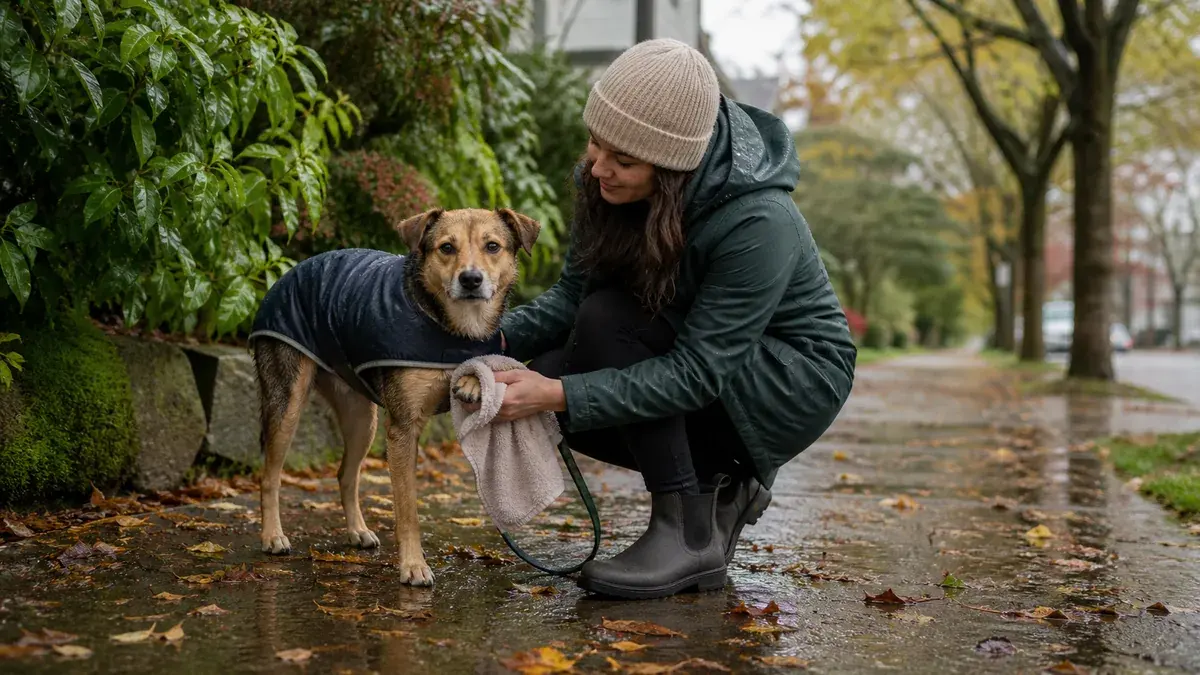
Wet paws are part of Vancouver life, but they should not stay wet for hours. After rainy walks, wipe between the toes, check for grit or small debris, and dry the belly, ears, tail, and any areas where fur mats easily. Dogs with long coats, skin sensitivities, or allergies may need a more careful post-walk routine.
- Keep a towel near the door so drying becomes automatic.
- Use paw balm if your dog gets cracked or irritated pads.
- Try booties gradually if your dog tolerates them and needs more protection.
- Rinse paws if sidewalks have salt, grit, or de-icing products.
Vancouver Weather Decision Card
Before heading out, match the walk to the conditions and to your dog’s comfort rather than following the same route every day.
- Steady rain: prioritize traction, visibility, paw care, and drying time.
- Heat: shorten exposure, check pavement, and choose shade or early timing.
- Smoke or poor air: reduce outdoor intensity and use calm indoor enrichment instead.
Cold-weather gear
A rain jacket or light insulated coat can help small dogs, senior dogs, short-coated dogs, and dogs who dislike being wet. Fit matters more than brand. The coat should protect the back and chest without rubbing, restricting shoulders, trapping too much heat, or making bathroom breaks awkward.
| Gear | Best for | Watch for |
|---|---|---|
| Waterproof jacket | Rainy walks, short-coated dogs, seniors | Fit around shoulders and belly |
| Paw balm | Everyday pad protection | Needs reapplication |
| Booties | Salt, grit, sensitive paws | Introduce gradually; many dogs need practice |
| Reflective leash or light | Dark morning and evening walks | Visibility from traffic and cyclists |
Choosing wet-weather routes
On heavy-rain days, a shorter dry-footing route may be better than forcing a long muddy walk. In Marpole and South Vancouver, paved sidewalks, quieter residential loops, and open routes with good visibility are often easier than slippery trails or crowded park entrances. If your dog is reactive, choose routes where you can cross the street early and avoid narrow passes.
Off-leash parks can be useful, but wet weather changes risk. Mud, low visibility, slippery surfaces, wildlife, and crowding near entrances can make recall harder. Check posted rules and current conditions before letting your dog off leash.
Heat, Smoke, and Summer Adjustments
Vancouver summers can bring hot pavement, dry afternoons, and occasional smoky-air days. On those days, dogs often do better with earlier or later walks, shaded routes, slower pacing, and more sniffing than distance. Flat-faced dogs, senior dogs, puppies, overweight dogs, and dogs with heart or breathing issues need extra caution.
Before a warm walk, check the ground with the back of your hand. If the pavement feels too hot for your skin, it is too hot for paws. Bring water, avoid long waits in direct sun, and watch for heavy panting, slowing down, glazed eyes, weakness, or reluctance to continue.
On smoky days, keep outings shorter and easier, especially for dogs with respiratory or cardiac concerns. If your dog struggles to breathe, collapses or becomes severely weak, stop the outing and seek emergency veterinary care immediately. Discuss ordinary exercise limits with your veterinarian when your dog is stable; persistent coughing or unusual fatigue also deserves assessment.
If overheating is suspected, begin cooling immediately while contacting an emergency veterinarian. Follow the cooling steps in our emergency first-aid guide.
A Vancouver dog year, month by month
Rain and heat get most of the attention, but several seasonal hazards around Marpole are easy to miss because they do not look like weather.
| Season | What changes | What to watch |
|---|---|---|
| October to November | Wild mushrooms appear on boulevards, in parks and under hedges after the first heavy rains. Halloween and Diwali bring fireworks. | Keep sniffing dogs off mushroom patches; some local species are toxic and a photo helps your vet if one is eaten. Plan early walks on fireworks nights and check ID tags. |
| Late fall | Salmon return to Fraser tributaries and dead fish wash up on the foreshore. | Raw salmon and trout in the Pacific Northwest can carry the organism behind salmon poisoning disease, which is serious and treatable only if caught early. Do not let dogs eat fish on the riverbank. |
| December to February | Sunset before 4:30 pm, wet leaves and moss, occasional snow and road salt. | Reflective gear and a light-up collar for afternoon walks. Rinse paws after salted sidewalks. Slippery lobby floors and steps are a real hazard for seniors. |
| March to May | Ticks become active in long grass and wooded parks. Mud season on trails. | Check ears, armpits and between toes after Pacific Spirit, Everett Crowley or the foreshore. Our parasite guide covers prevention. |
| June to September | Heat, wildfire smoke, and blue-green algae advisories on some ponds and lakes. | Pavement test before midday walks, shorten or skip on high AQHI days, and keep dogs out of any pond with an algae advisory or visible scum. |
| Late summer | Celebration of Light fireworks and long patio evenings. | Fireworks-sensitive dogs are calmer at home with a fan or white noise. Patio outings go better after a decompression walk. |
Indoor enrichment on heavy-rain days
When weather limits outdoor exercise, mental work can help take the edge off. Scent games, food puzzles, short training sessions, hide-and-find games, and calm chewing can all help dogs settle. Keep sessions short and successful rather than turning a rainy day into a full indoor boot camp.
Indoor Enrichment Backup Plan
When weather makes a full walk uncomfortable or unsafe, a shorter bathroom break plus focused enrichment can still help your dog settle.
- Use sniff games, scatter feeding, puzzle toys, or short training reps.
- Keep sessions calm for senior, anxious, or easily overstimulated dogs.
- Return to normal activity gradually when weather and footing improve.
When to shorten or skip a walk
Shorter walks are reasonable when weather is unsafe or your dog is uncomfortable. Be more cautious with puppies, senior dogs, very small dogs, thin-coated dogs, dogs recovering from illness or injury, and dogs who shiver or refuse to move. If your dog seems lethargic, painful, disoriented, or unusually cold, contact your veterinarian.
If wet-weather walks are becoming difficult to manage, Marpole Dog Walking & Boarding Service can help discuss routine, route fit, weather comfort, and current availability for local dog walking in Marpole and South Vancouver.
Seasonal care checklist
- Keep a towel and paw-wiping routine near the door.
- Use a waterproof coat if your dog gets cold, wet, or reluctant.
- Check paws for grit, irritation, cuts, and damp fur between toes.
- Use visible gear for dark mornings and evenings.
- Choose safer routes when rain makes trails muddy or slippery.
- Add short indoor enrichment when walks need to be shorter.
Related Guides
Frequently asked questions
Does every Vancouver dog need a raincoat?
No. Some dogs are comfortable without one. Raincoats are most useful for small dogs, short-coated dogs, seniors, dogs who get chilled, and dogs whose coats take a long time to dry.
Should dogs wear booties in Vancouver?
Booties can help with salt, grit, cold surfaces, or sensitive paws, but many dogs need gradual practice. Paw balm and post-walk cleaning may be enough for dogs who do not tolerate booties.
How can I exercise my dog during heavy rain?
Use shorter outdoor walks plus indoor scent games, food puzzles, training, and calm chewing. Many dogs do better with a balanced rainy-day plan than with one long, miserable walk.
When is cold weather a health concern?
Watch for shivering, weakness, reluctance to walk, confusion, pain, or unusual lethargy. Small, senior, short-coated, and medically fragile dogs deserve extra caution. Contact your veterinarian if you are concerned.
For more Vancouver-specific planning, browse the Vancouver Dog Owner Guides. If you are considering longer outdoor routes, check our dog-friendly hiking guide and confirm current weather and trail conditions first.
Agree on a wet-weather handover
Tell your walker where towels and dry bedding are kept, how you want wet equipment handled and how to contact you if conditions change. Leave clear instructions for access and the return home.