Leash Training Your Dog in Vancouver
A good leash walk is not about marching your dog in a perfect line. It is about moving through the neighbourhood safely, calmly, and with enough connection that both of you can enjoy the walk.
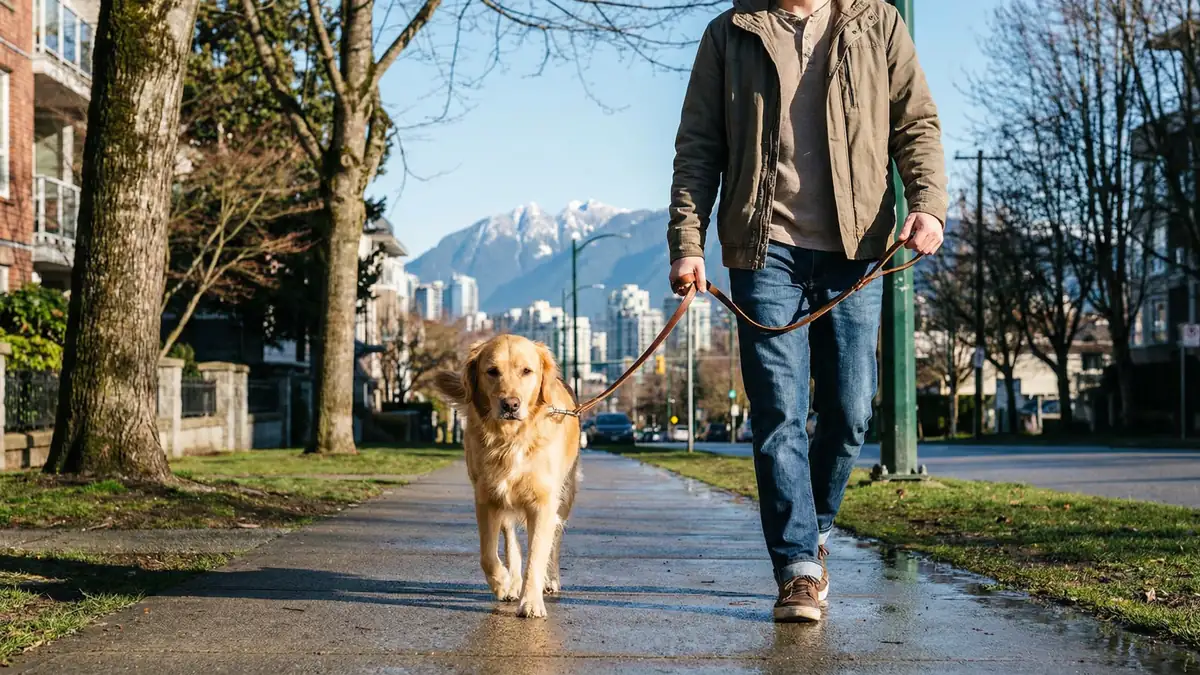
In Vancouver, leash skills matter because most public spaces require dogs to be on leash unless you are inside a designated off-leash area. That means everyday walks through Marpole, South Vancouver, Oakridge, Kerrisdale, parks, sidewalks, and busy crossings are much easier when your dog understands how to move with you.
Quick Answer
To improve leash walking, reward your dog whenever the leash is loose, stop moving when the leash becomes tight, and practise first in quiet places before adding distractions. A front-clip harness and a standard 4- to 6-foot leash can help, but the real progress comes from consistency.
Why Dogs Pull
Dogs usually pull because pulling works. They smell something interesting, lean forward, and the walk continues. Over time, the dog learns that tension on the leash is the way to reach the next tree, person, dog, or patch of grass.
Pulling is also natural. Dogs walk faster than people, investigate the world through scent, and can become excited by movement, traffic, other dogs, squirrels, bicycles, and food smells. The goal is not to remove curiosity. The goal is to teach your dog that staying connected to you is what keeps the walk moving.
A Simple Loose-Leash Method
Start in a quiet place, such as your hallway, yard, driveway, or a low-distraction residential sidewalk. Hold a few small treats. The moment your dog walks near you with slack in the leash, mark the behaviour with a clear word such as “yes” and reward beside your leg.
If the leash tightens, stop. Do not yank, scold, or drag your dog back. Wait for your dog to soften, look back, or create slack. As soon as the leash loosens, praise and continue. This teaches a simple rule: loose leash moves forward, tight leash pauses the walk.
Keep early sessions short. Five calm minutes are more useful than a long walk full of pulling. As your dog improves, practise near more distractions: a busier sidewalk, a park entrance, a school route after hours, or a quiet trail.
Leash-Training Gear
The right equipment can make training easier, but it should not replace training. Choose gear that gives you control without causing pain, choking, or fear.
| Gear | Best use | Notes |
|---|---|---|
| Standard 4- to 6-foot leash | Daily city walking | Gives clear feedback and better control than a retractable leash. |
| Front-clip harness | Dogs who pull forward | Can reduce pulling leverage while you teach loose-leash skills. |
| Well-fitted back-clip harness | Comfortable casual walking | Good for many dogs, but strong pullers may need extra training support. |
| Long line | Recall practice in suitable open areas | Use only where it is safe and legal; not ideal for busy sidewalks. |
Avoid retractable leashes for busy urban walks. They can create inconsistent leash pressure, make sudden control difficult, and may exceed local leash-length rules.
Vancouver Leash Rules and Etiquette
The City of Vancouver says dogs must be leashed in public areas unless they are in a designated off-leash area, and leashes must be no longer than 2.5 metres. Dogs also need to be under control, licensed, and cleaned up after. You can review the City’s current guidance on responsible dog ownership and dog off-leash areas.
Good etiquette goes beyond the minimum rules. Keep your dog close when passing pedestrians, children, cyclists, strollers, and other dogs. Ask before allowing greetings. Move aside if your dog needs time to settle. Pick up waste every time.
If you want off-leash time, choose a designated off-leash area and check the specific hours and restrictions. Some Vancouver off-leash areas have seasonal or time-of-day limits, and dogs may need to be on leash when entering and exiting.
Marpole Sidewalk Etiquette Snapshot
Good leash manners are partly about training and partly about route choices. In Marpole, narrow sidewalks, condo entrances, traffic, and surprise dog greetings can make calm handling more important than distance.
- Step aside early instead of waiting until dogs are nose-to-nose.
- Use parked cars, driveways, or wider corners to create space when needed.
- Avoid on-leash greetings if either dog is pulling, freezing, barking, or trying to hide.
Common Leash Problems
Pulling toward other dogs
Create more distance before your dog reaches the end of the leash. Reward calm looking, turning back toward you, or moving with you. If your dog is barking, lunging, or unable to eat treats, you are probably too close.
Zigzagging and sniffing
Sniffing is healthy enrichment, but constant crossing in front of you can be unsafe. Build in planned sniff breaks, then use a cue such as “let’s go” when it is time to move again.
Freezing or refusing to walk
Do not force a worried dog forward. Pause, soften your body language, offer encouragement, and move away from whatever feels overwhelming. Puppies and sensitive dogs may need shorter walks and more confidence-building.
Leash reactivity
If your dog barks, lunges, or panics around dogs, people, bikes, or traffic, focus on distance and management first. Our guide to reactive dog training in Vancouver explains how to approach this more safely.
Leash Handoff Checklist
Before someone else walks your dog, share the handling details that keep the walk calm and predictable.
- Preferred harness, leash, collar setup, and any equipment to avoid.
- Known triggers, safe distances, and routes your dog handles well.
- What cue words your dog knows and what usually helps them refocus.
Frequently Asked Questions
What is the fastest way to stop leash pulling?
The fastest humane approach is usually consistency: reward loose-leash moments and stop moving when the leash tightens. Equipment can help, but it will not replace practice.
Are retractable leashes allowed in Vancouver?
Vancouver’s guidance says leashes must be no longer than 2.5 metres in public areas. Many retractable leashes extend beyond that, and they are not a good choice for busy sidewalks.
Should dogs greet each other on leash?
Only if both handlers agree and both dogs look calm. Many dogs are nervous, reactive, in training, recovering from injury, or simply not interested. Asking first is the polite and safer choice.
When should I hire a trainer?
Get help if your dog is lunging, biting the leash, panicking, redirecting onto you, or becoming harder to control. Choose a qualified, positive-reinforcement trainer who can observe your dog in real situations.
Related Guides
- Dog Training Classes in Vancouver: Find the Right Fit
- Reactive Dog Training in Vancouver
- Best Off-Leash Parks in Vancouver
- Dog Walking in Marpole and South Vancouver
- Understanding Your Dog’s Body Language
- Dog Walk Routes in Marpole
- Understanding Dog Reactivity
Need consistent, owner-operated walks in Marpole or South Vancouver? Check availability with Marpole Dog Walking & Boarding Service.
Check Boarding Availability & FitShare an Observation the Next Handler Can Use
Replace a broad label such as “bad on leash” with a brief description of what happened. Record the setting, what your dog noticed, what they did and what response helped. Avoid guessing at a diagnosis or motive.
- Setting: narrow sidewalk, building entrance or another specific situation.
- Trigger and response: describe visible behavior without minimizing an incident.
- Useful context: familiar cue words, equipment and the space your dog needed.
This information supports a fit conversation; it does not replace a qualified behavioral assessment when one is needed. Bring it to your first walking enquiry, then use the first-walk checklist to organize the agreed handoff. Share access information and private care records directly, not in public comments.